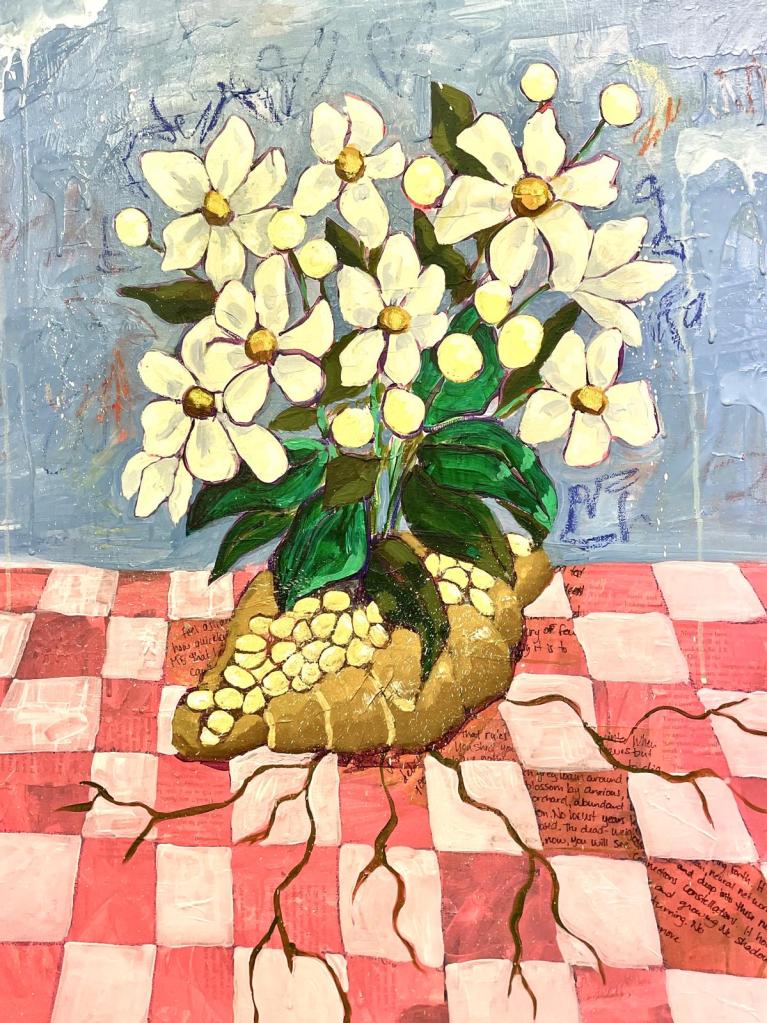
Amgydala Croissant
Erika Loftis
Mixed media on canvas
The amygdala is the part of the brain associated with emotional response – especially fear and sadness – and the emotion connected to memory. “Amygdala” means “little almond” – so named for the shape of the structure in the mid brain.
This piece was inspired both by Matthew Pullar’s poem “Neural Pathway: Amygdala” and a difficult experience Erika had recently after a blood test (of which she is severely phobic). An almond croissant became both a healing comfort after that experience as well as a reminder of the power of the “little almond” – both for good and ill – in our healing from the past.
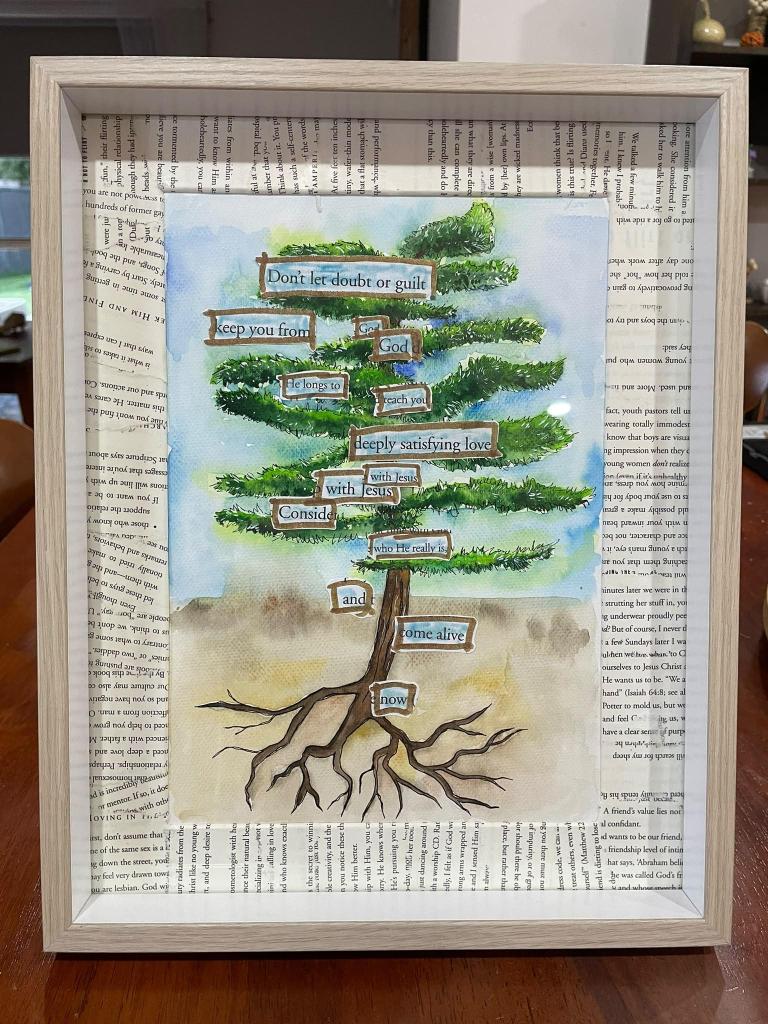
Don’t let doubt or guilt
Erika Loftis and Matthew Pullar
Cut-out poem on watercolour
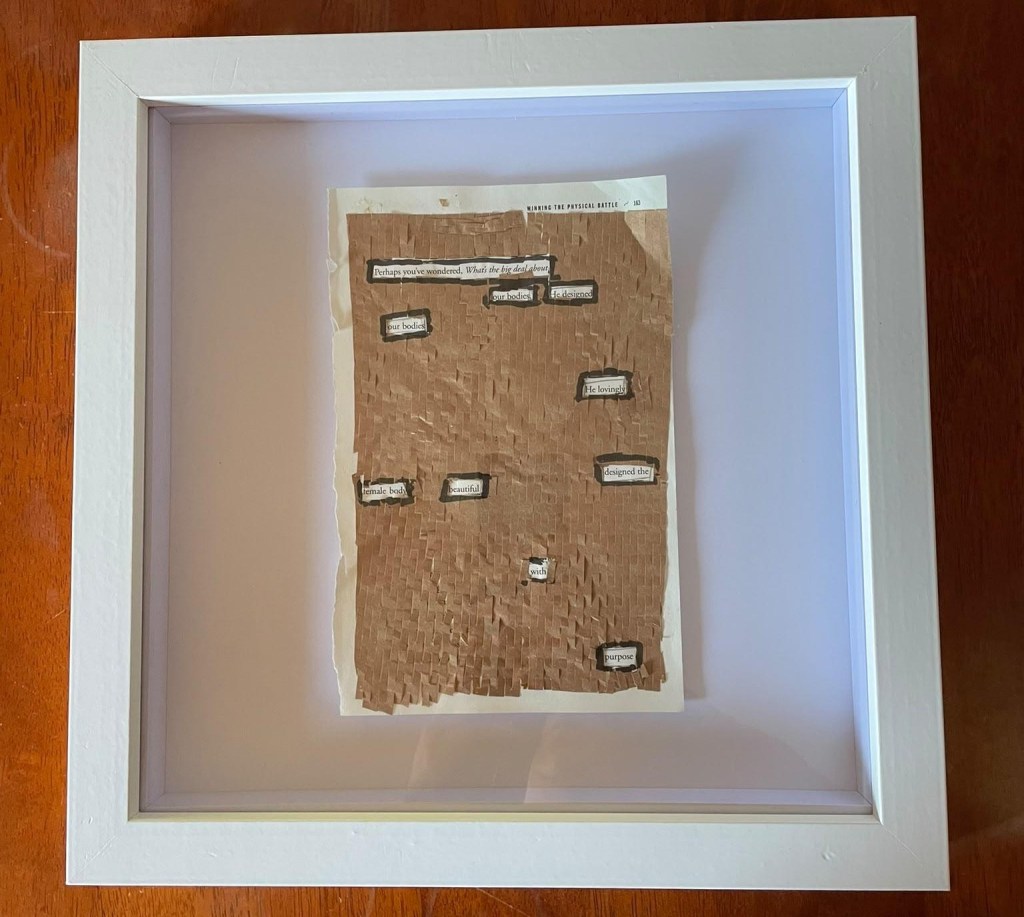
The Big Deal
Matthew Pullar
Blackout poem with cardboard
Taken from a page of “Every Young Woman’s Battle” suggesting that God deliberately made the body vulnerable to STIs, this poem covers the hurtful text with the coarse but organic texture of cardboard to bring us back to simpler theological truths. The rough cut-outs around the words that are kept suggest the ways in which we need to cut through false and hurtful theology to see the truth that is buried. Although unvarnished and seemingly lacking beauty itself, the rough texture of this piece puts the focus on the beauty and goodness of God’s creation in the human body.
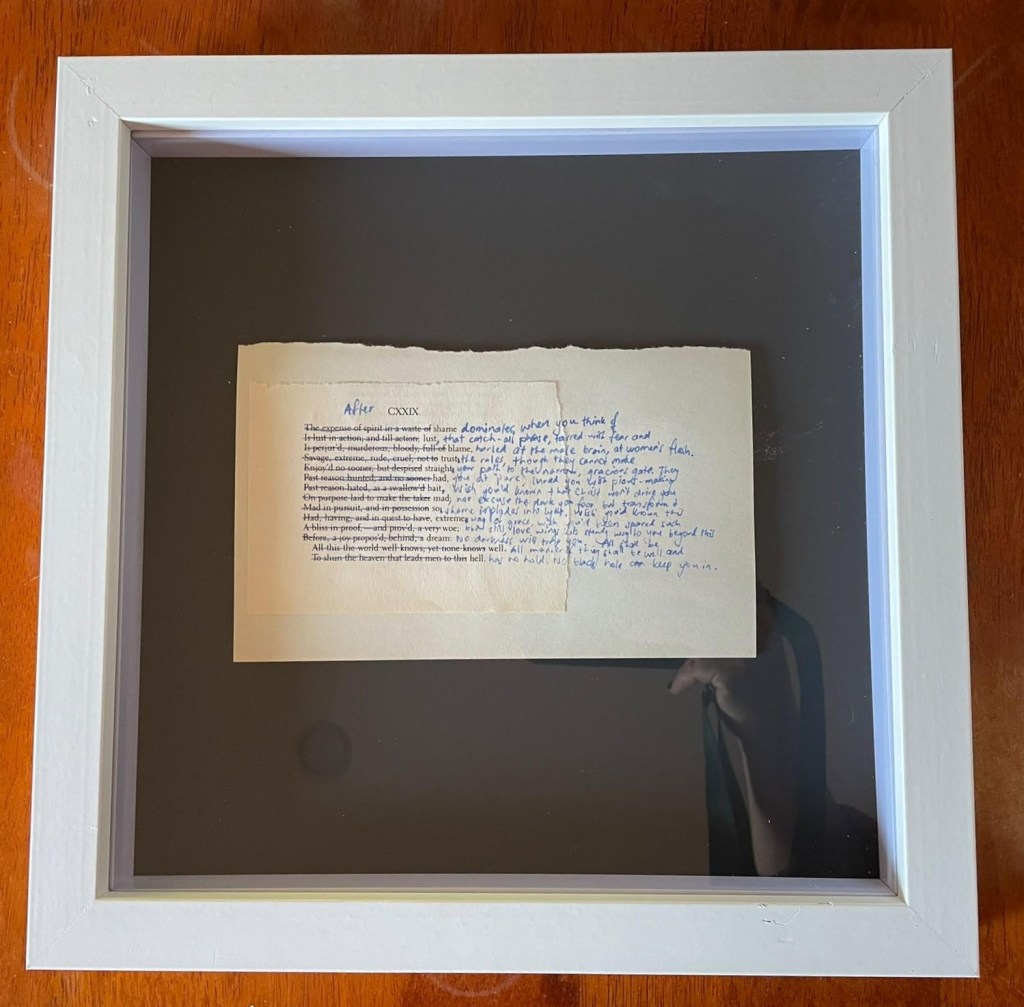
After Sonnet 129
Matthew Pullar
Blackout poem with fountain pen
This piece is an erasure and reinterpretation of William Shakespeare’s Sonnet 129, “Th’expense of spirit in a waste of shame”. Taking the final word from each of Shakespeare’s lines as the starting word for each line of the new poem, the piece repurposes a text that presents sexual desire in terms of shame and considers how our teaching around sexual desire can be reframed to speak words of freedom and grace to young people growing up today. The image of a black hole suggests the mental boundary that fear and shame create, with God’s grace being the certainty that stands on the other side of the unknown things we fear.
Read the text of the poem at Spirit Fire Review here: Sympathy for Pluto: three poems by Matthew Pullar
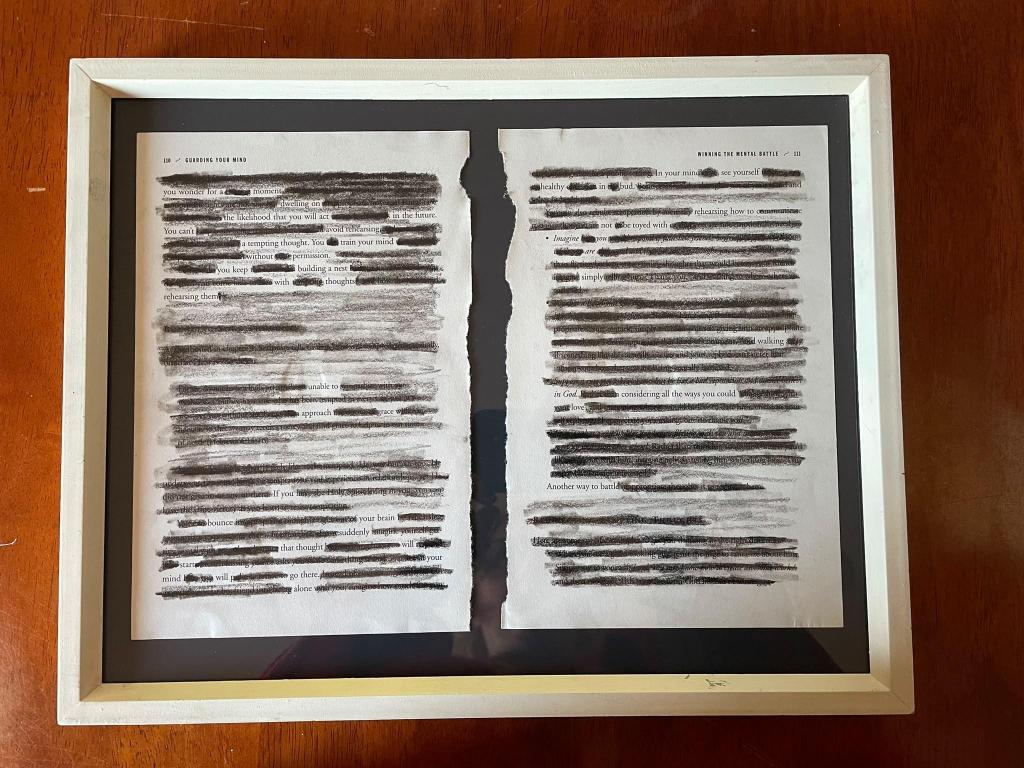
Bouncing Mind
Matthew Pullar
Blackout poem with charcoal
This piece is a blackout poem based on two pages from “Every Young Woman’s Battle” by Shannon Etheridge and Stephen Arterburn. The original text instructs teenage girls to “bounce their thoughts” when they find themselves fantasising about marriage, presenting this as the female equivalent to the practice of “bouncing your eyes” taught to young men. In doing this, the text enforces first the dichotomy that men and boys are visual and inclined towards visual lust while women are more likely to desire emotional intimacy. However it also teaches a kind of mental anxiety that can be self-reinforcing. This piece explores the dynamic of anxiety that both teachings – to bounce eyes or thoughts – reinforced for many Gen X and Millennial teens, and reframes the words to look towards a freedom that comes from not fearing sin but entrusting it to God’s grace.
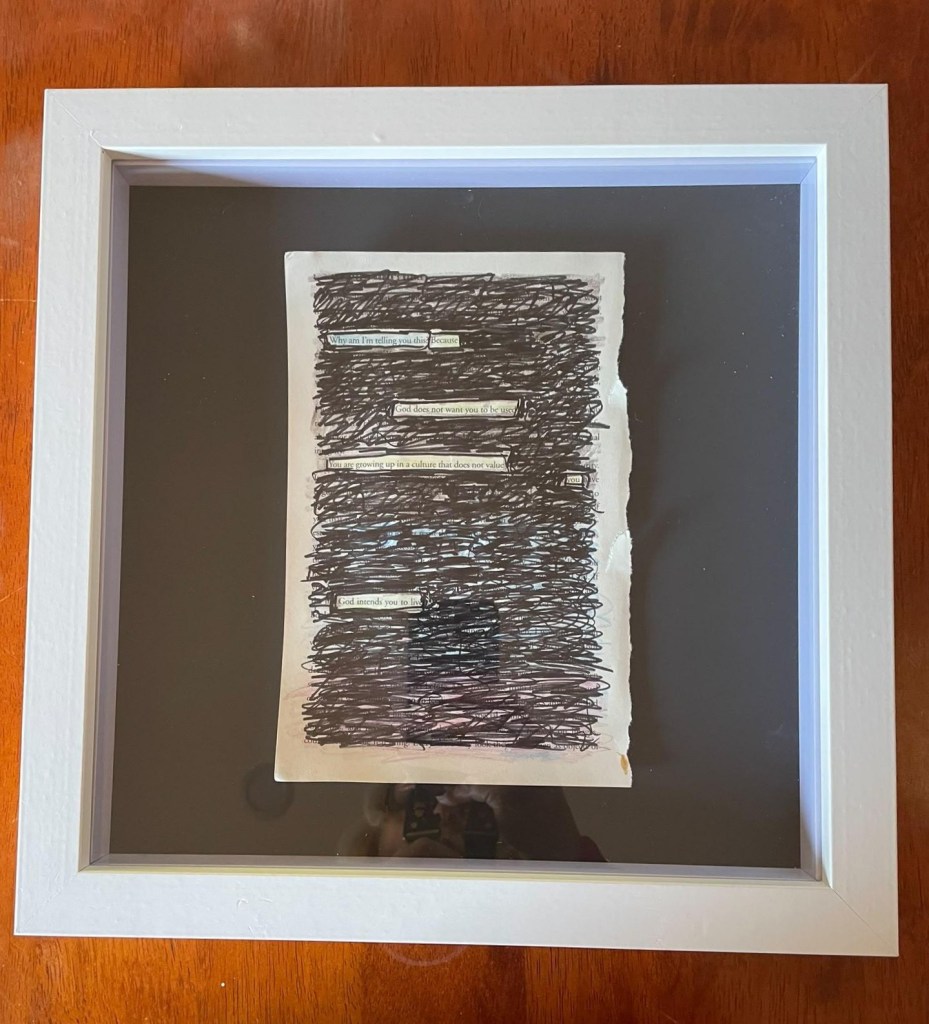
Intent to Live
Matthew Pullar
Blackout poem with texta and highlighter
This piece takes text from “Every Young Woman’s Battle”, in which girls are taught to expect objectification in their culture, and appropriates these words to affirm the dignity that all people are given in God. The rough lines of the texta blacking out the original text express the anguished process of growing that comes with adolescence, while the highlighter around the remaining words – like a teenager’s journal or study Bible – offset the darkness and anxiety with a sense of discovery. Life shines through in the chaos of becoming in God.

