I recently saw a meme containing the caption, “My life is a series of things keeping me from reading my book.” Sometimes, I must admit, I feel like this. Though when I look over the 120+ books I have read this year, I’ve clearly managed to read somehow.
My identification with that meme says much about a fairly central tension in my life: as a reflective, imaginative introvert, I long to hide myself away in books. Yet, also loving people deeply, I am pulled away from books to give my time and attention to those around me.
But when I think about the best books that I have read this year, the tension has not really been so real. Over the past few years I have sought out diversity in my reading, and this diversity has helped me to immerse myself in a wide range of life experiences that help me to understand and love others better. At their best, books are not an escape from life; they enable us to live better. The books contained in this year’s list have done that for me.
So here, for the third year running, is my overview of the best books I have read this year. Unusually for me, most of these books are very recent, either coming out this year or the year before. This is partly because 2023 has been a wonderful year for books, partly because there is so much happening in the literary world right now to ensure a diverse range of voices is being heard that I find myself barely scraping the surface of the riches to be discovered. This year I’m also adding a new category to my list, graphic novels and comics, because I am discovering the richness of the voices and perspectives that are found in that genre right now.
Novels
1. Abide With Me – Elizabeth Strout
One of my most beloved discoveries of recent years is the novels of Elizabeth Strout. In eighteen months I read all but one of them, and this her second novel is probably my favourite. I first met the main character in last year’s Lucy by the Sea, which brought together every one of Strout’s novels, and I was stunned by every moment of this story of a grieving widower minister and his young daughter who had barely spoken since her mother’s death except once to say, in Sunday school, “I hate God.” The story of how father and daughter learn to walk together in their grieve is touching and beautiful. Strout is not a Christian herself but the novel is profound, tender and spiritually profound.
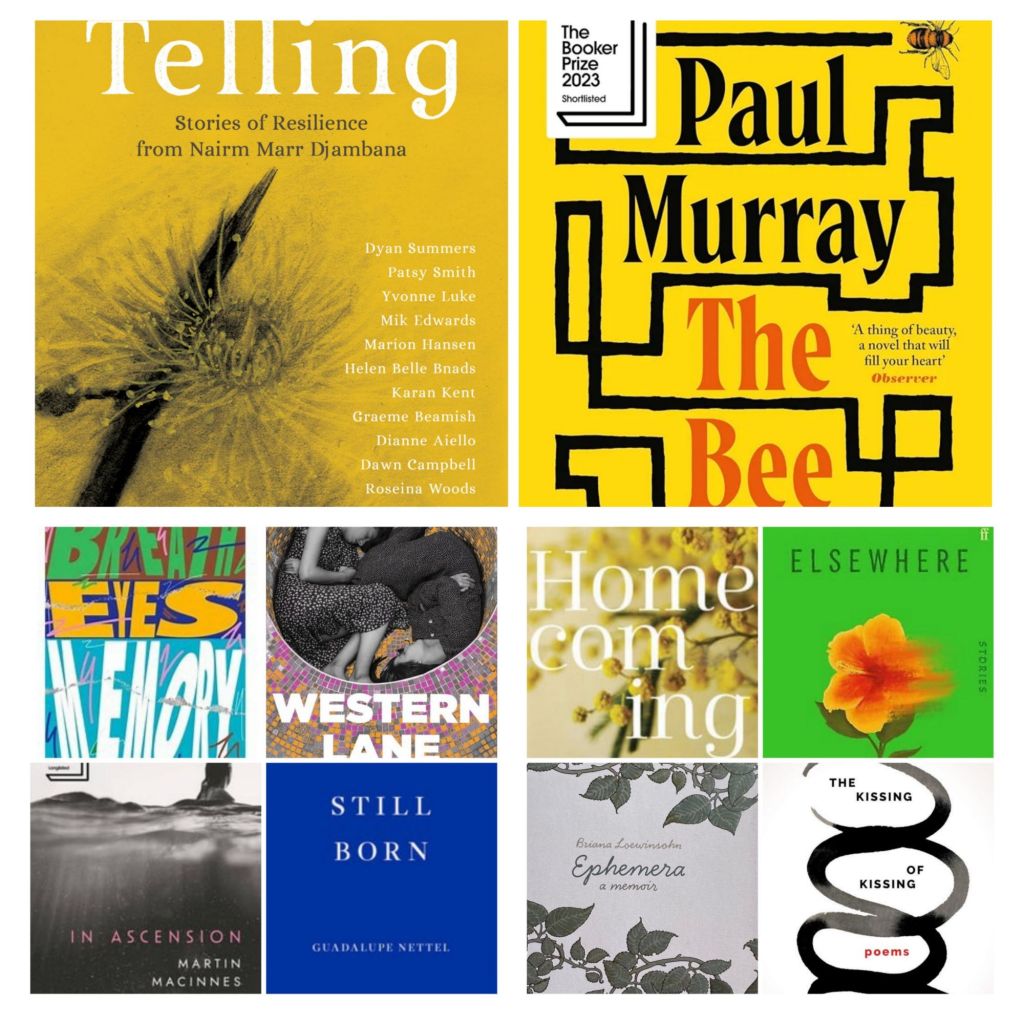
2. Western Lane – Chetna Maroo
I would never normally expect a novel primarily about squash to be interesting but Western Lane earns itself the distinction (alongside its sightly more prestigious Booker nomination) for being a sport story that had me hooked. It’s also a story of a migrant family in England negotiating cultural isolation and the pressure on migrant families to succeed. It is a sparse, quiet novel of remarkable power and luminosity.
3. The Colony – Audrey Magee
It has been an amazing decade so far for Irish literature. Three Irish writers have made it into my list this year, and many more could be mentioned. The Colony is a delicate and agonising story of two men trying to exercise their own control over an Irish island, one of the last places where only Irish is spoken, one using language, the other art, to assert themselves on the place and on the same woman. It is a painful novel in many ways, and the setting of the Troubles is violent and shocking. But it is also lyrical and vivid, and brings to life familiar historical events in surprising ways.
4. Still Born – Guadalupe Nettel
This contender for the Booker International Prize is a deeply moving story of motherhood from the perspective of a woman who has chosen not to be a mother yet experiences the joys and pain of bringing children into the world through those close to her. It reminded me in some ways of the more tender moments of Patricia Lockwood’s No-one Is Talking About This and is equally devastating.
5. Breath, Eyes, Memory – Edwidge Danticat
I first discovered Danticat last year when I read a stunning collection of her short stories and then her wonderful novel Clare of the Sea Light. This year her first novel was re-released, giving me the chance to get hold of a copy. It’s much rawer than her later work but still as powerful in its depiction of the lives of Haitian women doing their best to survive intergenerational trauma. It comes with significant trigger warnings around sexual abuse and suicide but there is also much beauty and hope in its pages.
6. In Ascension – Martin Macinnes
I’ve always been a bit of a sucker for existential Sci-Fi and this 600+ page novel had me hooked from the start despite its daunting length. There’s more science in it than I could really get my head around, but the reflections on the nature of all living things, from gut bacteria and algae to human life, is extraordinary, and it takes you from the depths of undersea trenches to the edges of the solar system. A remarkable feat of contemporary literature.
7. The Bee Sting – Paul Murray
Another from the Booker shortlist, and another epic. An extraordinary and engrossing polyphonic story of one Irish family and all the interweaving stories that have made them what they are. The ending is virtuosic and suspenseful to the last second and will leave the book lingering in your mind long after it is over.
8. Mullumbimby – Melissa Lucashenko
A hilarious and deeply moving story of a single Aboriginal mother living on country in Northern NSW and finding herself caught up in a Native Title battle. Lucashenko is very down to earth yet profound at the same time.
9. Pearl – Siân Hughes
A haunting saga of grief, mental illness and the stories we tell ourselves to cope with loss, Pearl weaves together Mediaeval folklore, nursery rhymes and family struggles to create a rich, powerful and ultimately healing tale.
10. Animal Life – Auður Ava Ólafsdóttir
An Icelandic novel about a midwife preparing for a wild winter storm does not sound immediately compelling to most readers. And the fact that the plot is significantly occupied by the narrator reading the often incoherent papers of her midwife great-aunt does not help this become blockbuster material. Nonetheless, it’s a tender, touching and surprisingly funny exploration of a world at once austere and warm, and a journey into the wonder of our shared human life.
Poetry
1. Deaf Republic – Ilya Kaminsky
I first read the devastating “We Lived Happily during the War” last year when Ukrainian poetry about war became particularly poignant. Kaminsky, now living in America, wrote this allegorical verse novel in 2019, before the current war broke out. Yet it feels very prescient. Deaf himself, Kaminsky uses the metaphor of deafness alongside voicelessness to convey powerlessness against oppression and the various ways we attempt to hold on to agency in a world being destroyed by tyranny.
2. Homecoming – Elfie Shiosaki
This extraordinary sequence of poems by an emerging talent draws much of its inspiration from archival documents of Shiosaki’s Aboriginal grandparents, often including found text from these documents. Particularly powerful is the series of letters her grandfather wrote to A.O. Neville, the “Chief Protector of the Aborigines” in the early twentieth century, begging for the return of his children to him.
3. Recoveries – Elizabeth Jennings
I found the poetry of Elizabeth Jennings this year in D.S. Martin’s wonderful anthology of 20th and 21st century Christian poets and went on to read several of her books. Recoveries is probably the best place to find all the facets of her writing, including some of her most powerful depictions of mental illness (and her time in mental institutions) and her most beautiful depictions of faith.
4. The Kissing of Kissing – Hannah Emerson
Probably the most challenging book on this list, The Kissing of Kissing is the first in the Milkwood Poetry Series devoted to work by neurodivergent poets. Emerson is a young non-verbal autistic poet whose extraordinary, inventive writing takes us inside a mind and body’s experiences that are so often cut off from others’ understanding. A difficult but powerful and lyrical read.
5. Untold Lives and Later Poems – Rosemary Dobson
I fell in love with Dobson’s poetry a few years ago then I taught it to my year 12 Literature students and have slowly been discovering the breath of her extensive career. Often considered her masterpiece, this is one of her last books and contains tender and simple portraits of her family in a way that honours them without glorifying their imperfections. It also includes some heartbreakingly beautiful poems about her own marriage.
6. Singing the Bones Together – Angela Shannon
This book is around twenty years old and reading it now I’m not sure why Shannon hasn’t become better known. Her poetry is urgent, soulful and hopeful, recalling the best of Langston Hughes and Maya Angelou, possibly even better than the latter. Honestly more people need to read her.
7. Soon Done with the Crosses – Claude Wilkinson
I read and loved Wilkinson’s World Without End this year and was excited to find that he had a new book out in the sublime Poiema Poetry Series. Wilkinson’s work is deep in its historical and contemporary resonance, drawing from African American spirituals, American history, classical mythology and contemporary culture to present a compelling picture of people longing for God’s kingdom to come.
8. The Oscillations – Kate Fox
A neurodivergent author, Kate Fox explores the contradictory values of our contemporary world, including COVID lockdowns, from an autistic perspective. Powerful, lyrical and arresting.
9. Cup My Days Like Water – Abigail Carroll
Another recent highlight from the Poiema Poetry Series, Carroll portrays the complexities of the life of faith in this world in a way that resonates with the beauty and awesomeness of creation.
10. People on the Bridge – Wisława Szymborska
I find myself increasingly drawn to contemporary poetry, particularly work written since 2020, feeling as if there’s a kind of abyss between our world now and the world before. I don’t feel that reading Szymborska. Though written nearly forty years ago, this book’s political and social insight are as razor sharp as its language is taut and precise.
Non-fiction
1. Songlines: The Power and the Promise – Margo Neale & Lynne Kelly
This is the first in the significant First Knowledges series, exploring Australian First Nations knowledge and practice in a whole range of domains. Here, series editor Neale with co-author Kelly explores the rich knowledge about country and geological history encoded in indigenous Songlines. A transformative journey into Australian indigenous tradition and knowledge, and its power for our world today.
2. Candles in the Dark: Faith, Hope and Love in a Time of Pandemic – Rowan Williams
In 2020, the former Archbishop of Canterbury gave weekly reflections to his parish church during lockdown. While grounded in the very particular context of the first wave of the pandemic and the bizarre politics of the time, Williams can take any topic, from wearing face masks to Donald Trump’s malapropisms, and turn it to profound and timeless theological truth. When my family found ourselves isolated again due to close contact with COVID over the Christmas period this year, Williams’ writing was of particular comfort.
3. On the Spectrum: Autism, Faith and the Gift of Neurodiversity – Daniel Bowman Jr.
Having close family members diagnosed with Autism in the past year has led me on a quest to understand the lived experience of Autism from #actuallyautistic authors. This memoir in the form of a collection of essays is a valuable place to start, especially for people of faith. Bowman is a poet and literature professor, so one of his aims is to carve out a space in literature for Autistic writers to express themselves in Autistic ways, without needing to make themselves neurotypical to be heard. That makes this a stylistically challenging read but a valuable and rewarding one for it.
4. Telling: Stories of Resilience from Nairm Marr Djambana – ed. Sina Summers
This collection of real life stories from Aboriginal people living in Victoria is a significant work. That it often sometimes seem very everyday and unremarkable is, I think, the point. The stories are diverse, sometimes deeply painful, sometimes very everyday, often hopeful. They reveal the extraordinary diversity of Aboriginal people’s experiences, challenge stereotypes, reveal hard truths and tell all of this in the simple, truthful voice of ordinary people. All connected to an Aboriginal community centre in Bunurong Country, the region where I live and work, is particularly meaningful for me. May there be many more books like this.
5. An Edith Stein Daybook: To Live at the Hand of the Lord
I have been interested in Stein since reading about her in a book by Rowan Williams. Born into a German Jewish family before the war, Stein started out as a phenomenologist, studying with figures like Heidegger before coming to Christian faith and entering a Carmelite convent and ultimately being killed by the Nazis. This year, while teaching Albert Camus’ The Outsider, I decided to read more of her as an example of someone who asked the same questions of existence as Camus did and found those questions leading her to God. This collection of daily readings from Stein’s work is hard to find but worth its weight in gold. She grappled with all the darkness of human existence and her particularly dark time in history, and found her answers in a real, immanent and loving God.
Short fiction
1. So Late in the Day – Claire Keegan
It’s been a good couple of years for Claire Keegan, with her Booker nomination for Small Things Like These and then having her novel Foster adapted as acclaimed film The Quiet Girl. So Late in the Day came out in the middle of this year as a standalone long short story then later reappeared in a collection of three stories. It was first published in French under the title “Misogynie”, and this gives a good indication of what the story is about. It is written with Keegan’s characteristic restraint, exploring the entrenched misogyny that threatens to destroy a relationship when it might be too late in the day for the protagonist to change.
2. Elsewhere: Stories – Yan Ge
Yan Ge’s stories are all about taking the reader “elsewhere”, whether to China’s past or to a wide variety of landscapes, ranging from Ireland to Myanmar. Her stories also regularly consider the inadequacies of language, whether looking at the precarious nature of translation (this, significantly, is the author’s first work in English) or simply the failure to really know another’s thoughts through their words.
3. Flock: First Nations Stories Then and Now – ed. Ellen Van Neerven
This is probably the best anthology of contemporary First Nations fiction that I have read. Covering a wide range of genres and places within Australia, this anthology is a perfect introduction for anyone wanting to experience the richness of Australia’s First Nations authors.
Graphic Novels/Comics
1. Alison – Lizzy Stewart
Stewart has chosen the perfect form to tell this story of a young woman who leaves her unsatisfying marriage in Dorset to pursue a career as an artist in London. The story is unflinching in its portrayal of male privilege in the art world and never glorifies or condemns the protagonist’s choices. Both beautifully written and drawn, Stewart often blends the aesthetic of an art folio or scrapbook with her magnificent illustrations of the story.
2. Ephemera – Briana Loewinsohn
This delicate and moving story of coming to terms with a mother’s mental illness is as light as the ephemera it’s named after but with a depth that is conveyed with a beautiful simplicity.
3. Parenthesis – Élodie Durand
Durand’s graphic memoir of dealing with epilepsy and a brain tumour is complex, powerful and beautifully constructed. Like in many of the best graphic novels, Durand plays with silence and omission as much as with what she reveals.
4. Dumb: Living Without a Voice – Georgia Webber
Another graphic memoir, Dumb recounts the author’s sudden and inexplicable loss of her voice and her agonising attempts to navigate society with no voice. A powerful and poignant work that plays skilfully with its form to convey the frustrations of voicelessness in a noisy world.
5. It’s Lonely at the Centre of the Earth – Zoe Thorogood
Thorogood’s confessional account of chronic depression is raw, funny, confronting and wise all so once. Not an easy read but highly experimental and engaging, including some entertaining depictions of the comic book scene in which Thorogood has experienced significant success.
And there it is – the highlights of my reading for the year. So many books that did not make the list that I wish I could tell you more about here. One day I will also have to write a list of all the books I read my children too – that is a whole other rich and amazing side to my reading life. But for now, here’s to a wonderful year of books, and looking forward to more books next year that help us to live well and understand others well.
 The Consolations of Writing