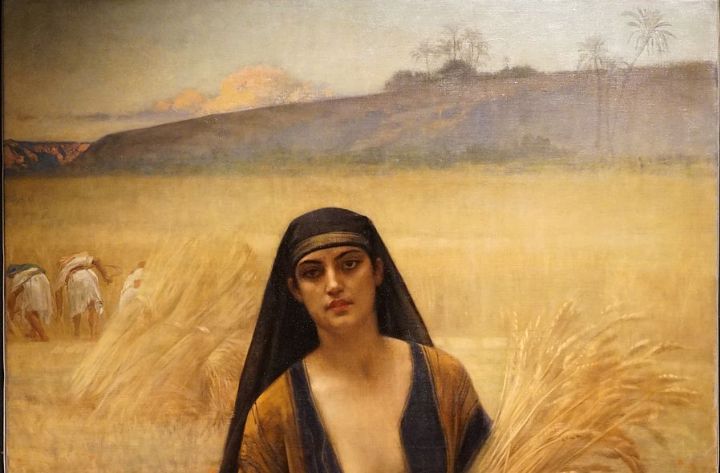
At first there’s nothing especially Christmassy about the story of Ruth from the Old Testament. It doesn’t have the messianic promises of Isaiah or Hannah’s song. There’s nothing about kingship or a promised saviour. So why is it one of the readings for today, the tenth day of Christmas?
Ruth’s is a story where most of its wonder lies in the background, in the margins. And hers is a story of margins. A foreigner, a young widow, Ruth is vulnerable on many levels. She’s a Moabite, a descendant, the story goes, of the incestuous union between Lot and one of his daughter’s. Ruth’s marriage to an Israelite would have been scandalous, and the sudden death of her husband, brother-in-law and father-in-law would have made her surviving mother-in-law Naomi appear cursed. She may even have seemed part of the curse.
Yet, instead of being a source of curse to Naomi, she brings favour to a devastated group of vulnerable women. First, Ruth receives protection from Boaz, Naomi’s relative, who keeps her safe from the unwanted attentions of his male workers. (Why he doesn’t call out their behaviour more directly, and for all women’s sake, not just Ruth’s, is another matter.) Then she also receives extra grain when he ensures she can glean more than usual. Gleaning was always the food source of the poor and vulnerable; Ruth in her gleaning receives an abundance.
Now this might all be interesting, and a little problematic, but it’s still not very clear what any of this has to do with Christmas. Except when we read the end of the story and find that Ruth and Boaz’s son Obed becomes the grandfather of King David. And through this Ruth also becomes one of the key women to feature in Jesus’ family tree in Matthew 1. Not only is the shame and suffering of her family turned to abundance, but she is also a source of blessing to Naomi and then to the whole world.
The story remains messy. Boaz’s motives cannot be seen as perfectly pure when he a) fails to stop the mistreatment of other women gleaning on his field and b) gets to marry a beautiful young woman in exchange for his altruism. Yet the problematic parts of this story are part of its power. It’s messy, and God uses mess to work redemption. God uses our imperfect, even downright evil, intentions to work good. And God sees the marginalised and vulnerable, and not only redeems them (that word “redeem” is particularly significant in the story of Ruth) but also uses them to redeem others.
And this continues long into the story, with a poor unmarried teen mother giving birth to the saviour of the world. And it continues long beyond that, to you and I and our whole messy broken world being grafted into God’s wonderful and unexpected redemption story.
 The Consolations of Writing