Today was the first proper summer day of the year in my home city, and the first in several weeks, so I and many other Victorians migrated to the beaches to enjoy it. And the beach is not a bad place to see in the last day of Christmas, particularly if you want Shakespeare’s Twelfth Night to accompany you. No, I wasn’t reading Shakespeare on the beach; my children would never have let me. But, if you know the play, you’ll probably remember that it starts out with a storm at sea that separates a pair of twins. (Fittingly, I was there with my twins, so I was ready for a performance if the occasion arose). The sea in Shakespeare is often a potent metaphor for fate; the phrase “sea change”, which in my society makes most people think either of a romantic comedy series from the 1990s or of moving to the beach for a new lifestyle, actually comes from another nautical comedy of Shakespeare’s, The Tempest, and refers to the way that fate can be tossed about in surprising ways by the ocean, but also by the unpredictable lives we lead in the modern world. And yes, Shakespeare’s world was modern: the very beginning of the modern world, where the predictability and order of the mediaeval world was thrown up into the air, or lost at sea.
Twelfth Night is a play full of this kind of chaos and upheaval, and its name – probably a reference to the night on which it would have been performed at court – also shows its connection to the twelve days of Christmas, a kind of English carnival where social roles were often tossed about, including traditions like appointing a child to be bishop for the season, or selecting a “Prince of Misrule” who would preside over the festivities.
This might sound a little unrelated to Christmas, and certainly has something to do with why the Puritans, already emerging in Shakespeare’s day, saw Christmas as a pagan tradition to be opposed. But on the other hand it has a lot to do with Christmas. After all, what is Christmas but the ultimate upheaval in the world’s norms and hierarchies. Mary points to this at the start of Luke’s gospel in her famous song when she declares that God ”has brought down rulers from their thrones but has lifted up the humble” (Luke 1:52). In its way, this is what Twelfth Night is all about: greatness being taken from the haughty and given to the lowly. The famous saying that “some are born great, some achieve greatness and some have greatness thrust upon them” is actually from this play, and though comedic in its context, it resurfaces more seriously at the end when the antagonist gets his comeuppance and the protagonists defy expectation to succeed.
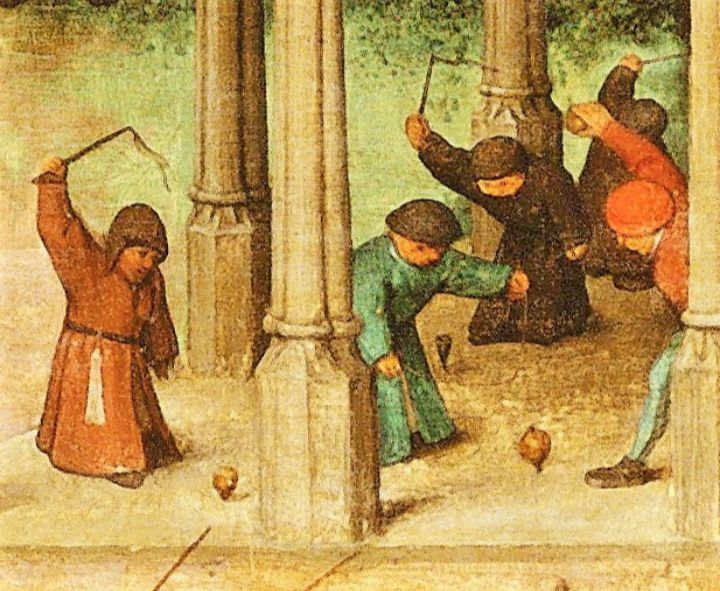
And it is the unlikely character of the Fool who proves the wisest, another Christian axiom, and it’s to him that Shakespeare gives possibly my favourite line of the play: “And thus the whirligig of time brings in his revenges”. A whirligig was a kind of spinning toy, like a top, and the image that Feste the Clown gives us is one of time spinning around, unsettling order, and then settling to give comeuppance to those who have done wrong, regardless of their station.
Yet there’s something about this line that doesn’t fit with Christmas, or with Jesus. Time isn’t impersonal; Jesus orders the seemingly chaotic whirligig of our days. And when they settle we do not fall prey to time’s “revenged”; instead, we return to solid ground to find our lives upended and transformed by the craziness and subversiveness of God’s grace.
 The Consolations of Writing