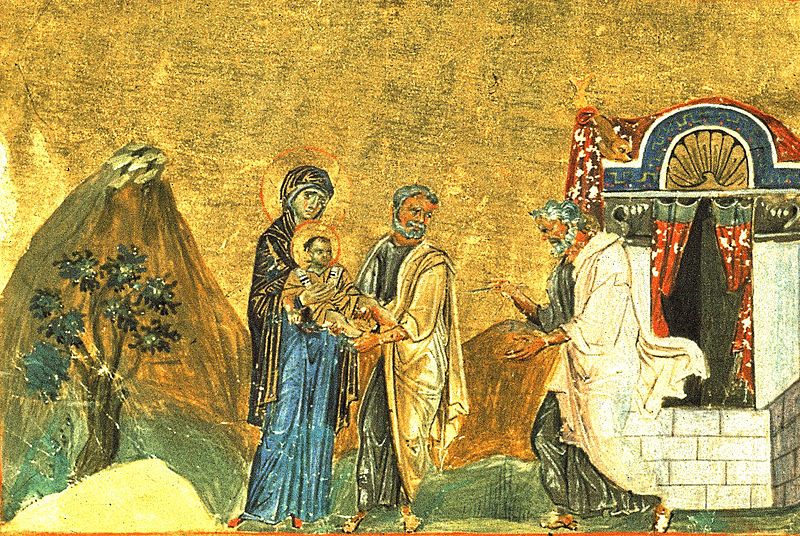
Possibly one of the more awkward moments in Christmas season is the feast of Jesus’ circumcision. If like me you grew up in the 90s and your view of circumcision has been somewhat influenced by Robin Hood: Men in Tights, that won’t help. But it’s historically a fact that Jesus, like all Jewish baby boys in his day, was circumcised eight days after his birth, and so today, the eighth day of Christmas, remembers this event. A quick scan over the liturgical art related to this feast will reveal roughly two approaches to representation of it: the hallowed and discrete, and the graphic. I suspect that’s because of a fairly understandable tension: in art Jesus even as a baby is depicted in an unearthly manner, attempting to convey his divinity, yet so much of the infancy narrative is earthy and dirty. It’s easy enough to see why the church has largely opted for simply a) recognising that this event occurred, b) never talking about it again and c) definitely never depicting it.
But why is this event remembered in the church year? Readings for today often come from Paul’s letters, reminding believers that circumcision of the body does not save, a point that only a few groups of Christians today would even question. Other common readings point to how Jesus fulfilled and surpassed the Jewish law. Both points are true and important. But there’s another detail, one that the iconography reminds us of: the extent to which the son of God took on our flesh and was fully embodied. This is something that two other very common readings throughout Christmas season remind us of. Both John’s gospel and his first letter begin with words of amazement and praise over the fact that God truly became flesh, possibly because in the church by the time John was writing had started to slip into some false teachings that said God couldn’t truly take on flesh; surely he only seemed human, leading to them being called “docetics” after the Greek word for “to seem”. No, John said, it’s extraordinary but it really happened.
We might not be tempted towards doceticisn today, but we certainly are tempted to avoid the awkwardness of our own bodies and the extent to which Jesus took on our flesh in all its fleshiness and awkwardness. Today, as little as I want to meditate on this event, I am grateful for the reminder that Jesus, in his love for us and obedience to the father, entered a world of bodies, took on a body, and was willing to suffer all the indignity that a body can suffer, so that our bodies could be transformed and tagged m raised into new and perfect life with him.

