Peace and the Thorn

“Mellow out,” they say. If I only could.

Adolescent patient quoted by Dr Michael Piechowski
Three times, the Apostle, says he cried,
yet three times denied:
within his side the unnamed thorn remained.
To fester? To infect? No, to be the site of grace,

for only this reply came: My grace
is sufficient; in your weakness will my power be complete.
And when He said weakness He meant
all the foibles and flaws you could name,
the whole litany of human frailty -
all the deal that He assumed
when He was flesh and frail like us.

And so we hope,
and like naked ones in the cold
crave to be clothed.
I for one shiver with shame
when laid bare by how stabbing thoughts
and fears betray me, how I wince
within, without, at every twinge that divides us,
every failed aim at peace.

Though I long
for numbness, or the certainty of some, I turn
in naked longing and set
the beating of an unquiet mind
to the slow, steady peace at the heart of Christ,
to the quiet words of the Word Made Flesh:
All shall be well. All this shall be well.
You too shall be well.

Lost Things

In a house where
daily I lose, misplace or break
what really, in eternity's view,
means little, yet
has power to make or break my day,

I understand
the urge to ask Saint Anthony where
my keys are, or my glasses, or
any other easily hidden thing.
God in heaven is surely
too busy with the business of souls
and perhaps too quick to point out that
my soul might be freer without
these Lost Things dragging it down.
Saint Anthony, I expect,
might take a kinder view,
being dead, and having this
in his official saintly purview.

And yet at times
when I might ask a saint and not a God, I recall
the stirring way He painted the heart
of the widow after her mite,
and the shepherd's flight,
and how far He Himself came
for every small, disposable
needless thing on two legs that roamed
foolishly, willfully, where it did not belong,
and I fancy
that God in heaven might
have eyes for lost things as small
and needless as mine.

Freeway Towns (After Kenneth Slessor)

Freeway towns
with your dusty browns

and shady grass
all moving past,

with parks astride
the freeway's side

and hearts that know
and streets that glow

in summer sun
at half past one,

that tolerate
our hasty gait

while moving on
to where we're from:

you watch it all,
while freeway's call

denies the chance
to meet your glance.

The moment gone,
we part unknown.

I wish I knew
the half of you.

Valedictions

Once the new year came
in a traffic jam, at Borneo's mouth,
when the crowds who'd fled early to escape the rush
now bid each other a happy one
between their cars across the street.

Another time it came while I
and a friend were lost in the midst of things,
driving from one house to another where
the champagne was chilled
and the view guaranteed.
Instead we drove
through a ditch and came
out at a set of lights where the lights
skipped across the shop rooftops.

Now I try convincing my
three boys that there's no party on,
while they fight through bedtime, crazed
from a day of irregular food and cars.
And where many can't wait to see it go
and say good riddance to the year that's been,
I suspect I'll say good night and catch
the fireworks from my sleep.

But after years and years and years
of deserts, each new year the same,
fighting to smile while others raved,
to see the evening slip to sleep
while my children slowly do the same,
I cannot say good riddance, only,
Thank You, thank You Lord.

The other side to success

Year 12 results come out today in my state, after a year in which no-one would have chosen to sit their final high school exams. I live through Year 12 results every year as a teacher and this year because of people close to me receiving results I’m experiencing it more close to home. This has given me pause to reflect on my own experience of getting my results 19 years ago.

I’ve been thinking in particular about something we tell all our students every year at my school: that “the number doesn’t define you”. Had someone told me that at the time, it would have sounded to me like a pat, “you’re all winners” kind of platitude. I also would have thought that it was something you said to prepare people for doing badly, but if they did well then it was fine to let it define them.

What people never tell you is that you’ll have to process how to handle the significance of your result whatever it is, high or low. If it’s low, or simply average, it might mean an adjustment of expectations in the immediate term. It might mean a change of preferences for tertiary study. It might mean a loss of dreams. But if you do well and you still let the result define you, then you’ll have to deal with the neverending question of how well is good enough. If you come to expect perfection, it’s never enough. Even if you attain perfection once, there’ll always be the challenge to maintain it, and that will either never happen or it will destroy relationships, mental health, and all elements of life that make you slow down and show grace to yourself and others. In other words, you might get a perfect score in your work but everything else will have to suffer, and you will probably find that it really isn’t worth it.

My VCE results got me into the course of my choice and meant that my uni paid for me to study with them. It also set a standard for myself in my head that I spent over a decade fighting to maintain. I still struggle with the pressure to seek perfection and to see no middle ground between perfection and failure. My academic results led to panic attacks throughout uni that then ate into my personal life and made panic my primary way of operating in all challenging aspects of life. And when I became a teacher, and then a husband, and then a dad, I entered realms of life in which hard work could never mean perfection. I couldn’t control my students’ results. I could never be a perfect husband or dad. I would always have to drop some balls some of the time. I may never be in the 99th percentile of life again and that needed to be okay.

The truth is that our English word “perfect” has lost track of its own meaning. It means “complete”. The Greek version comes from the word “telos” which means an end point, a destination. It refers to a point of arrival. Something is perfect when it has finished its job. I will not be perfect until my race is finished, and God willing that’s still a few years away. And the thing that will conclude my race and make it perfect is not my achievement but my dependence on grace. Grace enables me to love myself and others. Grace enables me to get up again in the morning, and to turn around and face my family again after I’ve blown a fuse or said something I regret. Grace makes my failures into successes and makes my successes into means of further grace not just for myself but for others. Without grace, I am all sound and fury, whatever number academic bodies attach to that sound, however socially acceptable the fury. With grace, everything – everything – is turned towards a perfect end.

That’s what I wish they told me about success 19 years ago. That’s why the number – whatever it is – must not define you. Only grace is worth that much.

Christmas Day: Let all the earth rejoice

You will go out in joy
and be led forth in peace;
the mountains and hills
will burst into song before you,
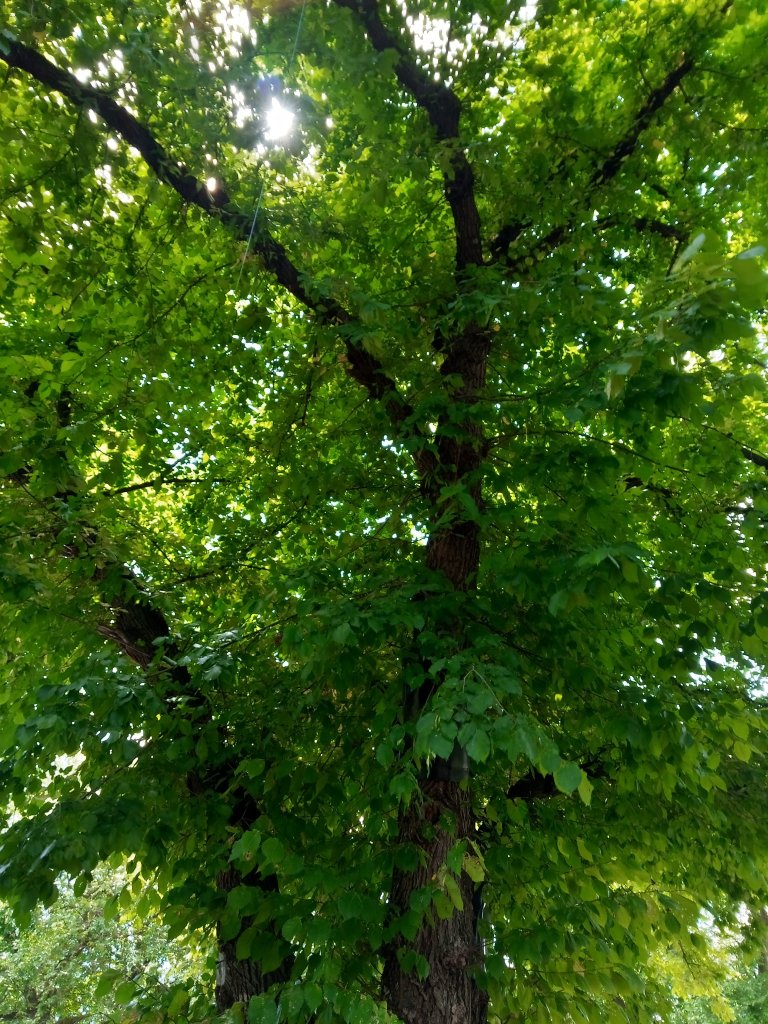
and all the trees of the field
will clap their hands.

Instead of the thornbush will grow the juniper,
and instead of briers the myrtle will grow.
This will be for the Lord’s renown,
for an everlasting sign,
that will endure forever.

Isaiah 55:12-13

Joy does not come readily to me. I am more comfortable with the solemnity of Lent and Advent than with the rejoicing of Easter and Christmas. I need these seasons to remind me that rejoicing should be part of my story – a significant part – yet I find seasons of waiting and longing easier to digest.

Yet the journey of Advent teaches me that, instead of accepting that this is as good as it gets, I should be longing with creation for all things to be made new. It also teaches me to see in Jesus the object of all our longing coming to make His home among us. And while I do not see Jesus face to face I can see Him in every face transfigured by His presence, and I can catch in everything that is exquisitely joy-inspiring the kind of beauty that He will bring with every footstep when He returns.

If I find it hard to rejoice, Jesus has space for me in His grace. Yet He also teaches me that I should rejoice nonetheless, if nothing else as a declaration that all things are being made new and that the old order of death is slowly dying with Life returning in its stead.

In a year of death, longing and waiting, we need this kind of deep, come-what-may rejoicing. We need it whatever lies ahead, because we need to train our hearts for the Joy that will one day trump everything else that has been.

Advent with the Prophet Jonah: Christmas Eve

The wolf will live with the lamb,
the leopard will lie down with the goat,
the calf and the lion and the yearling together;
and a little child will lead them…
They will neither harm nor destroy
on all my holy mountain,
for the earth will be filled with the knowledge of the Lord
as the waters cover the sea.

Isaiah 11:7, 9

The book of Jonah finishes with a question: if Jonah is willing to die in anger over the death of a tree he did nothing to nurture, then how much more should God be willing to do for the many He has made who do not know how to save themselves? Jonah is ready to die because of his anger; God is ready to die to end the enmity between us and Him.

We are born into enmity. Babies inherit the conflicts of their families, the age-old divisions between nations. Even those born into relatively peaceful relationships are nonetheless born into a world that is at war with itself. Jonah’s storm may have been orchestrated by God to get his attention but the whole fabric of our world today, glorious though it is, reminds us that even our weather does not function as it should; something is deeply amiss in how all things relate to each other. And in Jonah’s case that stretches to his complete failure to love his neighbour, even his failure to love God as he should.

But tonight we remember that another baby was born, into our enmity, into this rage of being flesh, yet came to end that enmity. A child came not to inherit all these griefs or participate in them but to lead us out of them, to put to rights the world itself and all relationships within it. We do not see all of this as reality yet; we wait in longing for it to be made complete. Yet on Christmas Day the hope is inaugurated; the little child leads us on to the day when we shall see Him as King, shall beat our swords into ploughshares and our flesh will no longer rage against us or God.

Maranatha. Come, Lord Jesus.

Advent with the Prophet Jonah: Day 25

But the Lord said, “You have been concerned about this plant, though you did not tend it or make it grow. It sprang up overnight and died overnight. And should I not have concern for the great city of Nineveh, in which there are more than a hundred and twenty thousand people who cannot tell their right hand from their left—and also many animals?”

Jonah 4:10-11

Jonah concludes in an oddly unresolved manner. For a story that could have finished at several different moments, it finishes here: Jonah still angry, his tree not restored, and only a question to conclude the dialogue between Jonah and God. But what it reveals is the intimate concern that God has for His creation. We see the apparent chaos of that creation – storms at sea, wild sea creatures, raging heat, worms that eat and destroy. Yet we also see the Creator deeply involved in His creation, and thinking of it, like a father for a child. Jonah’s petty rage over the tree dying is nothing compared to God’s care for the Ninevites who “cannot tell their right hand from their left”, a description that reminds me of Jesus’ concern for the crowds who were “like sheep without a shepherd”. Jonah in the end cares primarily for his own little kingdom; God cares for all His creation.

Perhaps that explains the animals. For me, the oddest part of the whole book of Jonah has always been the final line – “and also many animals”. Why do the animals need to be mentioned? Well, when we view sin as only harming humanity, the animals seem out of place, but if we remember that all creation suffers because of sin then the animals belong here. They too long for creation to be restored. And God is their creator as well as ours. They were not made in His image but they were made for His glory and He called them good. So of course their creator does not want to destroy them in a senseless shower or smoke. God is concerned for all He has made.

As Christmas draws ever closer, let’s remember this fact: Jesus’ Advent does not just save humanity; it restores creation. This is why the famous carol “Joy to the World” contains the words, “And heaven and nature sing” – because all creation declares Jesus’ Advent to be good. Jesus is making creation good again.

Advent with the Prophet Jonah: Day 24

But God said to Jonah, “Is it right for you to be angry about the plant?”

“It is,” he said. “And I’m so angry I wish I were dead.”

Jonah 4:9

Again, God asks Jonah if his anger is right, this time his anger about the destruction of the plant. And Jonah, oblivious to the way God is directing the conversation, insists that his anger is right, something I often insist upon myself when I am angry. The anger fills me with its own self-justification. All other context, all nobler concerns, fall away at the moment of anger.

Yet why is Jonah angry about the tree? And why angry to the extent that he no longer wants to live? If I were the one speaking to Jonah, I might suggest that his anger about the tree was really a diversion, that it was really Nineveh’s forgiveness that was angering him. But I think something else might be at work here: an anger at God’s decisions with His creation, to the extent that he wants to opt out of a life lived on God’s terms.

God forgives Nineveh but destroys Jonah’s tree: the whole thing goes against Jonah’s sense of what justice should look like. We often rail with Jonah about how the world works, and in Jonah’s position we might feel much the same as he does here. But Advent reminds us of two things that can speak to the Jonah in us: first, Advent agrees, with the voice of a longing creation, that the world does not work as it should, and Advent looks forward to the Creator decisively making it right again. Second, Advent declares that we are wrong about what is good and just for the God of the universe to do, because the God of the universe judges it right not to leave us to our own autonomous devices but to enter creation and turn the human fabric on its head.

Join Jonah in waiting to hear how God replies to our raging, longing flesh.

Advent with the Prophet Jonah: Day 23

When the sun rose, God provided a scorching east wind, and the sun blazed on Jonah’s head so that he grew faint. He wanted to die, and said, “It would be better for me to die than to live.”

Jonah 4:8

There’s a parallel moment to this in the Old Testament, when the prophet Elijah, after defeating the prophets of Baal, finds that Queen Jezabel is still out to get him. In a burst of adrenaline he runs and runs into the desert and finally, after an extensive time of not eating and reaching what today we would call complete burnout, he calls on God to take his life. It’s an interesting parallel: Elijah has been deeply zealous for God and has risked death multiple times; Jonah has fled from God, been spared death three times – once from the storm, once from drowning, once from the fish – only to reach this point of “burnout” because of God’s mercy. Yet this is not how the story feels to Jonah. To him, God has been unreasonable: God has shown kindness to Nineveh after all their evil and now has taken away the comfort he had amidst the heat and the discouragement of seeing your enemy get away with murder. In Jonah’s mind, he has been zealous for God; yet his idea of what God wants or expects is fundamentally flawed.

It’s important to distinguish what Jonah feels here from ongoing mental illness and suicidal ideation. These need to be treated sensitively and with great awareness of their complexity. Jonah seems more to have held wrong ideas about God and his place in God’s economy, and the discouragement, anger and burnout he feels here are symptoms of that false theology; and this is something that many struggle with unknowingly for a long time, often only becoming aware of it when we reach a crisis point like Jonah does here. At these moments of crisis, we need to interrogate our own assumptions about God, looking beyond what we declare to look instead at what we live out as true. In practice, that’s to say, what do we actually think about God and who we are before Him?

While this might be a frightening thing to confront, it need not be: Advent teaches us that God, whatever else we may think of Him, is a God who has chosen to be near to us, chosen to make Himself known to us, chosen the frailty of our flesh, our vulnerability, the way we burn beneath the heat of life; He has chosen to be one of us.