There’s a book I love which has a title almost as good as the book itself: A Long Obedience in the Same Direction by Eugene Peterson. I’ve been thinking a lot about this phrase recently, because I’ve been struck by how much of life is simply about perseverance, and Christian life in particular. Whether facing the long haul of fighting a global pandemic or the daily repeated struggles of parenting, I’m reminded that following God often means simply identifying the right things to be doing and to keep doing them, in God’s strength. Often even the act of living in His strength is a daily act of obedience: that moment of rising and saying, “I can’t do this today, but You can.” Even saying those words is hard and takes daily persistence.
Two circumstances in my life have particularly made me think more about this. The first is that I’m coming to the end of a very long period of theological study. I began studying theology in 2009, when I was a relatively new teacher and was just about to embark on a short term mission trip to South East Asia. The mission trip felt largely a failure and I only managed two subjects before deferring for several years, resuming in 2017, the year my eldest son was born. I felt fairly sure I wanted to be an ordained minister then. Now that doesn’t seem so likely, and I’ll be graduating at the end of this semester with a Graduate Diploma instead of the Masters I enrolled in. There’s disappointment and relief in equal parts in this turn of events. But mostly I don’t know what all the years of study have been for or where they are taking me. But I press on.
The second factor is a much more earthy one. My wife and I are toilet training our 2-year-old twins, and anyone who has ever toilet trained a child will be able to imagine how tiring and challenging this is. Yet I was strangely comforted when, in the midst of all of this, I found myself writing an essay on Martin Luther’s theology of vocation and found him speaking both of his son sharing his faeces around the house and also of the spiritual value in faithfully changing a dirty nappy. Luther, I learnt, challenged the mediaeval perception that obedience to God entailed grand acts: penance and pilgrimage in particular. No, he said, keep doing what you are doing (in loose paraphrase!) and be obedient wherever God has placed you.
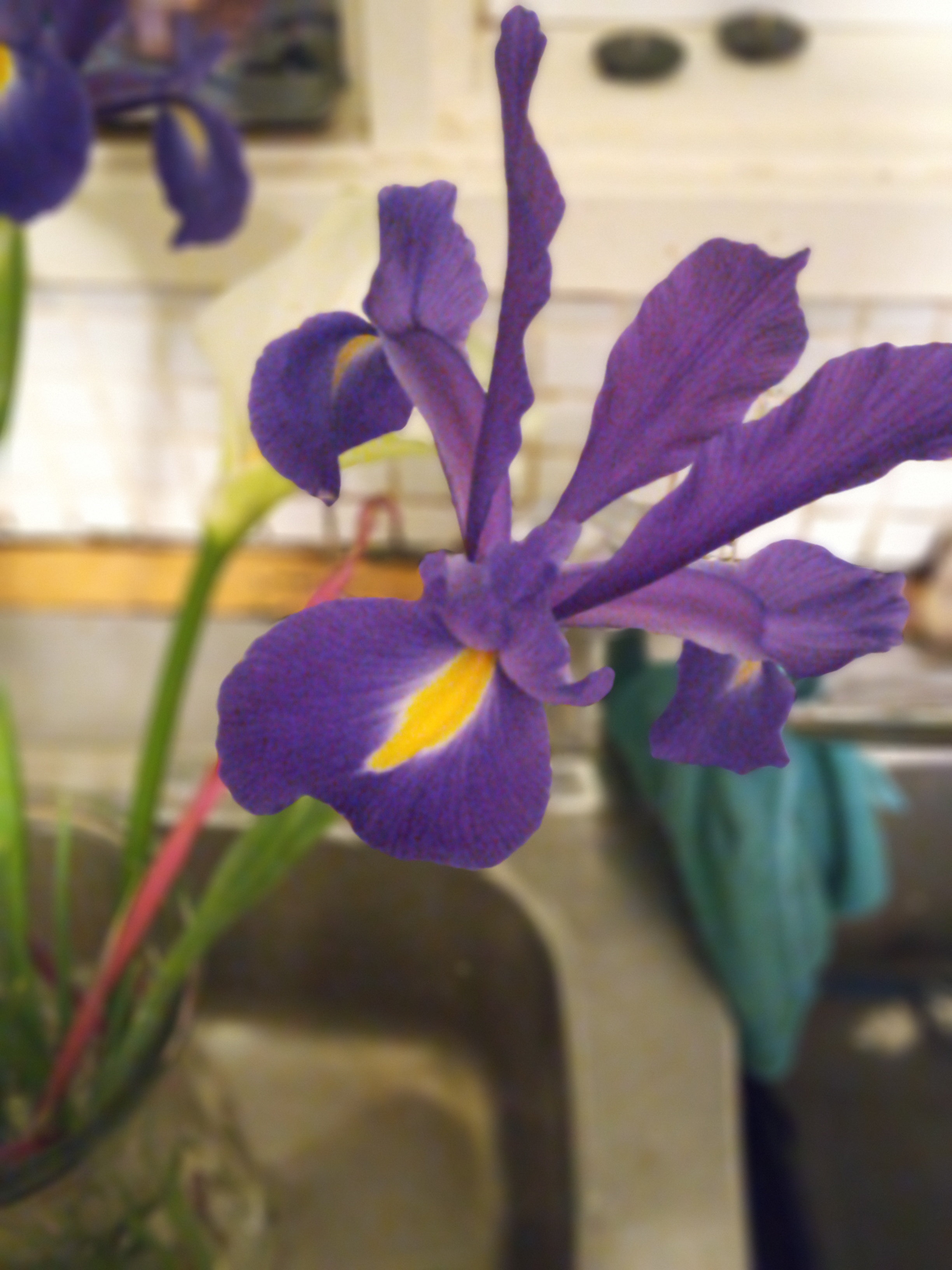
And so I seek to be obedient. I wash dishes and clean dirty underpants. I write essays and try to go to bed early so I can rise to my sons in the night. And sometimes, like these irises that I found my wife had placed in the sink in between my interrupted attempts at doing the dishes, beauty appears in the dirt and grime of our everyday obedience. Undoubtedly God appears, but we have to look faithfully at the tasks set before us if we are to expect to find Him there.





 The Consolations of Writing