A Mindlessness Prayer

These days when all of the socks are odd
and all your thoughts are scrambled eggs
and, try as you might to talk to God,
nothing much makes any sense,

for the rubbish awaits in noisome piles,
the bills are due and so’s the tax
and the laundry measures its depth in miles
and the devil has pains for idle backs –

unjumble yourself in a heap at Christ’s feet;
ramble and rant to the maker of ants
and all that creeps the planet, replete
with all its tangled, unnecessary plants;

rejoice to be useless and childlike and weak;
rejoice that you cannot make anything work;
rejoice and delight that the end of the week
will come round regardless of what you deserve;

and delight to know that mindless you are
yet He who is mindful of you holds the stars.
“Can they bring the stones back to life from those heaps of rubble?”

When David’s son scanned
the spiritual wreckage that was His house
and delared, “Destroy this
and I’ll raise it in three days,”
He meant
what He said not as
metaphor – which my students all know
is a kind of lying, a hedging of bets –
but as Truth, both in symbol and fact.
Daily they destroyed this house, and He,
the true house, would raise it,
would turn dull rubble to praise Him.

And when palm branches waved
in Passover praise, and these
Sanballats of another age raved,
and He silenced them, likened them
to duller than stone, for stones
could be turned to a chorus of praise –
I wonder if He turned in mind
to Nehemiah, with
his sword and his trowel, who
knew certainly how
our best laid plans make the best laid rubble
until all our rubble
is animate, raised
and taught again
to praise.

This Mess

I stubbed my toe on a London bus;
it stood in the doorway, just under us.

And by the door a bright Tonka truck
lay just where an unsuspecting limb got stuck.

And in the night a train might stray
far from its tracks into my way;

and you, dear you, might show up right
when I would rather turn in for the night

yet love is seldom a smooth affair,
and ground is better than ideal air.

True, I’d prefer to not stub my toes,
but love must bleed; that’s the way it goes.

Instruments: For Francis of Assisi

Today the church remembers St Francis of Assisi, so here is a sneak peek at a new poem I wrote based on his life and ethos for The Swelling Year.

Instruments (For Francis of Assisi)

All our instruments tend to dischord.
We turn away from harmony
in search of our own tunes.

Brother Jesus, in leper’s dress, welcomes us.
We leave Him with His bell and seek
better jewels and robes.

The channels of our hearts are noise.
Only little buds whisper the wonder
that God came as child.

Christ who died for life’s sake: teach
my miser-heart to be a pauper for love,
breathing into death.

“Consolation” – Elizabeth Barrett Browning

I don’t normally share other people’s work here but I read this gem this morning and it was so precious – especially the ending – that I thought I had to post it.

Consolation – Elizabeth Barrett Browning

All are not taken; there are left behind
Living Beloveds, tender looks to bring
And make the daylight still a happy thing,
And tender voices, to make soft the wind:
But if it were not so—if I could find
No love in all this world for comforting,
Nor any path but hollowly did ring
Where ‘dust to dust’ the love from life disjoin’d;
And if, before those sepulchres unmoving
I stood alone (as some forsaken lamb
Goes bleating up the moors in weary dearth)
Crying ‘Where are ye, O my loved and loving?’—
I know a voice would sound, ‘Daughter, I AM.
Can I suffice for Heaven and not for earth?’

Botany for Children

The touseled children
have their own way
with trees,
their own classification…
(Chris Wallace-Crabbe, “Timber”)

Some are named for likeness
to familiar things: the lemon tree
in Nanna’s garden becomes
a prototype for all other trees
in all other gardens.

And some are named
by analogy or comparison:
big tree, little tree,
special tree; and what
is bottlebrush but a metaphor turned
to proper use?

Yet others gain
the specificity of the eager learner,
like Adam flushed
with the daily discovery of all
living things and growing things,

and as tongue learns it way
around the tangled mechanics of thought,
a surprise clarity: paperbark!
a joyful melaleuca.

Memento Mori: After Chris Wallace-Crabbe

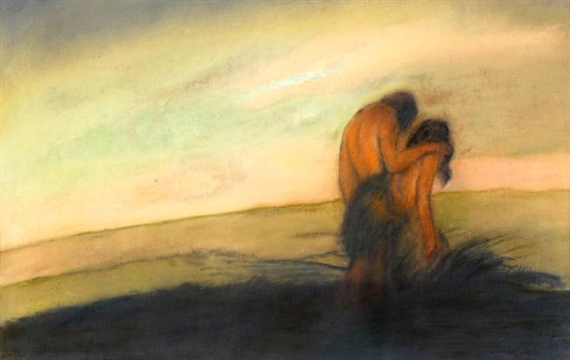
abel pann
Abel Pann – Expulsion from the Garden of Eden

And Adam, seeing that
immortality had not clothed him but
left his glory naked,

felt in his body the future ache
of all who would toil and moil
their mortal days, and

taking Eve’s hand, he hid
their rude-awakened flesh
in the quiet of a deceitful glade

while the immortal searched
to clothe them and teach
their mortal bodies again to praise.

I, like Adam, fancy myself a god
and hide when my flesh
exposes the subtle dream.

Yet in the cool of the day,
when the creator covers my failing skin,
I can learn it is better

to be clothed by Him.

Bloom

Those who sow with tears
will reap with songs of joy.
(Psalm 126:5)

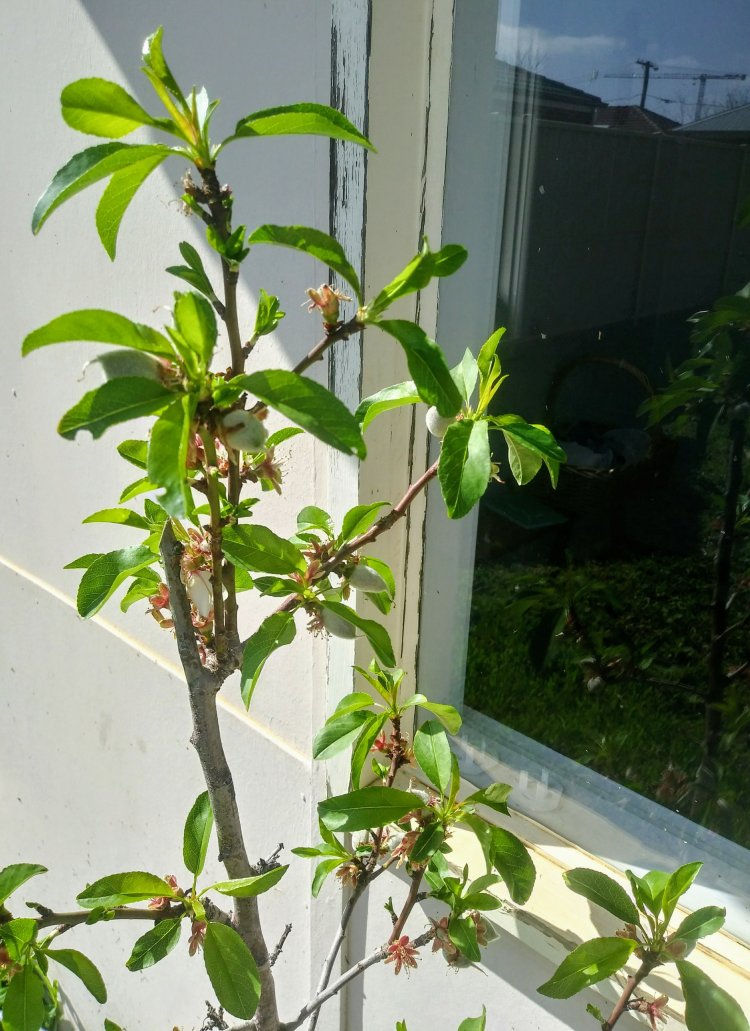
You’ll be glad to hear your tree is sprouting leaves
and in the midst of blossom, tiny fruit.
Your little brother’s learning all the names
for almond, flowering gum and bottlebrush;
yet you by now will know far more than this.
The grass is thriving; this week we had it mown
and all about’s the fragrance of fresh lawn.
All this you’ve never seen: the buzzing stuff
of life, but life for us waiting like
an almond tree, a hopeful Jesse-shoot.
The bursting things of spring have nothing on
the harvest feast that sings where you now dwell.
We never knew your smile, yet this we’ve known:
for every tear we’ve shed, a seed is sown.

My own garden I have neglected

Gather your spiritual bouquet…
(Francis de Sales)

Plenteous winter rain left
the backyard a grassy forest
where mallow and clover ran riot
and kikuyu spread its runners wide.
The rhizomatic tangle, lush and unbeatable,
enfolded in itself a toddler’s trucks,
a sandpit shovel, a bouncy ball, a peg,
and I, bent on order yet at odds with nature,
push a feeble mower through the shin-high jungle,
and vainly seek a clearing
to untangle my mind.