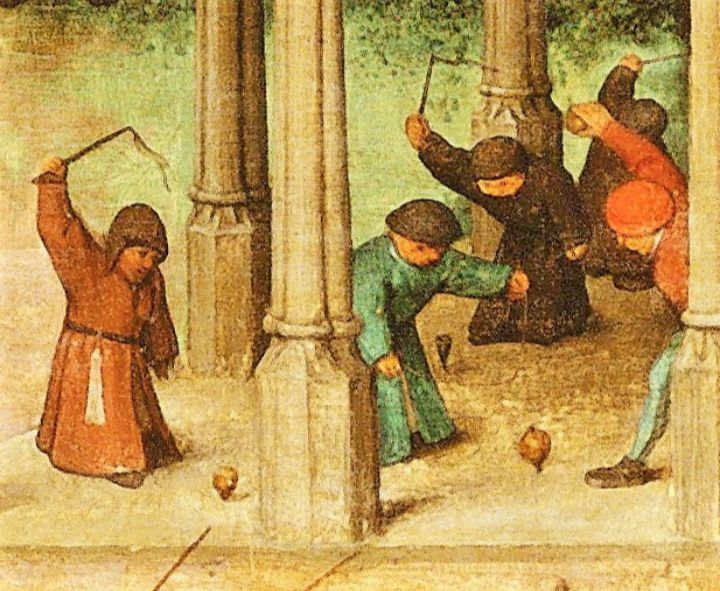
Detail from Children’s Games by Pieter Bruegel the Elder, c.1560.
Today was the first proper summer day of the year in my home city, and the first in several weeks, so I and many other Victorians migrated to the beaches to enjoy it. And the beach is not a bad place to see in the last day of Christmas, particularly if you want Shakespeare’s Twelfth Night to accompany you. No, I wasn’t reading Shakespeare on the beach; my children would never have let me. But, if you know the play, you’ll probably remember that it starts out with a storm at sea that separates a pair of twins. (Fittingly, I was there with my twins, so I was ready for a performance if the occasion arose). The sea in Shakespeare is often a potent metaphor for fate; the phrase “sea change”, which in my society makes most people think either of a romantic comedy series from the 1990s or of moving to the beach for a new lifestyle, actually comes from another nautical comedy of Shakespeare’s, The Tempest, and refers to the way that fate can be tossed about in surprising ways by the ocean, but also by the unpredictable lives we lead in the modern world. And yes, Shakespeare’s world was modern: the very beginning of the modern world, where the predictability and order of the mediaeval world was thrown up into the air, or lost at sea.
Twelfth Night is a play full of this kind of chaos and upheaval, and its name – probably a reference to the night on which it would have been performed at court – also shows its connection to the twelve days of Christmas, a kind of English carnival where social roles were often tossed about, including traditions like appointing a child to be bishop for the season, or selecting a “Prince of Misrule” who would preside over the festivities.
This might sound a little unrelated to Christmas, and certainly has something to do with why the Puritans, already emerging in Shakespeare’s day, saw Christmas as a pagan tradition to be opposed. But on the other hand it has a lot to do with Christmas. After all, what is Christmas but the ultimate upheaval in the world’s norms and hierarchies. Mary points to this at the start of Luke’s gospel in her famous song when she declares that God ”has brought down rulers from their thrones but has lifted up the humble” (Luke 1:52). In its way, this is what Twelfth Night is all about: greatness being taken from the haughty and given to the lowly. The famous saying that “some are born great, some achieve greatness and some have greatness thrust upon them” is actually from this play, and though comedic in its context, it resurfaces more seriously at the end when the antagonist gets his comeuppance and the protagonists defy expectation to succeed.
And it is the unlikely character of the Fool who proves the wisest, another Christian axiom, and it’s to him that Shakespeare gives possibly my favourite line of the play: “And thus the whirligig of time brings in his revenges”. A whirligig was a kind of spinning toy, like a top, and the image that Feste the Clown gives us is one of time spinning around, unsettling order, and then settling to give comeuppance to those who have done wrong, regardless of their station.
Yet there’s something about this line that doesn’t fit with Christmas, or with Jesus. Time isn’t impersonal; Jesus orders the seemingly chaotic whirligig of our days. And when they settle we do not fall prey to time’s “revenged”; instead, we return to solid ground to find our lives upended and transformed by the craziness and subversiveness of God’s grace.
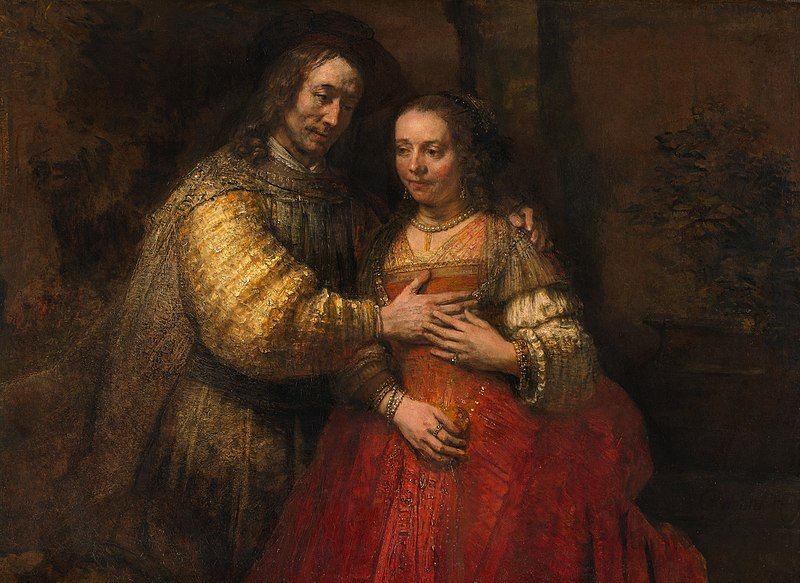
Het Joodse Bruidje, Rembrandt van Rijn, c.1665‒1669
We’re nearly at the end of Christmas season, and, if we’ve managed to stay focused on the season and not on all the busyness of the new year, we may be beginning to wonder where to put our attentions now. Traditionally tomorrow would be the time for the big party (the Twelfth Night that’s mostly only remembered now because of Shakespeare’s play). But what do we do today? The readings for the day are not much help. We’ll have sat with daily readings from 1 John 1 and Isaiah 8. This morning we might have read the next stage of the story of Ruth and, though we know where the story is leading, we’re not there yet. Boaz can’t step in as Ruth’s next of kin until he has given first right of refusal to another man. All round, it’s one of those odd, nothing sort of days that, really, are pretty common in the human experience.
But the now-and-not-yetness of the day is an apt way to near the end of this season. We have celebrated Jesus’ birth; we have proclaimed the king’s birth. But what now? Much like Ruth, hopeful that Boaz will come good, like Mary waiting to see what her child will do, we live much of our lives in this in-between world.
It’s also a common experience even when the thing for which we have been waiting arrives but proves to not be as we expect. We may be waiting for the relationship, the job, the child, the big career break, yet find that it isn’t completely fulfilling. Because nothing that we experience in this life is everything we hope for.
And this, I think, is why the Bible uses human marriage as a metaphor – and it does so many times in the readings for today. Because, much as the world of the Bible, and the world of today, may have seen marriage as the resolution to all tensions and longings, even this is not the final consummation of human longing. Marriages sometimes fail; and they always fail to fully satisfy. Yet they point to something key: our longing to be cherished, and to be perfectly united to another. This is not something we ever experience fully here in this life. So we live out the metaphor, and in its incompleteness await the real. Just as Jesus’ birth showed that God was fulfilling His promises, we all still live in wait for this fulfillment to be made known perfectly. We still wait for the final, full satisfaction of our longing in Him.
And so, on this eleventh day of Christmas, we wait. In hope. And we live in expectancy, however hard the wait may prove.
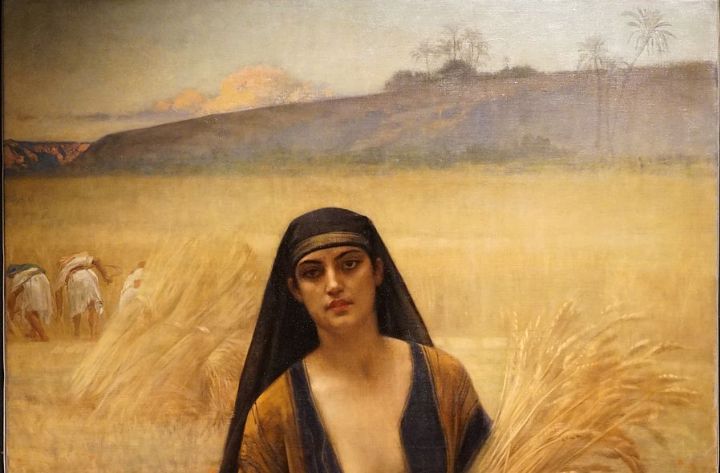
Detail from Ruth Gleaning by Alexandre Cabanel c.1845-1887
At first there’s nothing especially Christmassy about the story of Ruth from the Old Testament. It doesn’t have the messianic promises of Isaiah or Hannah’s song. There’s nothing about kingship or a promised saviour. So why is it one of the readings for today, the tenth day of Christmas?
Ruth’s is a story where most of its wonder lies in the background, in the margins. And hers is a story of margins. A foreigner, a young widow, Ruth is vulnerable on many levels. She’s a Moabite, a descendant, the story goes, of the incestuous union between Lot and one of his daughter’s. Ruth’s marriage to an Israelite would have been scandalous, and the sudden death of her husband, brother-in-law and father-in-law would have made her surviving mother-in-law Naomi appear cursed. She may even have seemed part of the curse.
Yet, instead of being a source of curse to Naomi, she brings favour to a devastated group of vulnerable women. First, Ruth receives protection from Boaz, Naomi’s relative, who keeps her safe from the unwanted attentions of his male workers. (Why he doesn’t call out their behaviour more directly, and for all women’s sake, not just Ruth’s, is another matter.) Then she also receives extra grain when he ensures she can glean more than usual. Gleaning was always the food source of the poor and vulnerable; Ruth in her gleaning receives an abundance.
Now this might all be interesting, and a little problematic, but it’s still not very clear what any of this has to do with Christmas. Except when we read the end of the story and find that Ruth and Boaz’s son Obed becomes the grandfather of King David. And through this Ruth also becomes one of the key women to feature in Jesus’ family tree in Matthew 1. Not only is the shame and suffering of her family turned to abundance, but she is also a source of blessing to Naomi and then to the whole world.
The story remains messy. Boaz’s motives cannot be seen as perfectly pure when he a) fails to stop the mistreatment of other women gleaning on his field and b) gets to marry a beautiful young woman in exchange for his altruism. Yet the problematic parts of this story are part of its power. It’s messy, and God uses mess to work redemption. God uses our imperfect, even downright evil, intentions to work good. And God sees the marginalised and vulnerable, and not only redeems them (that word “redeem” is particularly significant in the story of Ruth) but also uses them to redeem others.
And this continues long into the story, with a poor unmarried teen mother giving birth to the saviour of the world. And it continues long beyond that, to you and I and our whole messy broken world being grafted into God’s wonderful and unexpected redemption story.
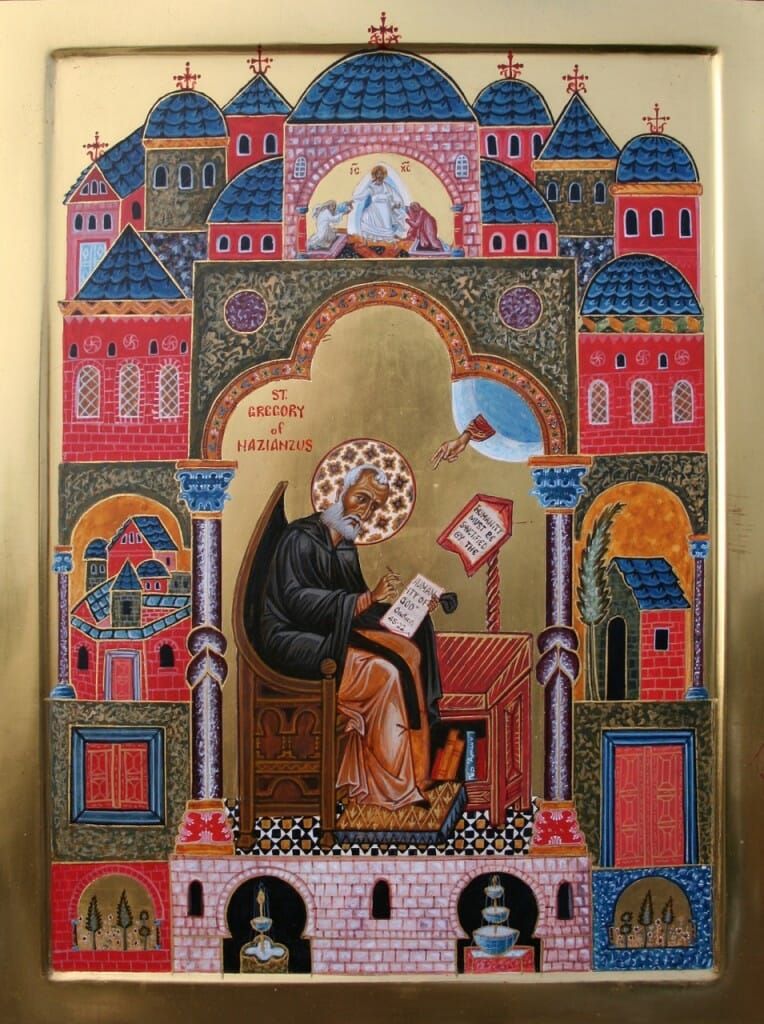
Icon of Gregory of Nazianzus by Aidan Hart, Source: orthodoxartsjournal.com
Fittingly, after yesterday reminded us that Jesus was – and is – fully God and fully human, today we remember one of the early church leaders who did much to ensure the church held on to that truth. January 2 in the western church calendar remembers two of the Cappadocian Fathers, Basil the Great and Gregory of Nazianzus. Gregory, a theologian and poet, is famous for leading the Council of Constantinople that developed the Nicene Creed, as well as formulating a lot of the language that the church today uses to talk about the Trinity and the divinity of Christ.
Yesterday we saw how people have always struggled to come to terms with Jesus’ divinity and his humanity being in complete union. One of the particular challenges to this idea in Gregory’s day was the teaching that Jesus had a human body but not a human mind. Now, this is a particular distinction that may not make much sense to us today, because so much of what we think about the “mind” is now captured in our ideas of the brain, and they really can’t be separated from the body. But in the ancient world, even in the early modern world, mind and body were commonly split in people’s anthropology, and it says much about this particular worldview that it struggled to conceive of God having a human mind.
That said, I think we often fall into a bit of a mind-body split in the church today. The purity culture of 1990s Evangelicalism that I grew up with talked about your “thought life” and we often struggled to have a pure “mind”. While watching your thoughts is an important part of discipleship, it can’t be separated from our bodies. Try thinking clearly, or purely for that matter, when you’re tired and hungry, and then try again after a good night’s sleep and a healthy meal, and you’ll see what I mean.
The good news, Gregory of Nazianzus says to both his day and ours, is that if Jesus has both a human body and a human mind, he saves all of us. In fact, making a point more commonly found in Orthodox theology, all of us can be “assumed” into God (unified into God) because Jesus has taken on all of our humanity. We are not just saved bodies with our minds left unsaved; we are saved to the uttermost, even our minds or, as we might say today, our neural pathways.
It also says that the innermost, private part of ourselves – our hidden thoughts – are not cut off from God, as though our bodies carried out an appearance of salvation but our minds kept the truth secret. No, Jesus with his human mind has the power to save the most hidden recesses of our minds.
As someone who has struggled with mental illness for most of my life, for whom the often dark world of my thoughts can feel furthest from salvation, I am greatly comforted by this aspect of Jesus’ saving work and incarnation that Gregory of Nazianzus preserved. And I hope you are too.
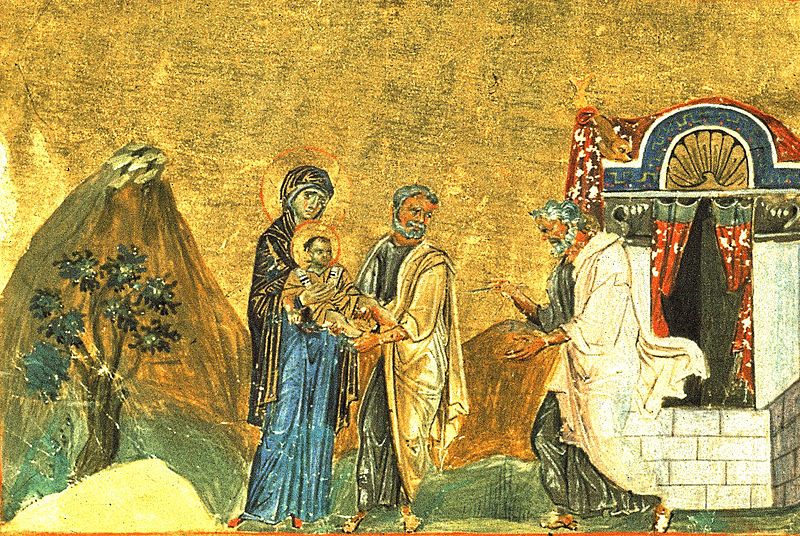
Circumcision of Christ, from the Menologion of Basil II, 10th Century CE
Possibly one of the more awkward moments in Christmas season is the feast of Jesus’ circumcision. If like me you grew up in the 90s and your view of circumcision has been somewhat influenced by Robin Hood: Men in Tights, that won’t help. But it’s historically a fact that Jesus, like all Jewish baby boys in his day, was circumcised eight days after his birth, and so today, the eighth day of Christmas, remembers this event. A quick scan over the liturgical art related to this feast will reveal roughly two approaches to representation of it: the hallowed and discrete, and the graphic. I suspect that’s because of a fairly understandable tension: in art Jesus even as a baby is depicted in an unearthly manner, attempting to convey his divinity, yet so much of the infancy narrative is earthy and dirty. It’s easy enough to see why the church has largely opted for simply a) recognising that this event occurred, b) never talking about it again and c) definitely never depicting it.
But why is this event remembered in the church year? Readings for today often come from Paul’s letters, reminding believers that circumcision of the body does not save, a point that only a few groups of Christians today would even question. Other common readings point to how Jesus fulfilled and surpassed the Jewish law. Both points are true and important. But there’s another detail, one that the iconography reminds us of: the extent to which the son of God took on our flesh and was fully embodied. This is something that two other very common readings throughout Christmas season remind us of. Both John’s gospel and his first letter begin with words of amazement and praise over the fact that God truly became flesh, possibly because in the church by the time John was writing had started to slip into some false teachings that said God couldn’t truly take on flesh; surely he only seemed human, leading to them being called “docetics” after the Greek word for “to seem”. No, John said, it’s extraordinary but it really happened.
We might not be tempted towards doceticisn today, but we certainly are tempted to avoid the awkwardness of our own bodies and the extent to which Jesus took on our flesh in all its fleshiness and awkwardness. Today, as little as I want to meditate on this event, I am grateful for the reminder that Jesus, in his love for us and obedience to the father, entered a world of bodies, took on a body, and was willing to suffer all the indignity that a body can suffer, so that our bodies could be transformed and tagged m raised into new and perfect life with him.
Ancient Assyrian diadem (Source: bible-history.com)
Today is simply called the “First Sunday After Christmas”. Because Christmas Day roams throughout the days of the week from year to year, the first Sunday after Christmas could arrive anywhere between one and seven days after Christmas Day. In churches that observe this day, you may well hear this passage from Isaiah being read:
The nations shall see your deliverance, and all rulers shall see your glory;
Then you shall be called by a new name which the mouth of God will give.
You shall be a crown of glory in the hand of the Lord, a royal diadem in the hand of your God.
Isaiah 62:1-3
When I first read this passage many years ago, I’ll admit I assumed a diadem was like a diamond. It turns out it’s not. It is a wreath-like crown reserved only for the king to wear. If you do a Google image search for “royal diadem” you’ll find all manner of crowns, many of them English, and this won’t particularly help you identify the kind of crown Isaiah is talking about. But I’ll also find several pictures of crowns with this verse emblazoned over them, often accompanied with words about embracing your identity as royalty in God. Which is an encouraging thing to tell someone, except that it’s not really what Isaiah is saying. Actually, rather than being crowned with a diadem, and this becoming royalty ourselves, we are the diadem. We declare and illuminate God’s royalty.
Is this a step down from being royalty ourselves? Possibly. If we want to think of ourselves as kings or queens, it might be a letdown to find ourselves being the jewellery of the king. But it’s actually quite amazing that this is what we are. You see, Isaiah was writing to a people in captivity. The kings who had defeated them, to their agonising shame as God’s people, would have worn royal diadems. And here was Isaiah telling them: These fake kings with their earthly diadems won’t have the final victory; I will. And when I do, I’m putting you all on my crown, as the beautiful jewellery I deserve to show that I am king.
If we aren’t astonished by this, I think we’re missing something. Yes, we are called children and heirs of God when we trust in Jesus; yes we become a “royal priesthood”. And this is extraordinary too, and deserving of our attention. But just imagine a conquered people being told that their God hadn’t failed; He was still king, and when He came back to power as king, he’d be bringing back the ones he had disciplined, and putting them in prime place on his head to show everyone His royalty.
Can you imagine God doing that? Can you imagine God doing that to you? I certainly can’t. It contradicts everything I think about myself, everything I fear about God.
But then, we are still in Christmas season, and so it is not so long ago at all that we remember the king of the universe coming to visit His people, not on a golden chariot flanked by servants, but as a baby, born into poverty and disgrace, lying in a feeding trough for animals, omnipotent but a helpless baby all the same.
When I think of this, then I can start to imagine a God who would place me in pride of place, as His royal crown.
When I was in my first year of high school and attending the local Anglican church with my parents, my school principal led a Bible study during the service for the handful of teenagers there. At the end of the year, he presented each of us with a book and a card for Christmas. Nearly thirty years later I still remember the verse on the card:
The people walking in darkness have seen a great light; on those living in the land of deep darkness a light has dawned.
Isaiah 9:2
In later years I would also sing other famous words from that passage when the school choir performed the famous chorale from Handel’s Messiah: For unto us a son is given... Both music and my principal’s card have endured these words stay readily in my head and today when I saw verses from this passage in morning prayer for this sixth day of Christmas both came back to mind instantly.
And, thanks to Handel, we rightly connect these words to Jesus. But we don’t often look at where they sit in the book of Isaiah. They come after two chapters in which the names of children and the image of darkness are given particular potency. Faithless King Ahaz has refused to ask God for a sign from Isaiah of what lay ahead for his kingdom, and so God has given him a sign anyway: Immanuel, God with us, a word of comfort for the faithful, a word of warning for the faithless for whom God’s immediate presence may not be so comforting.
In the chapter that follows, God gives more signs through the children he gives to Isaiah and the names he tells him to give them. Each name signals the judgement that lies ahead. Isaiah also finishes chapter 8 warning those who listen to false prophets – the ones who promise military victory and require no humility or faith – that they will be put in darkness and won’t be able to see the truth.
It’s into this scene that Isaiah 9 comes blazing with hope: light for those in darkness, and a child born with a promise in his name. And what is his name? Nothing less than the “mighty God” himself, the “Prince of peace”.
Unless we know how much our human rulers and leaders fail to save us, we won’t appreciate how amazing it is that God has come himself to save us. And we will only know how incredibly life and world changing Christmas is unless we know that we need saving. Only then will we hear the real triumph in Handel’s chorale and be able to fully sing along.
I recently saw a meme containing the caption, “My life is a series of things keeping me from reading my book.” Sometimes, I must admit, I feel like this. Though when I look over the 120+ books I have read this year, I’ve clearly managed to read somehow.
My identification with that meme says much about a fairly central tension in my life: as a reflective, imaginative introvert, I long to hide myself away in books. Yet, also loving people deeply, I am pulled away from books to give my time and attention to those around me.
But when I think about the best books that I have read this year, the tension has not really been so real. Over the past few years I have sought out diversity in my reading, and this diversity has helped me to immerse myself in a wide range of life experiences that help me to understand and love others better. At their best, books are not an escape from life; they enable us to live better. The books contained in this year’s list have done that for me.
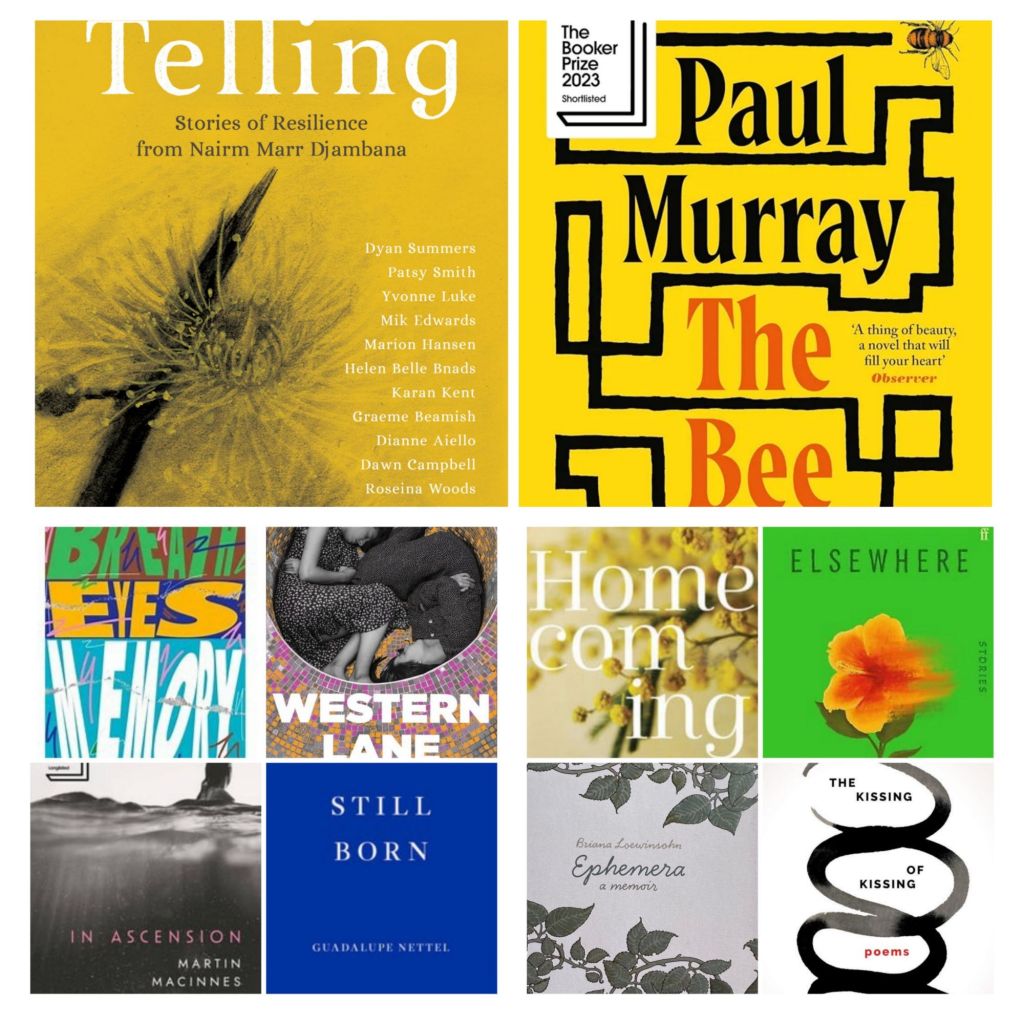
So here, for the third year running, is my overview of the best books I have read this year. Unusually for me, most of these books are very recent, either coming out this year or the year before. This is partly because 2023 has been a wonderful year for books, partly because there is so much happening in the literary world right now to ensure a diverse range of voices is being heard that I find myself barely scraping the surface of the riches to be discovered. This year I’m also adding a new category to my list, graphic novels and comics, because I am discovering the richness of the voices and perspectives that are found in that genre right now.
Novels
1. Abide With Me – Elizabeth Strout
One of my most beloved discoveries of recent years is the novels of Elizabeth Strout. In eighteen months I read all but one of them, and this her second novel is probably my favourite. I first met the main character in last year’s Lucy by the Sea, which brought together every one of Strout’s novels, and I was stunned by every moment of this story of a grieving widower minister and his young daughter who had barely spoken since her mother’s death except once to say, in Sunday school, “I hate God.” The story of how father and daughter learn to walk together in their grieve is touching and beautiful. Strout is not a Christian herself but the novel is profound, tender and spiritually profound.
2. Western Lane – Chetna Maroo
I would never normally expect a novel primarily about squash to be interesting but Western Lane earns itself the distinction (alongside its sightly more prestigious Booker nomination) for being a sport story that had me hooked. It’s also a story of a migrant family in England negotiating cultural isolation and the pressure on migrant families to succeed. It is a sparse, quiet novel of remarkable power and luminosity.
3. The Colony – Audrey Magee
It has been an amazing decade so far for Irish literature. Three Irish writers have made it into my list this year, and many more could be mentioned. The Colony is a delicate and agonising story of two men trying to exercise their own control over an Irish island, one of the last places where only Irish is spoken, one using language, the other art, to assert themselves on the place and on the same woman. It is a painful novel in many ways, and the setting of the Troubles is violent and shocking. But it is also lyrical and vivid, and brings to life familiar historical events in surprising ways.
4. Still Born – Guadalupe Nettel
This contender for the Booker International Prize is a deeply moving story of motherhood from the perspective of a woman who has chosen not to be a mother yet experiences the joys and pain of bringing children into the world through those close to her. It reminded me in some ways of the more tender moments of Patricia Lockwood’s No-one Is Talking About This and is equally devastating.
5. Breath, Eyes, Memory – Edwidge Danticat
I first discovered Danticat last year when I read a stunning collection of her short stories and then her wonderful novel Clare of the Sea Light. This year her first novel was re-released, giving me the chance to get hold of a copy. It’s much rawer than her later work but still as powerful in its depiction of the lives of Haitian women doing their best to survive intergenerational trauma. It comes with significant trigger warnings around sexual abuse and suicide but there is also much beauty and hope in its pages.
6. In Ascension – Martin Macinnes
I’ve always been a bit of a sucker for existential Sci-Fi and this 600+ page novel had me hooked from the start despite its daunting length. There’s more science in it than I could really get my head around, but the reflections on the nature of all living things, from gut bacteria and algae to human life, is extraordinary, and it takes you from the depths of undersea trenches to the edges of the solar system. A remarkable feat of contemporary literature.
7. The Bee Sting – Paul Murray
Another from the Booker shortlist, and another epic. An extraordinary and engrossing polyphonic story of one Irish family and all the interweaving stories that have made them what they are. The ending is virtuosic and suspenseful to the last second and will leave the book lingering in your mind long after it is over.
8. Mullumbimby – Melissa Lucashenko
A hilarious and deeply moving story of a single Aboriginal mother living on country in Northern NSW and finding herself caught up in a Native Title battle. Lucashenko is very down to earth yet profound at the same time.
9. Pearl – Siân Hughes
A haunting saga of grief, mental illness and the stories we tell ourselves to cope with loss, Pearl weaves together Mediaeval folklore, nursery rhymes and family struggles to create a rich, powerful and ultimately healing tale.
10. Animal Life – Auður Ava Ólafsdóttir
An Icelandic novel about a midwife preparing for a wild winter storm does not sound immediately compelling to most readers. And the fact that the plot is significantly occupied by the narrator reading the often incoherent papers of her midwife great-aunt does not help this become blockbuster material. Nonetheless, it’s a tender, touching and surprisingly funny exploration of a world at once austere and warm, and a journey into the wonder of our shared human life.
Poetry
1. Deaf Republic – Ilya Kaminsky
I first read the devastating “We Lived Happily during the War” last year when Ukrainian poetry about war became particularly poignant. Kaminsky, now living in America, wrote this allegorical verse novel in 2019, before the current war broke out. Yet it feels very prescient. Deaf himself, Kaminsky uses the metaphor of deafness alongside voicelessness to convey powerlessness against oppression and the various ways we attempt to hold on to agency in a world being destroyed by tyranny.
2. Homecoming – Elfie Shiosaki
This extraordinary sequence of poems by an emerging talent draws much of its inspiration from archival documents of Shiosaki’s Aboriginal grandparents, often including found text from these documents. Particularly powerful is the series of letters her grandfather wrote to A.O. Neville, the “Chief Protector of the Aborigines” in the early twentieth century, begging for the return of his children to him.
3. Recoveries – Elizabeth Jennings
I found the poetry of Elizabeth Jennings this year in D.S. Martin’s wonderful anthology of 20th and 21st century Christian poets and went on to read several of her books. Recoveries is probablythe best place to find all the facets of her writing, including some of her most powerful depictions of mental illness (and her time in mental institutions) and her most beautiful depictions of faith.
4. The Kissing of Kissing – Hannah Emerson
Probably the most challenging book on this list, The Kissing of Kissing is the first in the Milkwood Poetry Series devoted to work by neurodivergent poets. Emerson is a young non-verbal autistic poet whose extraordinary, inventive writing takes us inside a mind and body’s experiences that are so often cut off from others’ understanding. A difficult but powerful and lyrical read.
5. Untold Lives and Later Poems – Rosemary Dobson
I fell in love with Dobson’s poetry a few years ago then I taught it to my year 12 Literature students and have slowly been discovering the breath of her extensive career. Often considered her masterpiece, this is one of her last books and contains tender and simple portraits of her family in a way that honours them without glorifying their imperfections. It also includes some heartbreakingly beautiful poems about her own marriage.
6. Singing the Bones Together – Angela Shannon
This book is around twenty years old and reading it now I’m not sure why Shannon hasn’t become better known. Her poetry is urgent, soulful and hopeful, recalling the best of Langston Hughes and Maya Angelou, possibly even better than the latter. Honestly more people need to read her.
7. Soon Done with the Crosses – Claude Wilkinson
I read and loved Wilkinson’s World Without End this year and was excited to find that he had a new book out in the sublime Poiema Poetry Series. Wilkinson’s work is deep in its historical and contemporary resonance, drawing from African American spirituals, American history, classical mythology and contemporary culture to present a compelling picture of people longing for God’s kingdom to come.
8. The Oscillations – Kate Fox
A neurodivergent author, Kate Fox explores the contradictory values of our contemporary world, including COVID lockdowns, from an autistic perspective. Powerful, lyrical and arresting.
9. Cup My Days Like Water – Abigail Carroll
Another recent highlight from the Poiema Poetry Series, Carroll portrays the complexities of the life of faith in this world in a way that resonates with the beauty and awesomeness of creation.
10. People on the Bridge – Wisława Szymborska
I find myself increasingly drawn to contemporary poetry, particularly work written since 2020, feeling as if there’s a kind of abyss between our world now and the world before. I don’t feel that reading Szymborska. Though written nearly forty years ago, this book’s political and social insight are as razor sharp as its language is taut and precise.
Non-fiction
1. Songlines: The Power and the Promise – Margo Neale & Lynne Kelly
This is the first in the significant First Knowledges series, exploring Australian First Nations knowledge and practice in a whole range of domains. Here, series editor Neale with co-author Kelly explores the rich knowledge about country and geological history encoded in indigenous Songlines. A transformative journey into Australian indigenous tradition and knowledge, and its power for our world today.
2. Candles in the Dark: Faith, Hope and Love in a Time of Pandemic – Rowan Williams
In 2020, the former Archbishop of Canterbury gave weekly reflections to his parish church during lockdown. While grounded in the very particular context of the first wave of the pandemic and the bizarre politics of the time, Williams can take any topic, from wearing face masks to Donald Trump’s malapropisms, and turn it to profound and timeless theological truth. When my family found ourselves isolated again due to close contact with COVID over the Christmas period this year, Williams’ writing was of particular comfort.
3. On the Spectrum: Autism, Faith and the Gift of Neurodiversity – Daniel Bowman Jr.
Having close family members diagnosed with Autism in the past year has led me on a quest to understand the lived experience of Autism from #actuallyautistic authors. This memoir in the form of a collection of essays is a valuable place to start, especially for people of faith. Bowman is a poet and literature professor, so one of his aims is to carve out a space in literature for Autistic writers to express themselves in Autistic ways, without needing to make themselves neurotypical to be heard. That makes this a stylistically challenging read but a valuable and rewarding one for it.
4. Telling: Stories of Resilience from Nairm Marr Djambana – ed. Sina Summers
This collection of real life stories from Aboriginal people living in Victoria is a significant work. That it often sometimes seem very everyday and unremarkable is, I think, the point. The stories are diverse, sometimes deeply painful, sometimes very everyday, often hopeful. They reveal the extraordinary diversity of Aboriginal people’s experiences, challenge stereotypes, reveal hard truths and tell all of this in the simple, truthful voice of ordinary people. All connected to an Aboriginal community centre in Bunurong Country, the region where I live and work, is particularly meaningful for me. May there be many more books like this.
5. An Edith Stein Daybook: To Live at the Hand of the Lord
I have been interested in Stein since reading about her in a book by Rowan Williams. Born into a German Jewish family before the war, Stein started out as a phenomenologist, studying with figures like Heidegger before coming to Christian faith and entering a Carmelite convent and ultimately being killed by the Nazis. This year, while teaching Albert Camus’ The Outsider, I decided to read more of her as an example of someone who asked the same questions of existence as Camus did and found those questions leading her to God. This collection of daily readings from Stein’s work is hard to find but worth its weight in gold. She grappled with all the darkness of human existence and her particularly dark time in history, and found her answers in a real, immanent and loving God.
Short fiction
1. So Late in the Day – Claire Keegan
It’s been a good couple of years for Claire Keegan, with her Booker nomination for Small Things Like These and then having her novel Foster adapted as acclaimed film The Quiet Girl. So Late in the Day came out in the middle of this year as a standalone long short story then later reappeared in a collection of three stories. It was first published in French under the title “Misogynie”, and this gives a good indication of what the story is about. It is written with Keegan’s characteristic restraint, exploring the entrenched misogyny that threatens to destroy a relationship when it might be too late in the day for the protagonist to change.
2. Elsewhere: Stories – Yan Ge
Yan Ge’s stories are all about taking the reader “elsewhere”, whether to China’s past or to a wide variety of landscapes, ranging from Ireland to Myanmar. Her stories also regularly consider the inadequacies of language, whether looking at the precarious nature of translation (this, significantly, is the author’s first work in English) or simply the failure to really know another’s thoughts through their words.
3. Flock: First Nations Stories Then and Now – ed. Ellen Van Neerven
This is probably the best anthology of contemporary First Nations fiction that I have read. Covering a wide range of genres and places within Australia, this anthology is a perfect introduction for anyone wanting to experience the richness of Australia’s First Nations authors.
Graphic Novels/Comics
1. Alison – Lizzy Stewart
Stewart has chosen the perfect form to tell this story of a young woman who leaves her unsatisfying marriage in Dorset to pursue a career as an artist in London. The story is unflinching in its portrayal of male privilege in the art world and never glorifies or condemns the protagonist’s choices. Both beautifully written and drawn, Stewart often blends the aesthetic of an art folio or scrapbook with her magnificent illustrations of the story.
2. Ephemera – Briana Loewinsohn
This delicate and moving story of coming to terms with a mother’s mental illness is as light as the ephemera it’s named after but with a depth that is conveyed with a beautiful simplicity.
3. Parenthesis – Élodie Durand
Durand’s graphic memoir of dealing with epilepsy and a brain tumour is complex, powerful and beautifully constructed. Like in many of the best graphic novels, Durand plays with silence and omission as much as with what she reveals.
4. Dumb: Living Without a Voice – Georgia Webber
Another graphic memoir, Dumb recounts the author’s sudden and inexplicable loss of her voice and her agonising attempts to navigate society with no voice. A powerful and poignant work that plays skilfully with its form to convey the frustrations of voicelessness in a noisy world.
5. It’s Lonely at the Centre of the Earth – Zoe Thorogood
Thorogood’s confessional account of chronic depression is raw, funny, confronting and wise all so once. Not an easy read but highly experimental and engaging, including some entertaining depictions of the comic book scene in which Thorogood has experienced significant success.
And there it is – the highlights of my reading for the year. So many books that did not make the list that I wish I could tell you more about here. One day I will also have to write a list of all the books I read my children too – that is a whole other rich and amazing side to my reading life. But for now, here’s to a wonderful year of books, and looking forward to more books next year that help us to live well and understand others well.
Unknown depiction of the assassination of Thomas Becket, c.1175-1225
The story of Thomas Becket, Archbishop of Canterbury and assassinated in 1170 by King Henry II, seems altogether irrelevant to Christmas. And the fact that the church calendar remembers him today stems simply from him dying on December 29. But when we read the full Christmas narrative in Luke and Matthew’s gospels, there’s something fitting about this man being remembered during Christmas season. Old friend of the king when he was a hell-raising prince (making the casting of Richard Burton and Peter O’Toole as the king and Becket respectively very fitting), he became Archbishop at the king’s wish but, contrary to Henry’s expectations, proved not to be the sycophant he was appointed to be. Instead, he is remembered as one of those church leaders who used their position to “speak truth to power”, and the king had him killed for it. The story reminds us of all the tyrannical kings like Herod who are threatened by the true, humble power of King Jesus and become even more tyrannical in an effort to defeat him and his followers. Henry, King of a Christian England, wanted power on his terms, not God’s. But Jesus’ power has never been defeated by any tyrant’s attempt to stop him. Becket is still remembered this day because he stood for Jesus’ power not the king’s corrupted version. And Jesus’ power still works quietly and certainly through the world and shames tyrants today.
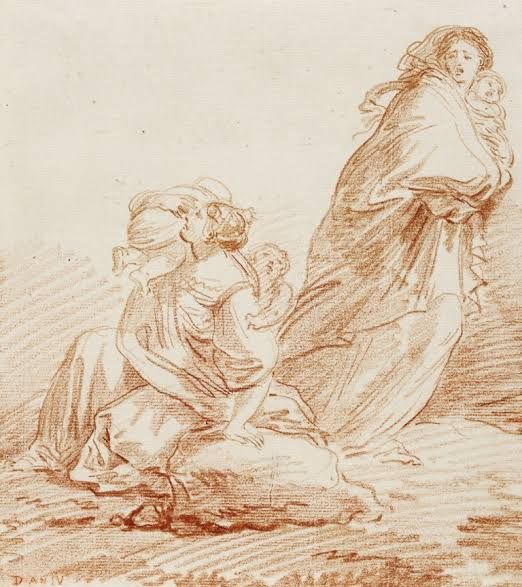
We come now to a day that has understandably not remained in our public celebrations of Christmas, the day when we remember all the children who were killed at the command of Herod the Great. It is possibly the most painful day of the church year. As a father of young boys I almost can’t bear it. But Fleming Rutledge, one of my favourite Anglican theologians, rightly says that we cannot have the full power of Christmas without it. The world-changing gift of Jesus as King means nothing if Jesus did not enter a world filled with violence and brutality. And indeed, agonising though the story is, it’s clear that the church throughout history has seen much value in reflecting on this story. Art is filled with devastating pictures of it. Songs have been composed about it. Archbishop of York, Stephen Cottrell, filled an unflinching chapter of his Walking Backwards to Christmas with a first person narrative as one of the children’s mother’s. But why? Why would we devote time to this story? Here are some reasons that I think are worth considering:
1. The Bible gives time to the story, so we should too. Anyone who feels that God is unaware of human pain – and this is often me – needs only to realise how much time the Bible devotes to honest depiction of our hardest experiences.
2. The story reveals the worst excesses of human power. Herod, inappropriately called “Great”, is so insecure that he orders the murder of a generation of children to protect his throne.
3. The story reveals the true powerlessness of evil to overcome God’s work. Herod’s actions are devastating in their impact, and the grief they cause is almost unbearable to think of, yet even then Herod’s evil does not triumph. Jesus lives to be a grown man; and in the ultimate irony his death, seemingly the triumph of evil, defeats the very evil that causes it.
4. The story makes space in our Christmas celebrations for the millions who experience devastating pain this Christmas. Jesus knows their pain and entered the world first to share it before overcoming it.
5. The story reminds us of the countless evils that remain in the world for us to fight against as we wait for Jesus’ return.
And for those who, like Rachel in Matthew’s account of the story, cannot be comforted, there is space in Jesus’ story for you, and space in Jesus’ arms.



 The Consolations of Writing