Another of 18th-century Welsh poet Ann Griffiths’ beautiful prayers is the powerful “Since I am corruptly fallen”, an expression both of the intensity of human sin and the glory of God’s grace. I’ve included the original poem, as translated by A.Z. Foreman, at the end of this post. In my own poem, I have tried to work with similar ideas to Griffiths and have used the same rhyming scheme and rhythm found both in Foreman’s translation and in the original Welsh. Happy reading!
Ripped in two by self, desire (After “Since I am corruptly fallen”)
Ripped in two by self, desire,
Torn and smeared from world and sin,
Broken, though your image-bearer,
Tarnishing your everything:
Here I stand, expectant, waiting,
Here I’ll see your glory rise,
Lifting up my sin-scarred body
To your gracious, saving skies.
When I rise, I’ll not be beaten
By the goads and spurs of death;
You will catch the little foxes
And restore love’s fainting breath.
In your garden, walled from all foes,
Love will cleanse and sparkle bright;
Now I wait the dawn of heaven
When my faith shall be made sight.
Since I am corruptly fallen – Ann Griffiths (trans. A.Z. Foreman)
Since I am corruptly fallen,
Straying from you constantly,
To ascend your sacred mountain
Is the right of rights for me.
There on high your veils are riven,
Every cover nullified,
There above all worldly nothings
Is your glory magnified.
Oh to drink on high forever
Where redemption’s waters flow,
Drink until I thirst no longer
For the fading world below,
Live in wait for my Lord’s coming,
Wakeful for the coming night
When I swiftly open to him
In his image, in his sight.
It’s true:
God’s always watching in the Quad.
Reality is bursting at the seams
And all our earthly dreams may look quite odd
To one who sees through our most concrete schemes.
The fixed unchangingness of human things
Is like a dream and fades like vapour as
We rise too eagerly on knowing wings.
Yet all our questioning will surely pass
When, fixed and certain, unchanging, He shows
Himself in flood of light and rhapsody
Of colour, truth too beautiful for prose,
The perfect shaking objectivity,
No footprints showing in the ground we’ve trod
Before this certain Truth: all-constant God.
To trust requires a qualitative leap (Kierkegaard Sonnet #3)
To trust requires a qualitative leap
And sin, I’m told, involves more of the same:
The gap, whichever way you turn, is deep
And, leaping, you can’t go back where you came.
So, then, when our ontology is faint
And all our guesses lead us back to here –
This point of anxious thinking, mind’s constraint –
Our only hope the ground we know and fear,
(A firmness interpenetrating sight),
The trust that, eo ipso, God still is
And we may be in Him, just like the light
Of Sun consumes all that we see and gives
All things their life and energy. Though we
Must leap within the dark, we leap to see.
“The Concept of Anxiety” Explained
As anyone who has read my Twitter feeds recently can probably tell, I have been on a bit of a Kierkegaard-reading binge – partly for my study and partly for my own interest. After a particularly challenging session of reading the first chapter of The Concept of Anxiety, I composed this sonnet. Enjoy!
The Concept of Anxiety Explained:
I read the first few sections and it seems
To hinge upon the Garden, Adam stained,
And all of us caught up in spirits’ dreams
As soul and body waiver at the point
Where actuality is realised.
Don’t ask me to explain the rest; the joint,
The crux of what he’s saying, I think, lies,
In setting up, in dialectic terms,
The tension-points in Adam’s apple-feeds
And what was felt precisely when the germ
Of sin was planted as an anxious seed;
Therein the anxious concept is contained.
(It all makes perfect sense if you’re a Dane.)
Song of the Pierced Veil (After Ann Griffiths’ “Hymn for the Mercy Seat”)
My poems based on the work of Welsh poet Ann Griffiths have been a bit slow in coming out this month, I’m afraid. It’s been a particularly busy time at work and in my studies, giving me many other things to occupy my time apart from writing poetry. But it’s time to catch up!
Today’s poem is inspired by Griffiths’ majestic “Hymn for the Mercy Seat”, wonderfully translated (again) by Rowan Williams and available to be read here. The original is so magnificent, and so idiosyncratic of Griffiths’ work, that I have decided to use it more as a point of departure for my own poem rather than trying to replicate it in any way. My poem is a ballade, an old French form that has its origins in music. I hope that you enjoy reading it.
Song of the Pierced Veil (After “Hymn for the Mercy Seat”)
Flesh rots: instead, aflame, along with heaven’s singers,
I shall pierce through the veil, into the land
Of infinite astonishment, the land
Of what was done at Calvary…
(Ann Griffiths, “Hymn for the Mercy Seat”, trans. Rowan Williams)
And when in faith I pierce the veil
And then at last see face-to-face
The One who orders rain and hail
And binds the seas within their place;
And when at last, brazen with grace,
I take my steps towards the throne,
And find there One who pleads my case,
Then I shall not be left alone.
He will not leave us orphaned, frail,
Desolate, rotting, debased;
Look to the man upon Skull Hill
Who bled and died, and now all space
Cannot contain Him! He’ll embrace
Us filthy ones: He has atoned
For all our nakedness, disgrace;
We shall not then be left alone.
Then Hell will grasp to no avail:
The Mercy Seat has won the race.
Though teeth will gnash and lost ones wail,
The broken ones will join in praise
Unto the Lamb, Ancient of Days,
Who was and is and will prevail
And pleads forever for His own
That they may sing to Him always;
They shall never be left alone.
His righteousness will then replace
The blemishes of skin and bone.
Gone, gone their stains without a trace;
And never will they be alone.
Søren, the pure of heart must will one thing
And we too must be pure in heart to see
Our God, before whom we are all in need;
And if we double-minded ones all cling
To two things at the same time – everything
The world declares in lying unity,
And that which, in our hearts, we long to be
(The loving one, the child of God, das Ding
An Sich, our perfect essence, pure in Him) –
Then we must seek, with focus and with faith,
The point of pure worship, pure desire
And in our double-mindedness aspire
To will only the good, only the truth,
As, pure in heart, we will only one thing.
Colossians 1
Qualified by grace to share in the light
And the kingdom which shines like His chrysolite face,
I enter the throne-room, a beggar, no right,
While the one spotless lamb hangs in my bleeding place.
Unsettled by striving, cast out of the race
(Failing to run and nose-diving my flight),
I hold the gold laurel, the crown of first place,
Qualified by grace to share in the light.
The invisible God’s perfect image: the sight
Blinds me here as I see Him, and yet I can trace
My story within His mercies, alight
And the kingdom which shines like His chrysolite face.
From outside of me, the gift of pure faith
And love rich in every dimension and height
Transforms me, pulls me into it, apace;
I enter the throne-room, a beggar, no right.
The glory which shines on us all now rewrites
Our stories of failure, our dead fruit and days,
Gives purity where we had only pride
While the one spotless lamb hangs in our bleeding place.
Uprooted by truth, I linger in space.
No sense in this; no, it defies all touch, sight,
The logic of ears and the world I embrace.
No sense, and yet now I stand, pure, bright,
Qualified by grace.
The Bright-Shining Lord (After Ann Griffiths’ “I Saw Him Standing”)
I first discovered the amazingly visceral and love-saturated poetry of Ann Griffiths through my friend Erin who posted a couple of Rowan Williams’ translations on her blog a while back. The one that arrested me in particular was “I Saw Him Standing”, which you can read on Erin’s blog here. I’ve chosen it as an apt starting point for exploring Ann Griffiths’ work. Being male, it’s a little hard sometimes to copy her particular register of expressing love for Jesus, but I’ve done my best. I hope you all enjoy it.
The Bright-Shining Lord (After “I Saw Him Standing”)
The prince of love, he speaks in whispers,
whispers low to my heart’s deep voice.
Where deep calls to deep
in waterfalls, I stand, his breakers
crashing down around me with
their silent shuddering, the voice
of love amidst the thundering;
to me he calls.
No-one there is with eyes of such fire
seated upon his sapphire throne,
with radiance that shines my soul with its burning
and his brightness a bow in a rainy-day’s cloud.
Inexpressible, he is: how he blends such bright fury
with the gentlest whisper of his nail-scarred palms,
sparkling in glory over valleys,
the Son of Man.
Let the world have its dazzling allure and stories;
the eyes of this prince, this prince of love’s glory
shine truer than all of the world’s diamond lies.
He sits with the blind man and Zacchaeus, the road-side
his banqueting table, for Samaritans and me.
Sit with me, friends, at his morning-bright table
and we too will shine with him
eternally.
12 Poets #3: Ann Griffiths
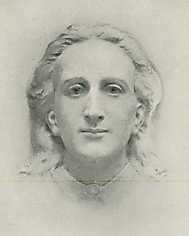 Well, a new month has begun and this means it’s time to move onto a new poet, this time eighteenth-century Welsh poet Ann Griffiths. Her work was originally written in Welsh but there have been a number of beautiful translations, including those done by former Archbishop of Canterbury Rowan Williams, so I’m looking forward to working through some of those translations with you this month. I hope that you enjoy travelling through her work with me!
The hinge that held the beeswax in the mind;
As demonstrated by my sonnet from earlier in the week about minds exploding, I am currently taking a subject in my Masters course that is much more philosophical than anything I have done since undergraduate study. Today’s poem has been inspired by my reading of Wittgenstein and Descartes. It is perhaps more philosophical than my poetry often is; I hope that the result is, if not easy to understand, at least evocative. If neither, then I blame the philosophy that I’m having to read!
The hinge that held the beeswax in the mind;
The ladder upon which the learner climbs
And navigates what new worlds she may find –
Worlds where the certain falls and falls, sometimes
Revealing dull contrivances and rhymes.
The hinge that held the door firmly in place;
The wax which melts, reformulates in climes
Now hot, now cold; the mind which tries to trace
The shifts, the essence, all that it contains
And is contained within the words I am;
The vacuum and the Being which remains;
The truth that lingers when we lose the sham:
The hinge that holds the beeswax still in view;
The door, the soul, within the Me, the You.
 The Consolations of Writing