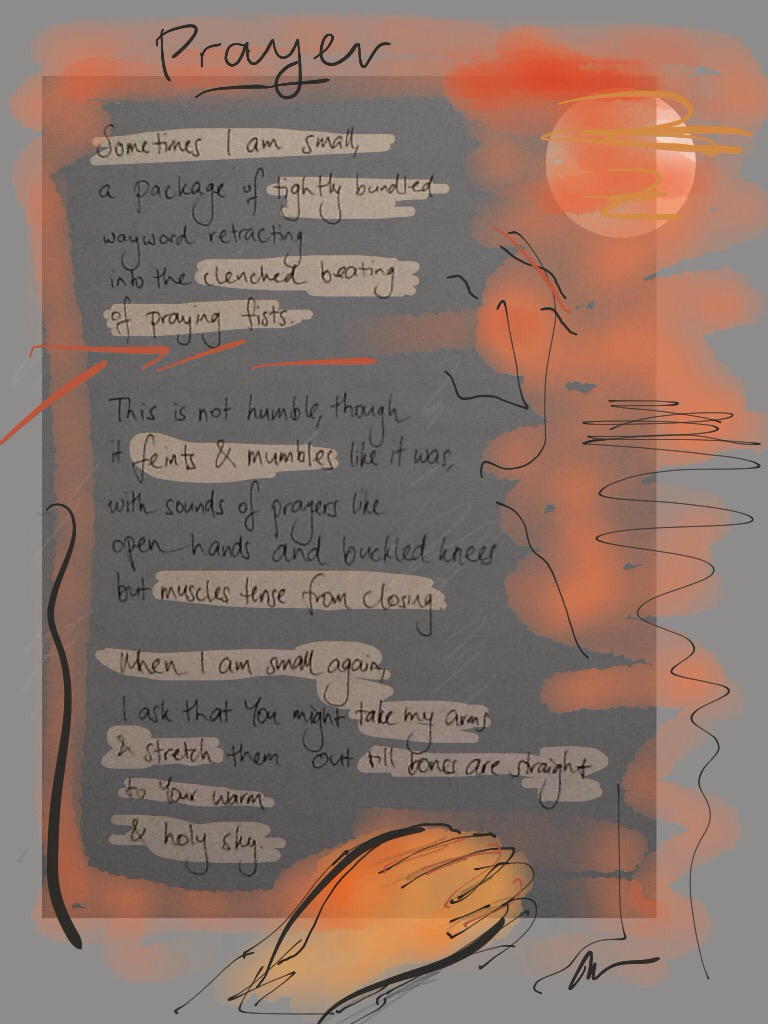
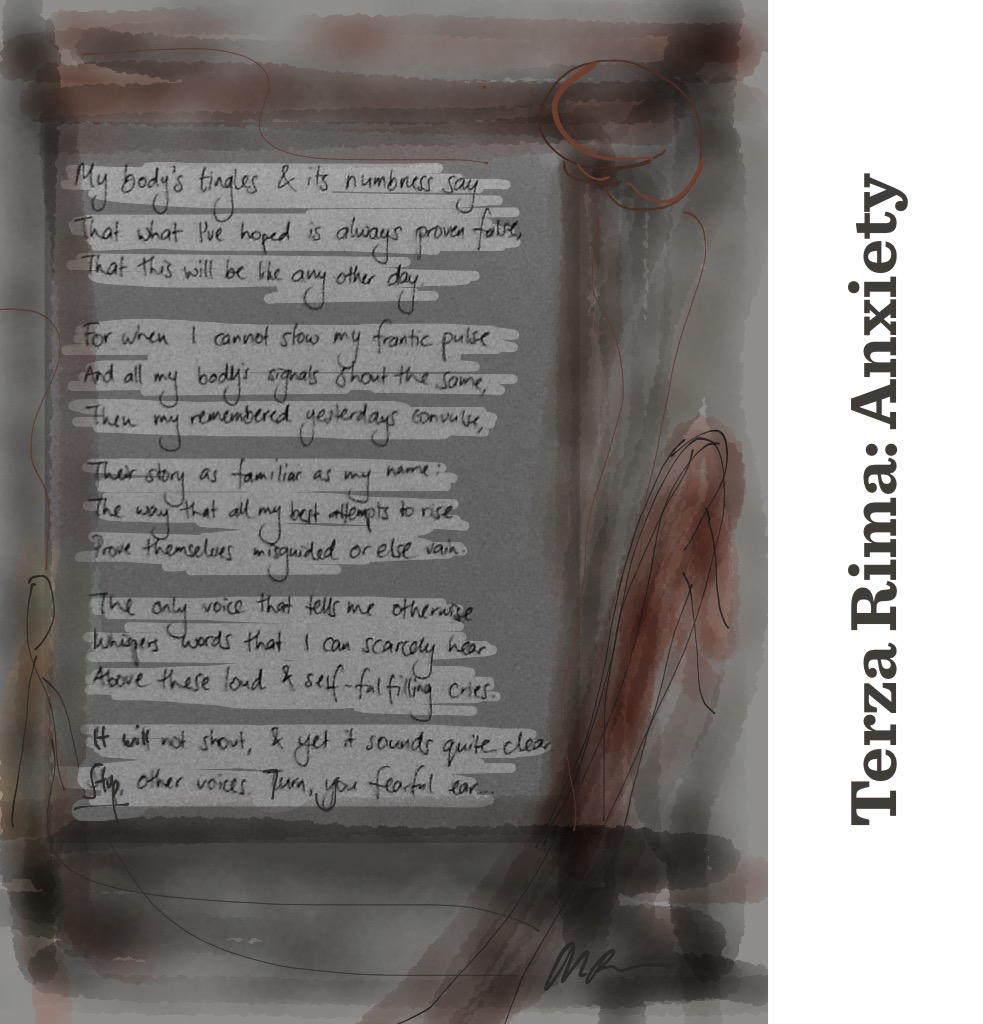
Mental Health November Week 4: No, you’re not “just a bit OCD”

Wanting to keep things neat and tidy is not OCD. Straightening crooked pictures is not OCD. Demarcating your work-space clearly is not OCD. All of these things might point to OCD but they could just as likely not. Having invasive, repeated and unwanted thoughts that drive you to perform compulsions in an attempt to control them – THAT is OCD.

It was a small town in South Australia near the Murray River. My wife and in-laws were still in the coffee shop finishing their lunch and I needed to pick up some medication before we left town; I would need it by the morning, and there was a chance that there would be no pharmacy wherever we were going that night. So I left my family in the shop and wandered down the street to where I had seen a small pharmacist.

There was a trainee at the counter. He seemed warm and friendly and had been a local boy before moving to the city to study. He greeted the other customers like old friends or long-forgotten neighbours. I was the odd one out for sure, but he didn’t let it show. He was friendly enough and, once he had fetched my medication, he was careful – painstaking even – in how he wrapped up the packet inside the white paper bag he gave me. I must have looked at him in a way that made him feel scrutinised, because he smiled and said, “Yeah, I’m just a bit OCD about that.”

My first response was just to smile, pay, and leave with my medication. And as I walked from the shop I didn’t feel anything in particular. It’s a normal remark. It annoys me, but I’m used to it. I hear it all the time and, while you might hear it too and not really notice, I do because, you see, I have OCD. That was why I was getting the medication: an SSRI commonly prescribed to treat the condition. The same medication can be used for any of the related anxiety or depressive disorders; often OCD goes along with generalised anxiety disorder and/or depression, as it does in my case. Yet a training pharmacist should be expected to know that an SSRI may well be treating OCD or at least a number of closely related disorders. It was a thoughtless remark at best. At worst, it could have been deeply harmful. As I left I wondered if I should have said something. There was such a high chance that his remark would be highly pointed for me, and, while I have learnt to ignore comments like his, others may not know how to or even think that ignoring it is right. In the end it was too late to do anything. All I can do is hope and pray that he learns not to say such things.

But ever since then I have been thinking more and more about the remark, thinking about my own tendency towards brushing it off as “just something that people say”, and about the ways that such off-hand remarks can actually cause significant pain and distress to many. I’ve been thinking too about how few parallels there are, how few other serious conditions we have turned into idioms to describe our own eccentricities. Our society has generally moved away from calling things “schizo” or “retarded”. We might often say that we are “depressed” when we just feel temporarily bad, and some are inclined to declare themselves “suicidal” when that is a very long way from the truth. Yet there seems to be something highly pervasive about the phrase “just a bit OCD”, and not only does it diminish the pain of those who truly are more than a bit OCD, but it also shows a complete misunderstanding of what the condition entails. Wanting to keep things neat and tidy is not OCD. Straightening crooked pictures is not OCD. Demarcating your work-space clearly is not OCD. All of these things might point to OCD but they could just as likely not. Having invasive, repeated and unwanted thoughts that drive you to perform compulsions in an attempt to control them – THAT is OCD. And it is close to nothing like what the general public thinks.

When I was a child some of my family and friends would joke about me being “OCD”. I bought into the joke, not knowing how unhelpful it was. You see, I liked everything to be neat, and I was quite extreme in this. I once asked my brother if he had borrowed a certain CD, on the grounds that the disc was aligned differently in the case to how I would have done it. I also went through a stage of being almost obsessive in keeping my hair neat. These were, perhaps, signs of compulsions. The neatness, I’m inclined to think wasn’t, because in the end I could largely do without it. The hair was more likely a sign. But the thing that made it a sign wasn’t that I wanted neat hair. It was that there was a student in my class who was teased because his hair made an egg-shape on his head and, fearing anything that might give more reason for me to be bullied, I did everything I could to avoid such ridicule of my own hair.

The biggest signs of OCD, however, were entirely internal. When my head would be assaulted with a barrage of obscenities that were completely at odds with my quiet, Christian, demeanour, and I learnt to combat them by silently tapping out rhythms on my fingers or keeping a steady, circling version of the Lord’s Prayer or something along those lines in my head: that was OCD. Not just a bit OCD, profoundly OCD.

And it wasn’t until, at age 28, that a psychiatrist thought to ask me about THOSE thought patterns, not just why I was sad and stressed all the time, that my OCD was identified. Not because I liked things to be a certain way but because my head was filled with assaulting thoughts and I only knew how to keep them at bay through old (and increasingly ineffective) patterns that I had learnt as a child.

The word “obsession” actually comes from the Latin word for an army assault. That’s what an obsessive thought is like. Picture an army with a battering ram attacking a castle. And then picture the knights indoors trying to combat the battering ram by tapping out their own frantic rhythm to keep themselves from hearing the assaults outside. When that describes your mental state, and the habits you learn to combat it, that is OCD.

No-one ever describes a sore pimple or bump on your head as “a bit cancerous”. We’ve learnt not to call things “spastic”, and we’re moving away from “gay” and “psycho”. But, when we like things to be neat, we have no qualms calling that “a bit OCD”. Please, please – just don’t. If you don’t want to trivialise the agonising pain of a condition you barely understand, then find another phrase. Say you’re neat. Say you’re fussy. But don’t say you’re “a bit OCD”, because the chances are that you aren’t, and if you are (and you have all my sympathy and compassion if this is the case) then the problem is going to be much bigger than your neatness and deserves more respect than you or our society are giving it.
No Ghosts This Year #2

The walk home was generally a relief. Mark caught the bus home, so he wasn’t around to be a nuisance. And mostly Philip had the time to himself, to think and daydream. Sometimes he would take a book with him and try to read as he walked, but that was a hard thing to do. He knew the walk well and hardly needed to look where he was going to take the correct left and right turns, but he hated having to interrupt his book every time there was a red traffic light (“You would have been happier in this town when there were no traffic lights,” his grandfather had once said to him, “then you could read without stopping”), and once in a while there was a dog that had left a little treat for him on the ground, waiting for careless feet to tread in. No, it was generally best to look where he was going. It was difficult to do that and read at the same time.

You could get quite far in a daydream, of course, even if you couldn’t read: far away from Mark, and far away from PE and Maths homework. You could get to a place where it didn’t matter so much if your hair was messy or you stank, where no-one was likely to take a specky on your back. Only, there were obstacles still to daydreams: the realities of classmates that saw you while you were walking, for instance. Where they were likely just to ignore you at lunchtime, you seemed to become much more interesting when they saw you outside of school. If they saw you while they were standing by the milk-bar, they might call out, “Hey Savage!” as though that were a particularly original (and biting) thing to say. If they were doing something forbidden for kids to do in school uniform – smoking, for instance – they might append an offer to the “Hey Savage”, like, “Wanna smoke?”, knowing, of course, that the answer would be no. That was the point of it: to provoke him into saying no. Had he ever said, “Sure!” and gone over to smoke with them, the appeal might have worn off quickly. Or he might have opened up something altogether new in his relationships with his peers, an entirely unknown and dangerous dimension: unknown and dangerous to all involved.

He preferred the unknown dimensions of his daydreams. At least then he had some control over what happened within each dimension. Recently, for instance, he had discovered that, in his mind, he had mastered the power of time travel, and found that it was remarkably similar to an H.G. Wells book, just without the bad special effects and furry monsters of the old film version your father showed you. In that world he could smoke without getting lung cancer or being grounded, because that was what happened in H.G. Wells books. Indeed, you could do basically everything that would be misinterpreted or misconstrued in a world that simply did not understand imagination or the desire to be somewhere or someone else. So long as he could be in his imagination without anyone seeing that he was “playing imaginary games” (something that, he had learnt a few months ago, he and his peers were all now too old to do), he was fine; he could do whatever had struck him as interesting or worth doing, without fear of it being twisted against him. Hadn’t it been Mark who, back in Grade Three, had seen him and his friend Tim, no longer at the school, playing a game themed around the French aristocracy being guillotined, and had said by way of explaining away their game, “They’re homosexual”? Now it struck him that this had only revealed a lack of imagination or historical knowledge on Mark’s part, not anything negative about himself or Tim, but he could hardly have said that at the time – or even now, for that matter. People like Mark didn’t care about being unimaginative or historically ignorant. It was almost a badge of pride. No, it was best to keep his many worlds inside his head. That was best for everyone.

He was all set to explore one of these worlds on his five minute walk home (ample time for a time traveller to use gainfully) when from behind him came a voice that he didn’t recognise. It wasn’t Mark – that much was impossible, since he would be on his way home on the bus by now. But neither was it anyone from his year level. It was an adult’s voice. He paused, unwilling to look behind him, the stranger-danger talk firmly in his mind.

“Sorry to bother you, mate,” said the man. “I just need some directions.”

Philip remained where he was but tilted his head a little towards the man. He didn’t recognise him, but something about the man made him seem harmless enough. He looked like someone his parents would invite over for dinner – though that was hardly a guarantee of safety. “Even if someone you know well makes you uncomfortable…” his teachers had said – at which Mark had called out, “Ben makes me uncomfortable!” and the lesson had changed from being about stranger-danger to Mark’s stupidity. Not unusual, he reflected. Though it had made the moral of the lesson a little hard to recall at this moment.

“Can you tell me where Burden Street is?” the man continued. “I…” A pause. “I got the train here and thought I could walk there from the station. But I’m lost.”

No Ghosts This Year: A Story of Advent #1

img_0539-2hen holidays came, it would be okay. But for now Philip just had the long waiting days. The sun deceives us, he thought, into believing it’s holidays before it is. Last weekend he had made the mistake of sitting out on the verandah with his book, like he used to do with his sister in that first glorious week of holidays at home, and nice as it had been for those hours of warmth loosening his tautened face, once over it only made more agonising that gap between now and the time when holidays properly began. Now he was stuck in that odd limbo period in which teachers pretended that the work they were doing now still mattered but when things like reports and awards had not yet arrived to make the year’s struggle seem somehow worthwhile. They were too old for colouring-in (and he probably would have found it babyish to do now, though he remembered with a certain fondness the focus that shading carefully within the lines had brought him), yet they were too young for work experience or introductions to VCE, too young for anything that was truly important.

What was this now? An odd form of torture designed to keep parents from having to pay for extra child care before Christmas? The days were flusteringly hot and the rooms not air-conditioned. Today he had come in from lunchtime sweaty and irritable. His hair, he knew for a fact, was sticking up all over the place because of the ridiculous hats they had to wear in the summer months. And now he was seated at a large square of tables at the centre of the music room where everyone could see everyone else and there was no hiding while he tried to flatten his hair with his hand so he didn’t look like some strange antennaed alien while they did their listening journal for the afternoon – this one a recording of a highly inappropriate carol, “In the Bleak Midwinter”. If only it was the bleak widwinter, he thought. My hair wouldn’t stick up like this in winter.

Wha-at can I bri-ing him, poor as I aaaam?

“The singer,” he wrote, “sounds like a strangled cat, and the words are about as appropriate for Australia as the American national anthem.”

He was quite proud of that. He hoped his teacher would find it funny.

Across the table, Laura was looking over at him. He smiled at her, and pressed his hair down in case it was standing up again. Laura seemed to be laughing. Perhaps she found the song funny too. He could share with her what he’d written after class. It might make her laugh more. But Laura wasn’t looking at him now. She was writing in her listening diary.

I-if I were a she-epherd, I would bring a laaamb…

His feet felt fidgety and his pants were sweaty. The room stank a bit, and he was starting to have that feeling he sometimes did, that dislocated feeling, like he was watching himself, not participating in his own body. He had asked his dad once if he had ever felt like he didn’t really exist. Dad had said, “Yes,” and he’d felt that instant rush of relief that comes from being understood, only then Dad had continued by saying, “That was how we used to talk in the 70s,” and Philip had suddenly fallen from a state of being known to one of total disconnection. His father’s words had fallen flat on him. Was he talking about nothing more than what was trendy back when everyone was on LSD? He’d read about those days in a book once. He was fairly sure his dad had never taken LSD but the words had no other meaning to him than that. No, there was no understanding after all.

I-if I were a wi-ise ma-an, I would do my paaart… 

He held his hair down some more. Laura looked at him again and smiled.

Inspired by the smile, he wrote, “The writer has no idea how to rhyme. He’s obviously only just learnt how to write poetry in primary school. My little brother could write better poetry than that.”

Why had he written that? He didn’t have a little brother. Still, it was effective writing. He kept it in.

But what I ca-an I gi-ive hi-im…

Behind him some boys were laughing. Mark’s voice he recognised, Mark who had taken a specky on his back at the gym last week and feigned repentance and concern for him while the teachers were around only to mock him for his distress when the boys were alone in the change rooms at lunch.

“That’s gay,” someone said – probably Mark. It was the kind of thing he said.

“It’s talking about Jesus,” Laura called back.

Miss Brown said sshh and the lesson regained some barely-maintained control. Philip didn’t write anything more about the song. He didn’t want to sound like Mark. He gave the song three stars, closed his exercise book, and rested his head on his hand to press down his hair more. He hoped no-one could see.

As class finished and they left the room, he slowed down so that he walked through the door at the same time as Laura.

“Did you have fun playing with your hair?” she asked. 

He said nothing. His hands felt clammy.

“Good song, hey, Savage?” said Mark behind him. “You loved it, didn’t you?”

Philip slowed and slowed until he sank into the exiting mass coming through the door. The holidays could not come a moment too soon. More and more outside of himself, he watched as a small and insignificant child hid inside a mind that no-one could penetrate if they tried. The day, at least, was over.

Unexpected Gifts

img_20161117_183452413

Because the Danes
roared across the waves in Viking-
glory, horn-helmeted
King Cnut at the helm,

we can now say
that we are glad, can label small
what we’d otherwise miss,
and can cut with a knife

the smallest things
the eye can see. Come wind and hail,
though time may slay, we lay
cold and rain before the tide

of longing day.
Poetry from Vikings! The gift
of words like comfy shoes
we slip into and set

the day at rest –
Thank you, Cnut, and all who brought
words (and worlds) over waves –
and Søren, that least-like-

a-Viking Dane,
who stepped out of the longboat, saw
the gift of every day
in lilies clothed by God –

in awe, under
the thrall and whirl of tide, of time,
we take our seats until
smallest gifts can glitter.

How we wait

The taste of hospitals and airports says:
You are here
under whatever circumstances,
tired,
no doubt stressed.
Have a coffee.
Sit down.
No-one will care if you cry;
everyone is going somewhere different
sometime soon.
Everyone is crying or dazed,
on edge yet kept
in secure wards
or waiting gates,
volatile, yet
in comfy chairs.
Anything could happen, and
everything is happening. This
is the taste, the smell
of hospitals and airports, just
like churches should all be.

Mental Health November Week 1: Anxiety

This year, the people behind Movember are having a particular focus on men’s mental health, a topic close to my heart. So, while I won’t be shaving off my beard to grow a new mo from scratch, I have decided to take a handful of my old poems on mental illness and give one of them a visual reinvention for each week of November. Here’s the first, a poem I wrote back in early 2013 at one of my darker times. May we all find different ways of shining light into an all-too-common darkness.


Five Nobel Laureates that should be better known

image

The week just passed has seen quite a bit of controversy (some of which I’ve participated in) over Bob Dylan’s Nobel Prize for Literature win. My personal favourite was the Tweeter who seemed confused over which Nobel Dylan won and felt prompted to say that, as good as it was that Dylan had won a Nobel Peace Prize, “the dude that has always given me peace is Leonard Cohen”. But amidst the debate I’ve been reminded of all the wonderful but still largely unknown, or largely forgotten, authors that have won the prize over the years. In light of this, here are five Laureates for the Nobel Prize for Literature that you’ve never heard of but should have.

1. Grazia Deledda (winner 1926): Italian novelist, one of only fourteen women to have won the prize. Check out the delicate and heart-rending Church of Solitude, an amazing reflection on faith and duty, as well as a (surprisingly for its time) moving portrayal of a woman with breast cancer.
2. Frans Eemil Sillanpää (winner 1939): the only Finnish writer to win (compare with the 8 won by their immediate neighbour Sweden, the home country to the award). Read Meek Heritage, if you can get your hands on a copy. I was spellbound from the first sentence. You know from the start that it’ll break you heart but you’ll want to finish all the same. I’m currently floating through the delicate and lovely People in the Summer Night, which is a free online read here.
3. François Mauriac (winner 1952): one of the best writers of faith of the 20th century. The Nobel list is overly full of male French novelists, but Mauriac deserves his place. Read Precedence and That Which Was Lost. Read anything by him, actually. He doesn’t shy away from human brokenness but always opens us into grace.
4. Halldór Laxness (winner 1955): the only Icelandic author to win. Icelandic village life never felt more real. He can paint the unique and the universal with the same poetic intimacy. Read Fish Can Sing and Independent People. The former is charming, the latter slow and heartbreaking. You won’t read many things more beautifully written than either.
5. Joseph Brodsky (winner 1987): Russian poet who moved to the United States. He and W.H. Auden had something of a mutual admiration society going, which says a lot. Though Auden strangely missed out on a Nobel, he earned fame. Brodsky won the Nobel but far fewer know him. Read his “Nunc Dimittis” as an introduction to his wonderful work. I really need to read him more.

It’s a challenge to locate work by all the writers on the Nobel list, though well worth the effort. Perhaps a list that contains historians, journalists, philosophers and politicians alongside novelists, playwrights and poets has room too for a songwriter. The best thing you can do is to discover the list yourself and make your own decision.

Rainy Day Sermon

saint_paul_rembrandt_van_rijn_and_workshop_c-_1657
Saint Paul – Rembrandt van Rijn
The text is darker in this weather,
     more emphatic, as though
while he wrote,
         outside prison walls Saint Paul
            saw the fall
of some Ephesian rain-drops and thought:
            If my plea should fall on hard soil…

Did he see the runaway slave
     in the wet, uncertain,
standing at
         his master’s door, with letter
            dripping ink
on solid Colossian stones, and fear
            a silent and stony reply?

Raindrops soften soil. Outside is damp,
     garden drenched. Too much heart
is a flood
         when heart hears abject pleading.
            Letter drips
today with softening truth, and yet
            for all my rain I still am clay.