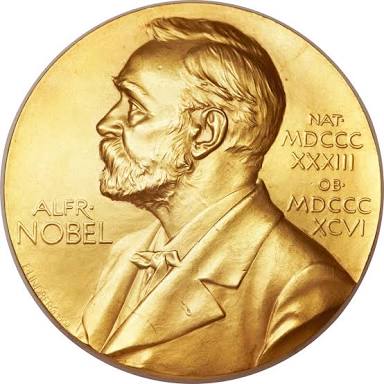
Five Nobel Laureates that should be better known

image

The week just passed has seen quite a bit of controversy (some of which I’ve participated in) over Bob Dylan’s Nobel Prize for Literature win. My personal favourite was the Tweeter who seemed confused over which Nobel Dylan won and felt prompted to say that, as good as it was that Dylan had won a Nobel Peace Prize, “the dude that has always given me peace is Leonard Cohen”. But amidst the debate I’ve been reminded of all the wonderful but still largely unknown, or largely forgotten, authors that have won the prize over the years. In light of this, here are five Laureates for the Nobel Prize for Literature that you’ve never heard of but should have.

1. Grazia Deledda (winner 1926): Italian novelist, one of only fourteen women to have won the prize. Check out the delicate and heart-rending Church of Solitude, an amazing reflection on faith and duty, as well as a (surprisingly for its time) moving portrayal of a woman with breast cancer.
2. Frans Eemil Sillanpää (winner 1939): the only Finnish writer to win (compare with the 8 won by their immediate neighbour Sweden, the home country to the award). Read Meek Heritage, if you can get your hands on a copy. I was spellbound from the first sentence. You know from the start that it’ll break you heart but you’ll want to finish all the same. I’m currently floating through the delicate and lovely People in the Summer Night, which is a free online read here.
3. François Mauriac (winner 1952): one of the best writers of faith of the 20th century. The Nobel list is overly full of male French novelists, but Mauriac deserves his place. Read Precedence and That Which Was Lost. Read anything by him, actually. He doesn’t shy away from human brokenness but always opens us into grace.
4. Halldór Laxness (winner 1955): the only Icelandic author to win. Icelandic village life never felt more real. He can paint the unique and the universal with the same poetic intimacy. Read Fish Can Sing and Independent People. The former is charming, the latter slow and heartbreaking. You won’t read many things more beautifully written than either.
5. Joseph Brodsky (winner 1987): Russian poet who moved to the United States. He and W.H. Auden had something of a mutual admiration society going, which says a lot. Though Auden strangely missed out on a Nobel, he earned fame. Brodsky won the Nobel but far fewer know him. Read his “Nunc Dimittis” as an introduction to his wonderful work. I really need to read him more.

It’s a challenge to locate work by all the writers on the Nobel list, though well worth the effort. Perhaps a list that contains historians, journalists, philosophers and politicians alongside novelists, playwrights and poets has room too for a songwriter. The best thing you can do is to discover the list yourself and make your own decision.

Rainy Day Sermon

saint_paul_rembrandt_van_rijn_and_workshop_c-_1657
Saint Paul – Rembrandt van Rijn
The text is darker in this weather,
     more emphatic, as though
while he wrote,
         outside prison walls Saint Paul
            saw the fall
of some Ephesian rain-drops and thought:
            If my plea should fall on hard soil…

Did he see the runaway slave
     in the wet, uncertain,
standing at
         his master’s door, with letter
            dripping ink
on solid Colossian stones, and fear
            a silent and stony reply?

Raindrops soften soil. Outside is damp,
     garden drenched. Too much heart
is a flood
         when heart hears abject pleading.
            Letter drips
today with softening truth, and yet
            for all my rain I still am clay.

Topography

65056_10152260856108242_861641856_n

…rediscovering, room by room, what it was that I first learned there about how high, how wide the world is, how one space opens into another…

(David Malouf, 12 Edmondstone Street)

How many of my dreams go to this place?
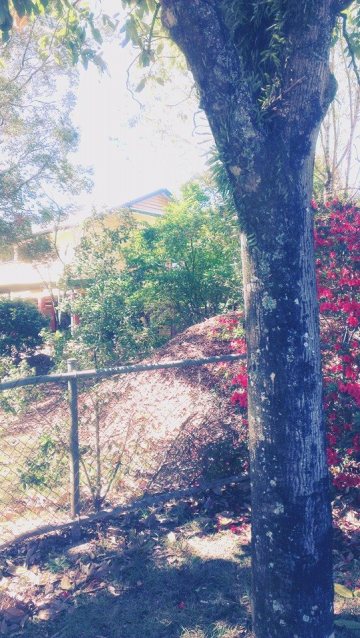
Always the same Queenslander balconies
where I wander over those drooping eaves
in search of silent, sleeping days of grace.
What do I find there? Memory’s faint trace,
nestled somewhere in the comfort of leaves,
world always higher than my gaze believes.
I must look up always to see Your face,
so dreams look up: to canopy, to farm
atop a hill, a volcanic red dome…
When I return here with my wife, we find
the colours that I know, the trilling sound
of butcherbird above our heads, yet mind
always says, “Climb up. This is still not the ground.”

How lonely sits the city

I did not see them go there with their flame
to burn the city’s heart, the city’s bones.
I did not see the past fall down in ash
or hear the cries of covenant in pain.
I did not hear the gongs of history clash
or see foe-cities’ gods fight in the square.
Yet in me is a city dead, and groans
of all our cities lost and yet to come.
In all our homes are ghosts, and everywhere
are souls displaced from homes, and everyone
has lost their way from some-where to where-else;
I do not know their places or their ways,
yet in me is the city’s call, the pulse
of beggars in a dust-heap singing praise.

All our comings and our goings

Some wandered in deserts; I strayed
Among Antarctic beeches and Bunya pine,
Silver ferns and blood red soil, where I made
Kingdoms and mountains from my trampoline.
Some languished at sea; I saw an ocean
Outside my window when the Easter rains
Flooded the side path, and gazed at the scene
In raptured delight. I frittered hours
On the back garden wall; others wailed.
My haven-home moved with me; others lost
Home with house and place. Love never failed
My nomad days; yet love carries a cost.
It demands I reach out as I am held,
And make new home where the world has repelled.

#blessed

However it hits us – with sudden strike
Or slow attrition – it hits all the same.
Movements may be slower, tentative, like
A creature not accustomed to the day;
Or, paralysed, you might see the sun and
Not know that it calls you to anything
But sleep. If so, sleep deep. Tomorrow’s hand
Is stayed for now. Times without mask can bring
The faces that we long for, and our feet
When broken trample less. Now you may know
The truth that says Liar! to the swift and fleet.
In all these days of infinite regress,
Blessed are the poor in spirit, it says.

Westgate Country

Did you know that Melbourne has a Brooklyn?
Mostly factories, but behind the freeway
Nestled amidst houses there’s a church, in
Low-ecclesiastic cream brick. Today
On my way to work I saw it, vacant
Being Wednesday. But on Sunday there’s family.
And I smelt the Spotswood Vegemite plant
With its playful chimneys; a child might be
Filled with yeasty dreams to live there, growing
Up on that street where happiness ferments.
My first home was a tambourine, singing
Its jingling sounds in south Queensland silence.
So I’ll write here for these other unknown homes,
For everywhere that’s never had a poem.

Thirty-Two Blessings

image

Gratitude begets gratitude, just as love begets love.
(Henri Nouwen, Life of the Beloved)

That I am begotten by love,
Sustained

That my heart beats
And my feet move

That the air is rich
For me to breathe

That love is patient,
That love is kind

That I can know
What goodness is

That I have companions
Beside my walk

That song is true
(Only hear the birds!)

That the world is full
Of light, of play

That colour
Amazes

That I have climbed
Mountains and trees

That my eyes receive
The signals of life

That yellow flowers I cannot name
Line my road, my way

That I can talk for hours
To God

That I am small
And He is not

That language is beauty
And also meaning

That I have never suffered
As I should

That again the sun has chosen
To rise

That I must never
Truly fear

That I have been given
Home and name

That I belong
Where I am found

That sun and rain
Are common gifts

(That roads are built
That we may walk

And we may sit
In neighbourhood)

That even sparrows have a home
(How much more I, a child of grace?)

That I am held
In arms like His

That hope is stored
Where none can harm

That life is hid,
Yet lived today

That I can look up to a sky
And think – Sublime!

That all this glory
Is yours and mine

That in these thirty-two years of grace
It is not I but Him –

For this and more,
Much thanks.

Go!

FullSizeRender

               Go!
into the world
                  and find!
the overlays
                    that blind
your eyes from what surrounds.
                              Go out. Decide
the lens through which to see your world.
                                        Behind
your chosen screen
                      is light
that shines wherever you may walk.
                                   Be light.
The world has many interfaces;
                              see
the face before you. Look into
                                 the eye
of truth, the way, the life,
                for this
                            is life -
no interface, but face-to-face
                                and bright,
transforming knowledge.
                       (Nothing here can hide.)

Talking Worship Episode 4: Sing a new (or an old) song?

Here is the latest episode of Talking Worship with Ben and Matt, a discussion this time about the pros and cons of old and new worship music, plus some Anglo-Saxon poetry and Gregorian chanting to spice things up a bit.