Rudd and Bonhoeffer: A Verse Comparison

A conversation with my girlfriend after the recent Australian election prompted her to suggest that I might write a poem about my disappointment with Kevin Rudd, a man who in the past has professed a Christian approach to politics that I have identified with. It isn’t exactly nuanced political commentary, but it was therapeutic to write!

Rudd and Bonhoeffer

Dietrich Bonhoeffer died for his beliefs;
KRudd’s beliefs slowly died –
In good conscience, he said,
Though I don’t think he’s read
The books he should use as his guide.

For Bonhoeffer knew discipleship’s cost,
But Kevin 07 seems lost,
Taking selfies of shaving cuts
(We wish his mouth was shut) –
Not quite the cost of the Cross.

So all of this, then, is to say,
The Christian left has lost its way
If Rudd was our mascot.
I don’t think that we have got
Much of a cause to our name.

“For he taught them as one who had authority”

The fox knows many things,
but the hedgehog knows one big thing.

(Archilochus)

The authority of the fox runs in many directions;
centrifugal, it leaves
the burrow with cunning,
while the hedgehog burrows centripetally,
knowing one thing
and knowing it
deep.

And the scribes and the Pharisees, burrowing law,
are amazed to see
one who leaves
the centre and the limelight to go elsewhere,
to sheep of other folds
and to walk upon the
seas.

The demons know who He is, for they know the depths,
but not the heights
or the width;
they burrow into souls and feed upon duplexity,
robbing the double-minded
of heart and wealth
within,

while scribes and Pharisees declare that this is so:
a vision planted once
in truth, yet with no
power to make it so, fed only on tenacity,
a stubborn clinging to
the way it’s always
been.

But now a teacher stands who sees the motions of the seas,
and in His voice
are manifold
truths that spoke the stars to be, and turns the shrivelled
joints and bones
to wholeness; many,
one –

He holds both in His depth and breadth, for, one with
Father, Spirit,
grasps the whole
yet sees the many parts – a fox, a hedgehog,
knowing both
one and many
things,

the cunning of the fox who knows and sees complexity,
who, being God, has
complex core,
yet pure in heart, single in vision: the Kingdom,
with its manifold glory
and unity in this
richness.

“The invisible things of him”

Well, it’s hard to believe, but this is apparently my 500th post here at The Consolations of Writing. It’s been quite an amazing couple of years since I set up this site, and I’m very grateful to have wonderful readers to share it with.

Today’s poem comes out of a Bible study that I am leading tonight on Romans. In my attempt to understand it, I’ve looked back to Genesis, a place which Marianne Moore’s poetry has already taken me to this month. I have found it comforting and helpful to go back to the beginnings of God’s story and to see in that moment the way that the big picture of salvation slowly unfolds out of our weakness and failure.

“The invisible things of him from the creation of the world”

Fruit glistened in the garden with
            the rising of the mist,
and all was golden, fresh-green, hopeful
           in its naked, shameless days.
 
There wisdom grew its faithful flowers
           and put seeds in fruit, the
Tree of Life’s triumphant bough
            an arch, a bow across us;
 
what knowledge that we needed, we found
            in hand-in-hand walking,
truth of trees and seasons, flowers’ names,
            the songs of hours.
 
And what was seen in the sky,
            what walked amongst us on
the garden’s paths, we knew as truth,
            sufficient unto the day:
 
a righteousness revealed in days
            ordered and perfect like
each one before, and worship-choirs
            heard on these breezy nights;
 
a righteous trust that held the hand
            of its Father-Maker in
the garden of its making, where
            nothing else need rule.
 
Still, fruit glistened in the garden with
            the rising of our dreams,
thoughts that burned like snake-bites in
            our wisdom-longing minds,
 
where what was seen, invisible –
            though all that we need know –
was not enough for our yearning throats
            that surely would not die.

Adam’s Hymn

It shouldn’t be a surprise to any of my regular readers that I love the hymns of John Newton and William Cowper. Some of you will also know that, for the last eighteen or so months I have been working through a number of their hymns, setting them to new tunes of my own. Tonight I finally got around to recording the first of the hymns that I set to music, one which Newton simply entitled “Adam”. It is a powerful retelling of Adam’s fall, told from the perspective of the Gospel. You’ll have to forgive the technical shoddiness of the recording, but I hope that it can help to open new audiences up to the beauty of Newton’s words.

Of the People (After Marianne Moore’s “In Distrust of Merits”)

Well, having written a silly poem about the democratic process this morning I am now writing a serious one, in response to one of Marianne Moore’s most magnificent poems, “In Distrust of Merits“. A critique of war-mongering, it is easily one of the finest poems of the 20th century. I’m a little wary of putting my effort forward alongside it! Still, the election made me think, and here is what I thought, in my best attempt at an imitation of Moore’s style of verse.
 
Of the People (After “In Distrust of Merits”)
 
Line on line we wait; waiting for what?
            privilege congealed in minds worn out
by grumbling and fighting in the ranks?
            compulsory rights
dragging the democratic chain? Now where
are the dreams we dreamt in Athens? And where
            is Plato when you need him?
                        Sausage sizzles in school-grounds
            do not take the place of thrones;
                        but perhaps they appease
 
the stomach, the tired mind, grumbling
            and fighting in internal ranks. Lines
swerve down McCracken Street; paper flies
            from hand to apa-
thetic hand. “To Cyrus, whose right hand I
take”: the promised plan no clearer
                        in minds that wait now, where the
            one who seems the lesser wolf
                        will win our votes today.
 
A painter from Linz too won over hearts
            disaffected with these corridors
and their schemes and machinations; can we
            know what beast we here
invite? But trust the process; what goes up
            must come down, and he who bites
                        the hand that votes him in
            may find himself a wayward
                        stray in queuing streets like us.
 
Yet are we so wise? Where were we when
            Leviathan danced and the oceans
parted at one clear command? The truth is
            we have no clarity.
When pillars fall, assumptions melt, and we
are left without all axioms. Perhaps
            it does not hurt to lose
                        what we have held more closely
            than the truth; still, what have we
                        to replace those dreams? What now?
 
The same error is “bred in my bone”
as is in yours. Line on line we wait
while, fighting in internal ranks, we dream
            of better yesterdays
and fairer futures. Throw your ballot in
            the box; no blood is shed to-
                        day and there will be a man
            who Mathematics says has won
                        in Parliament tomorrow.
 
Yet of David’s line is one who wields
            a sceptre with the wisdom of years
spent in communion with the heavens,
            flinging stars in space
and playing with Leviathan. He knows,
being man himself, what man most needs, and
            will raise up what must be raised.
                        Now He gives and takes away,
           “and He will make it plain”.

Doggerel for the Federal Election in the Seat of Melbourne

Adam Bandt
Shook my hand
Quite a hand
Had Adam Bandt
If I had
Not have planned
How to vote, then Adam Bandt
Would have won me with his hand
(What a hand
Had Adam Bandt).

Cath Bowtell’s
Quite nice as well
She smiled at all
And offered help
But she did not shake my hand –
For shaking hands
See Adam Bandt.

At the First Dawn of Brightness (After Marianne Moore’s “In the Days of Prismatic Colour”)

Marianne Moore is both an intriguing and a daunting poet to imitate. Her poems, visually and linguistically, dance in complexity and variety, and her subject matter is often both fascinating and impenetrable. Today’s poem is based on “In the Days of Prismatic Colour“, a wonderful meditation on Creation, complexity and simplicity. I offer it tentatively, but happy to have survived the challenge.

At the First Dawn of Brightness (After "In the Days of Prismatic Colour")

when seasons and order were only yet imagined,
        impressions in the Creator's mind, the spirit
 hovered over waters deep,
        the plan a temple in His heart, a stool
 for feet to rest beneath Heaven's radiance; the light

of first-dawn being, time and space instantly conceived,
        and domes there waiting for division, no ribs yet and no
 apples there for eating; and colour
        hummed at first acquaintance with the light, its purpose
 soon to be unveiled: water blue like baby's clothing,

Heaven thick, its door ajar, the light from it refracting
        over domes and oceans and the parting of ideas,
 and celebrations declared when
        the lights, large and small, appeared in the sky,
 marking out our days and giving rhythm, pace and tone,

while colour grew in the teeming oceans and over
        Leviathan on his frolicking back, the texture
 of water atop the scales of skin
        and flesh, each according to its various kinds: this was
 the season declared by the first dawn of brightness,

when shade was a new language and nothing was known
        but the days given order and purpose within every
 breath of soft life, when our
        wisdom had not learned to eat its own fruit, and spring
 was silent punctuation. There colour hovered,

potential unrealised but tranquil: a tone, a hand,
 a promise that when white was spoiled, there would be
        other words, like red,
 on hand, and spectrum-bows in place of floods.

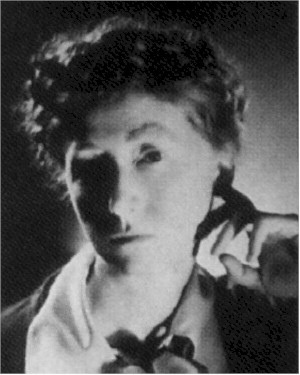
12 Poets #6: Marianne Moore

It’s hard to believe, but another month has passed and it’s time for a new poet. We are now into the 20th century, and our poet for September is the brilliant and eccentric American modernist poet Marianne Moore. One of the most accomplished and celebrated poets of her century, Moore was also a devout Presbyterian, a fact which does not immediately show itself in her work but which we shall try to look at more closely as the month unfolds. She will be a challenging poet to work with, for the complexity of her style, but also a delight. I’m looking forward to sharing her work and my responses to it with you all.

20130901-084024.jpg
Image: http://english.illinois.edu.au

The Week of Cherry Blossoms

Today is something of an anniversary for me. Seven years ago, on this day, I wrote my first adult poem. I remember this because it was the last day of winter, and unusually warm. The poem was about a new crush after a long relationship had ended. I’m sure it would be highly embarrassing to look at now, not least of all because the crush in question went resolutely nowhere, but somehow the metaphor of unexpected spring seemed to fit the moment well. I suppose that, all cliches aside, it did.

I went on to write several poems about spring, but have not done so for some time. I became a little more ambivalent towards spring over the last few years. It seemed to draw me reluctantly out of my winter hibernation, when I, like an unsettled hermit, would much rather be left alone.

This spring is different. Much in my life is changing, and though I do not know where any of it will lead, I am slowly learning what it is to trust the God who orders all the seasons alike and purposes love through them all. Today’s poem looks at this idea. I hope you enjoy it.

And to those living in the southern hemisphere, happy last day of winter.

The Week of the Cherry Blossoms

Winter kept us warm, covering
Earth in forgetful snow, feeding
A little life with dried tubers.
Summer surprised us…

(T.S. Eliot, The Waste Land)

And it will surprise us, this week out of nowhere,
Grey mornings and overcast noons replaced
With this unexpectedness of pink

Blossoms bespeckling trees fresh from winter,
A shower of tenderness covering limbs,
Pianissimo moment in spring’s overture,

The redness of leaves soon to take August’s place,
This week just one window of delicate peace,
After winter’s refuge from sunbeams.

No fear; the sun cannot harm us by day, nor
New growth take us where we would rather avoid:
The seasons work, hands held, together,

Guided by logic and purpose and love,
Not arousing or waking what’s better asleep
But harvesting hope as it springs.

Sonnet for Gilles Deleuze

Being is constant creativity,
Or so old Gilles Deleuze has made us think,
But reading him my mind caves inwardly,
My being draining outwards down the sink.
These post-structuralists, they all like to speak
And multiply their words like plural truths,
But at day’s end, we all of us must eke
A living out, for which they are no use.
I’d love to live – don’t get me wrong – like them
And break down structures like a fallen tree,
Attack the garment, rip apart the hem
And make my own truth rhizomatically,
But sad to say, dear Gilles, you make my head
Feel like I think it must feel to be dead.