After a day of near-summer heat, my home town returns to rain. And it falls gently around my house, on the grass and the trees and in the garden beds, and coming to the end of a tiring day I am soothed by the sounds it makes. Rain reminds me that God is good: He provides, cleanses, feeds. And He does not let it rain forever. Today the rain is not gloomy for me but a gentle reminder to come out of myself and receive from heaven with open-cupped hands. I am not in charge. The God who sends the rain is, and He is good.
Listening to the water’s soft hands I’m reminded of a tender little poem by Langston Hughes that has the humility of a prayer to it, even though God is never named or addressed. Such humility is often the best way into prayer.
Let the rain kiss you Let the rain beat upon your head with silver liquid drops Let the rain sing you a lullaby The rain makes still pools on the sidewalk The rain makes running pools in the gutter The rain plays a little sleep song on our roof at night And I love the rain.
I have always been one to leap ahead. When I was thirteen and a half I declared to my family that I was “nearly fifteen”. I spent most of my childhood planning what I would do “when I grew up”, and now that I am a grown up I wonder when I will feel that I have properly grown up. I still find myself thinking ahead: to the next school holidays, to the time when the kids are all toilet-trained, to the future school year, the next book project, the next study pathway…
One of the results of this strange time in life is that our capacity to think ahead has been shaken. Much of this is distressing: travel or wedding plans that need to be rearranged, birthdays that have to switch from being parties to nothing. But I am finding this one grace in it all – that I must take most days as they come. Part of this is the uncertainty of the future, and part of it is the way that sheer exhaustion has simply eroded my ability to think further ahead than I have to.
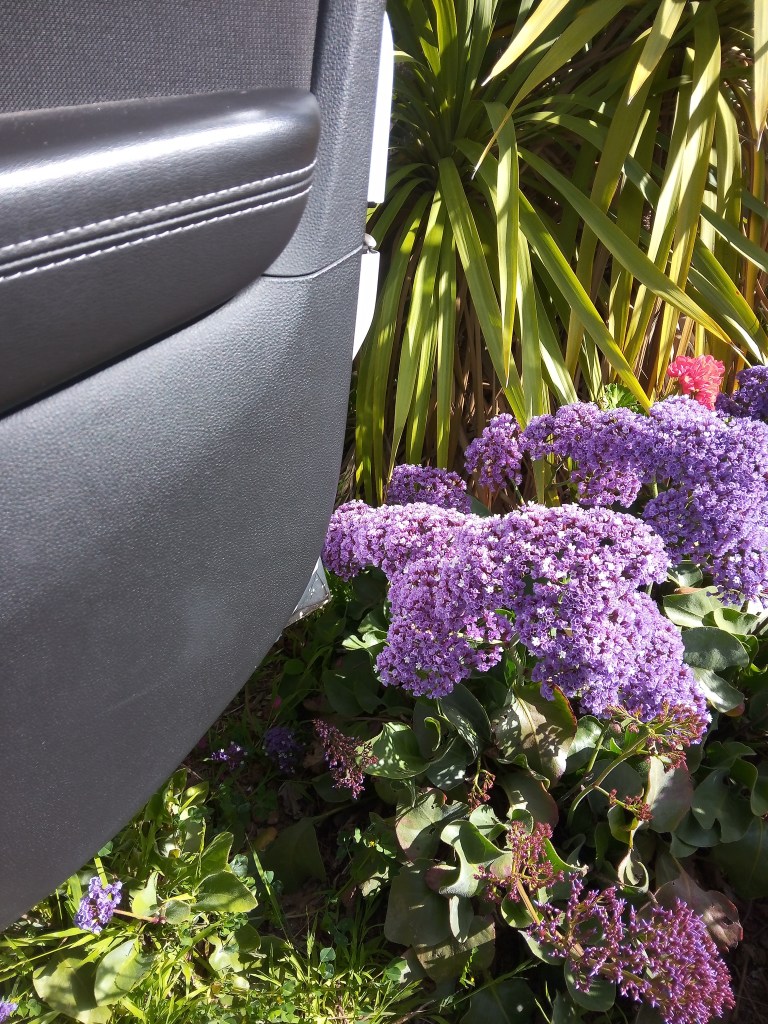
Today, a few days into the first week with all my students back at school, I paused in the driveway with my car door open, caught a glimpse of the flowers in the garden bed, and simply breathed. Whatever stresses I carried with me from the day just gone, however little energy I had left, I had this moment to breathe, to prepare. And I need those moments. When we rush ahead, we charge on in our own power, our own wisdom, our own sense of self. That rarely works. When life pulls us up and makes us pause, it is almost always a grace. Because we need to breathe, to look to our maker, to remember who we are and who we are living for.
And then I picked up my bags and walked inside, empowered to love.
So yesterday I handed in the final assignments for my Graduate Diploma in Divinity, bringing to a close 12 years on and off of study at a theological college. I wish I could share with you here the photo of myself on my student card when I began. Disshevelled, full head of flowing hair and a less kempt beard than I have today, I was captured staring hazily in the distance by the chemist assistant taking the photograph and the result was a picture that looked more like a mug shot of a drug dealer than a theological student’s ID card. It would have captured the passing of time quite aptly. When I began my study I was a fresh-faced, if a little disillusioned, teacher two and a half years into my first job. I was also just months away from the short-term mission trip that nearly destroyed me and ultimately shaped me. In those twelve years, I have worked overseas, been unemployed and briefly homeless, been diagnosed with two mental illnesses, married, written a Masters thesis, had children, suffered grief, known surprising joy and released three books of poetry. It’s been a busy 12 years.
Yet I still feel embarrassed that it took me so long. The high achiever in me feels that I should have been able to do it quicker. After all, a Grad Dip only takes a year. Why did it take me 12? The answer is clear. A lot happened along the way. I nearly failed Greek because my eldest son basically didn’t sleep for the first year of his life. I wrote my New Testament exam paper with him playing with his children’s Bible on a playmat before me. I know I could not have worked any faster. But still, there it is: a feeling of embarrassment, as though it’s all a bit anticlimactic.
There’s also the fact that, along the way, I changed directions. Faced in this last year with the prospect of needing to start repeating credit points soon, I made the decision to switch from a Masters to a Grad Dip, which meant also the decision to not pursue formal church ministry, at least not for the time being. There’s a lot of my identity wrapped up in that decision, and it’s been a challenge to trust that God is able to do more than my preconceived ideas of where all this was going. Nonetheless, there’s that to deal with as well.
As I have looked ahead to finishing study, a lot of people have declared that I “won’t know myself” when I’m finished. What they mean is that I’ll suddenly find myself free in a way that I haven’t been for years. Perhaps. But there’s a deeper truth, that I feel slightly adrift, as though, if I’m not a theology student any more, who am I now? Many things of course. A teacher, a husband, a father, a brother, a friend, a son, an uncle, a poet. But there certainly is one of the moorings of my identity that is now gone. And it will take some work to reconfigure how I view the direction of my life now.
Much like we all do now. We’ve heard the phrase “a new normal” many times, but it’s only now that my city is starting to confront the reality of that. With vaccination rates climbing, we’re soon to open up again after our sixth, and second longest, lockdown. We’re going to have to get used to more cases in the community, and Covid being more of an everyday reality, rather than longing for the days when everything will be “normal” again. And while some have been busting to get out for months now, some of us aren’t quite ready yet. Some of us, myself included, feel more than a touch apprehensive of this new normal.
We’ve got some old friends, however, who can help us navigate this space. The exiles returning to Israel with Ezra and Nehemiah had to do something similar. The destruction of their home had shattered memories and everything they had taken for granted. Then they had to learn how to live like exiles, and had tried to make the most of their new life, torn between longing for the old and adjusting to the new. And then they were home again and struggling to feel like it was wholly home.
What is beautiful, however, when you read the post-exilic writing in the Old Testament, is how Israel reconfigured faith in light of this new reality. God hadn’t changed, nor ever will. But they had, and their story had, and now they needed to understand their faith in light of this new story.
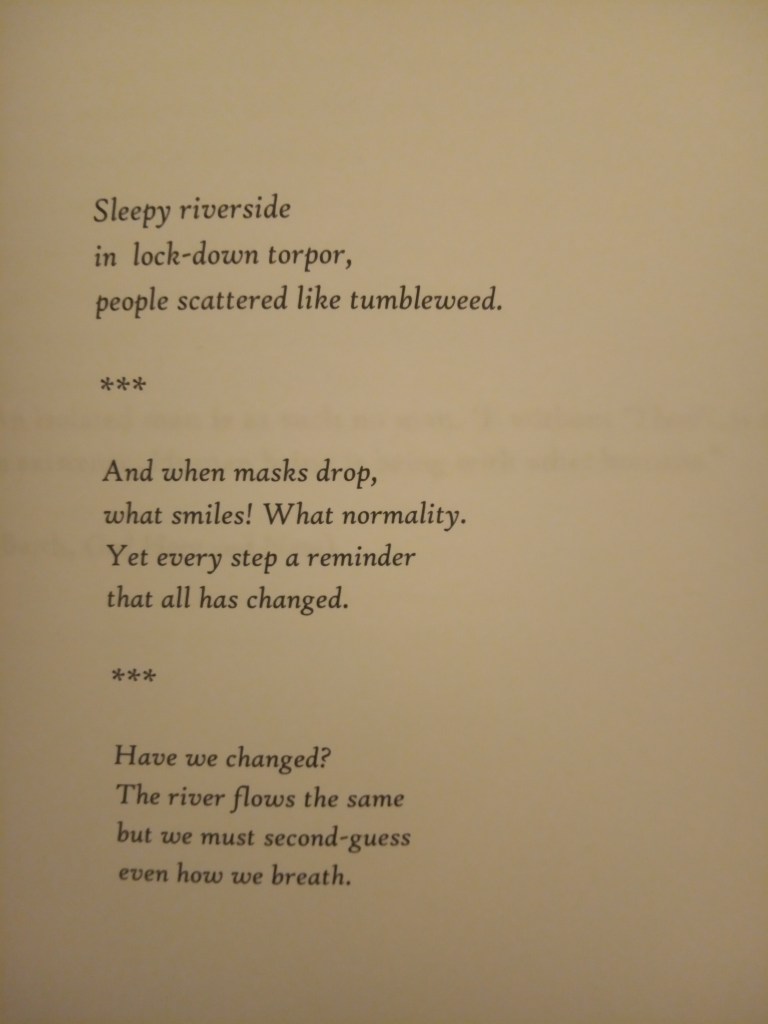
When lockdowns ended last year, I wrote a poem reflecting on the sight of people doing old, familiar things in unfamiliar ways. It became the opening to my second book on the pandemic, Anno Domini. I’m sharing it to close here today because it feels all the more relevant now than it did then. May God give us all that we need as we relearn even the very way that we breathe.
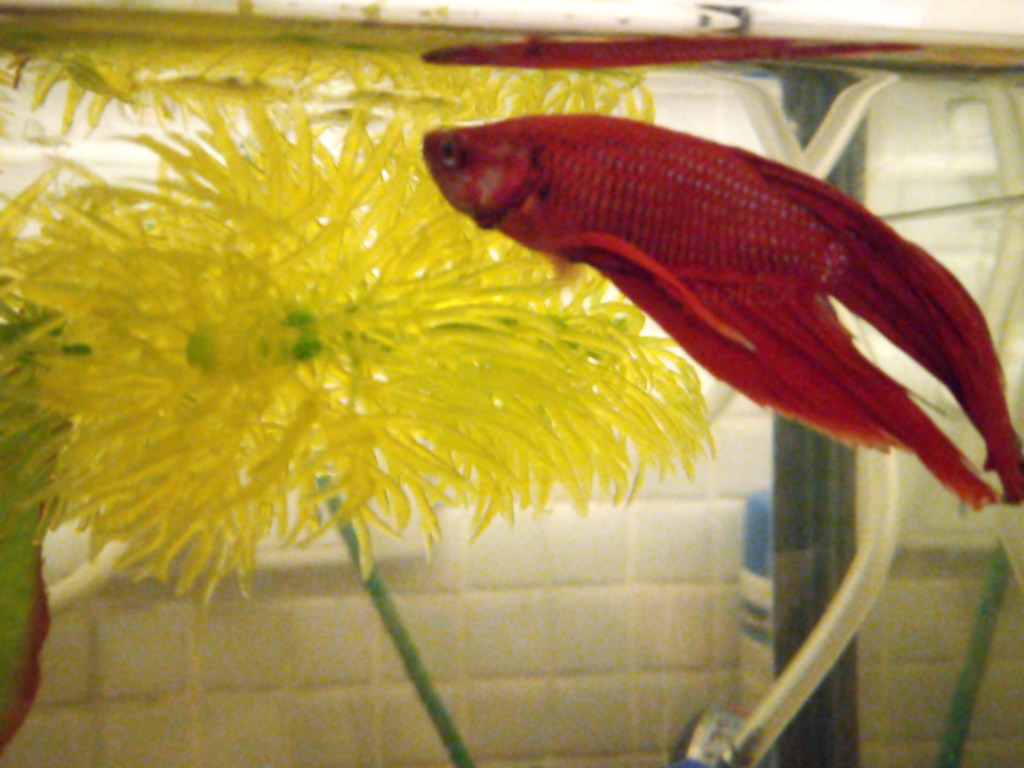
We take this break from our regular Ordinary Time programming for me to introduce you to the newest member of my family: Shemmy Kenja-Penja Pullar. Shemmy is a betta fish – also known as a Siamese fighting fish – purchased for the fourth birthday of my highly inquisitive, nature-and-ocean-loving eldest son.
If you read my poem from earlier in the week, you’d know that the process of preparing for Shemmy’s arrival in our lives was a little like preparing for a baby, mostly because you learn about all the things that you need to buy to keep them alive and because, when it’s your first, you have no idea what is true and what is sales pitch. In fact, having had no success in the past at keeping pets alive, I’d say I have a much better track record with human babies than animals. I was only a small boy, about my son’s age, when our beloved family cat died, and we never had a pet after that. In fact, a childhood fear of dogs and limited exposure to animals made me think for much of my life that I didn’t like animals. Not at all, I’m learning. I love animals. I just haven’t ever learnt much about how to interact well with them.
And as a result there’s much that I’ve missed out on learning from them. I first realised that we could learn a thing or two from animals when, during a particularly anxious time in my life, I stayed with my sister and her family and was struck by the simplicity of their dog’s complete trust in us and in the world around her. The Bible uses the animal world to remind us of God’s faithfulness to all His creatures, and this is wonderfully captured by Mary Oliver who, though not a Christian in any conventional sense, is an extraordinarily devotional poet in her own way:
...if your spirit carries within it
the thorn that is heavier than lead– if it’s all you can do to keep on trudging–
there is still somewhere deep within you a beast shouting that the earth is exactly what it wanted–
each pond with its blazing lilies is a prayer heard and answered lavishly, every morning… (From “Morning Prayer”,1986)
Of course, the earth is not exactly as we want it – not now. We’ve done a very good job of be ensuring that it isn’t through violence, apathy and greed. As God’s image bearers, it’s right that we hunger for our world to be what it was made up be, and right that we should grieve what we’ve done to it and to each other. But there’s a powerful reminder when we see a scarlet fish waving through the water that it takes completely for granted – a reminder that this earth is a gift to us from one who knows perfectly what we need and feeds all creatures, including is, “in due season”.
The seasons are undoubtedly out of kilter. Many do not receive what they need, and much in our world is falling apart. God is not. I do not know how to keep my fish alive or my children happy; God does. And though He lets us experience the out-of-kilterness of things as the natural outcome of the choices our species has made, He does not abandon us. Like my wife when she gently calls our new fish to slip up towards the surface and take the food she has sprinkled there, God keeps calling to us, urging us to have that same trust in His power to make everything right again.
Unaccustomed to fish and their ways,
we realise quickly that the goldfish bowls
of our childhood are no longer the way,
and so, acceding to a preschooler's wish,
my wife spends hours learning
the ways of fish tanks
and the fish that dwell in them,
then imparts this learning to me as we
gather together accoutrements
and seek to keep a fish alive.

Like new parents, powerless
to draw the line between marketing and
the edicts that utter death to the fish
that do not receive them, we take
all advice, and pour
hours the night before, like
purified water,
into the tank's assembly, then

the next day slowly let
this fish like a newborn
take in its water, its new surrounds,
while two wondering eyes swallow all
in a dazzled gulp, and I
am back on the ground watching
his newborn pupils discover
this gobsmacking, stunning, sense-exploding whole
for the very first time, and wonder too:

that we should have made it through
four years largely unscathed,
save the loss of sleep; that he
- this life-absorbing, world-imagining
force before me
should be here at all,
staring in awe
at a fish bubbling water.
This morning when I woke to my children climbing on each other and me and complaining of each other’s intrusion into their personal space, I found myself very quickly feeling resentful and grumpy. It was my first day back at school – in person, not on a computer – for eight weeks and I was frustrated to find all the work that I had done over the holidays to help my children sleep better landing me back here, with them clambering over me and each other as though we had never bought them their own beds. Very quickly I found myself thinking, “Here we go again.”
It’s a common enough feeling at the moment: the sense that we continually return to these places that we do not want to be in; the sense that our lives keep repeating themselves in never-ending cycles.
But I want to challenge that thinking in myself. I want to remind myself that even with each return to old, unwanted places – the things I would gladly leave behind – I am not the same. At least, I am not if I am responsive to the work that God is doing in me and in the world. God is not stuck on repeat, nor is my life “Groundhog Day”, much as it may feel like it. Each day, each season builds on those before it. Each day, if we are listening to God, is a step further in His direction, even if we cannot see what that direction is.
I recently read a beautiful poem by Robert Browning entitled “Now” in which two lovers seek to overthrow the tyranny of time by “mak[ing] perfect the present”, finding the eternal in the momentary. It’s a wonderful image but I want to do better than that. I can seize a moment of time in a photograph or a poem and try to capture it with timeless qualities. But better than that is when each moment builds on the last, when even loss is growth when it carries us more in God’s direction.
How, then, should I live if once again my children destroy my sleep? I write these words while holding one of the twins who has woken up coughing; it does not bode well for the rest of the night. Well, one thing I can try to do – emphasis on try – is to “make perfect the present” by finding God in the present. Whether I am revisiting old ground that I want to escape or in a moment that I want to preserve for ever, I can try saying simply, “Here I am, God, where You have placed me now. Show me how I can use this moment to move closer to You.”
Right now, we are bound by time. It frustrates us constantly by moving slowly when we want it to race and disappearing when we want it to stay. But God is not bound by time, and He orchestrates all our present moments to bring about His perfection, moment on moment on moment. Let’s listen to Him.
And what if, in the end, you lost it all? In the poorly timed decision, the negligent hurry, in missing the moment for the undoing click? What if, in a swift dazzle of technology, all your acts and monuments fell down a drain never to be found or known again?
Would you, then, wake up at sunrise to find that, in spite of it all, the wattle-birds still have their insistent call, and there still are the honeyeaters in the bottlebrush hedge? Would you find a familiar coffee pot on the stove, pattering feet wandering the hallway in their sleeping bags, and thoughts – new day thoughts – to replace the old?
Perhaps, in a moment of quiet, you might find yourself turning to the persistence of ink on paper and scrape some hesitant symbols, soon words, soon poems, and see new combinations, hear new assemblages sound, and find in the rhythms of your pen, in the undulations of thought, something which perhaps could owe its very iambs, its steady pulsations across page to the loss that yesterday crippled you.
Family reunion brings us here,
where gum trees open onto two eternal flames
smoking up suburban Sunday sky.
Our park - the edge of our travel limits, sits
beside quiet street and under
the refinery's steady shadow.
Two swings, two slides, ancient eucalypts,
and where houses fence the park's perimeter, a hidden gate
opens while we picnic and out
pops a man's head, then a man,
up for a chat or to survey the scene.
Here for 45 years, he tells us, he's seen
the refinery grow and housing prices fall,
smelt and breathed it all,
would never leave, not even for Queensland.

I doubt we will come here again,
yet the man in the fence shuts the gate,
returns to his 45-year-old-home for home can grow wherever
we stop, open our bags and rest.
Home has been here before; has been contested; will be
here again.
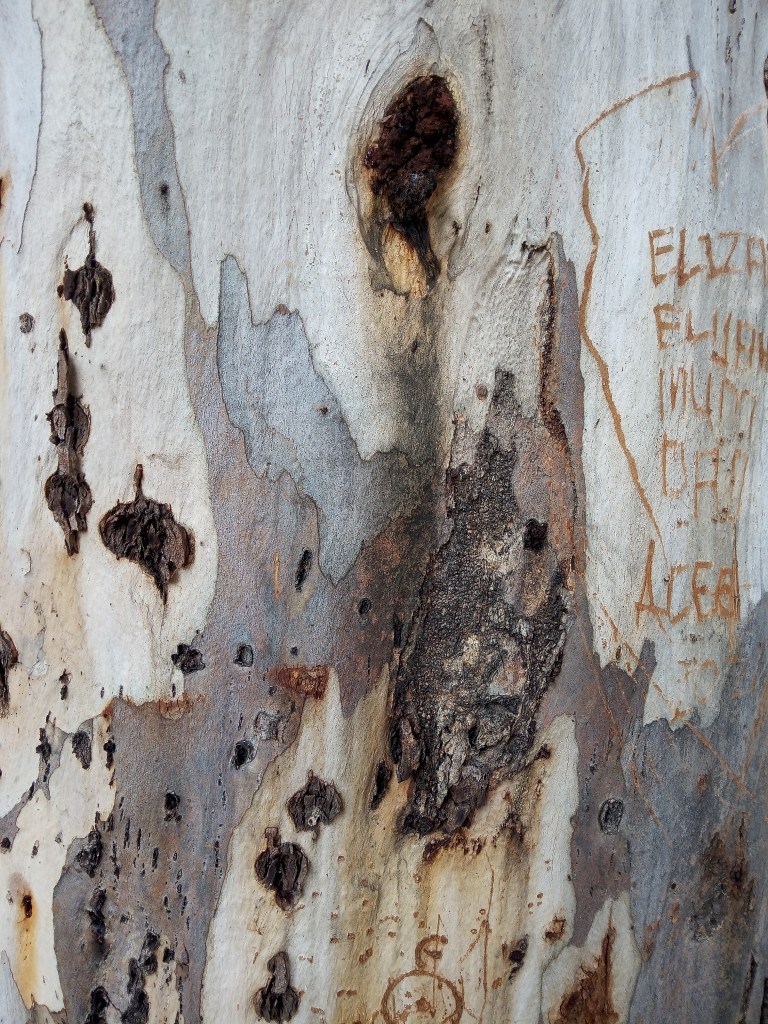
Eucalypt skin carries its scars,
carries its stories and its hopes.
Our stories, our homes, are refined in the scarring,
will one day erupt in air purer than this.
One day, our homes will open their hands
and fold you into their scars.
There’s a book I love which has a title almost as good as the book itself: A Long Obedience in the Same Direction by Eugene Peterson. I’ve been thinking a lot about this phrase recently, because I’ve been struck by how much of life is simply about perseverance, and Christian life in particular. Whether facing the long haul of fighting a global pandemic or the daily repeated struggles of parenting, I’m reminded that following God often means simply identifying the right things to be doing and to keep doing them, in God’s strength. Often even the act of living in His strength is a daily act of obedience: that moment of rising and saying, “I can’t do this today, but You can.” Even saying those words is hard and takes daily persistence.
Two circumstances in my life have particularly made me think more about this. The first is that I’m coming to the end of a very long period of theological study. I began studying theology in 2009, when I was a relatively new teacher and was just about to embark on a short term mission trip to South East Asia. The mission trip felt largely a failure and I only managed two subjects before deferring for several years, resuming in 2017, the year my eldest son was born. I felt fairly sure I wanted to be an ordained minister then. Now that doesn’t seem so likely, and I’ll be graduating at the end of this semester with a Graduate Diploma instead of the Masters I enrolled in. There’s disappointment and relief in equal parts in this turn of events. But mostly I don’t know what all the years of study have been for or where they are taking me. But I press on.
The second factor is a much more earthy one. My wife and I are toilet training our 2-year-old twins, and anyone who has ever toilet trained a child will be able to imagine how tiring and challenging this is. Yet I was strangely comforted when, in the midst of all of this, I found myself writing an essay on Martin Luther’s theology of vocation and found him speaking both of his son sharing his faeces around the house and also of the spiritual value in faithfully changing a dirty nappy. Luther, I learnt, challenged the mediaeval perception that obedience to God entailed grand acts: penance and pilgrimage in particular. No, he said, keep doing what you are doing (in loose paraphrase!) and be obedient wherever God has placed you.
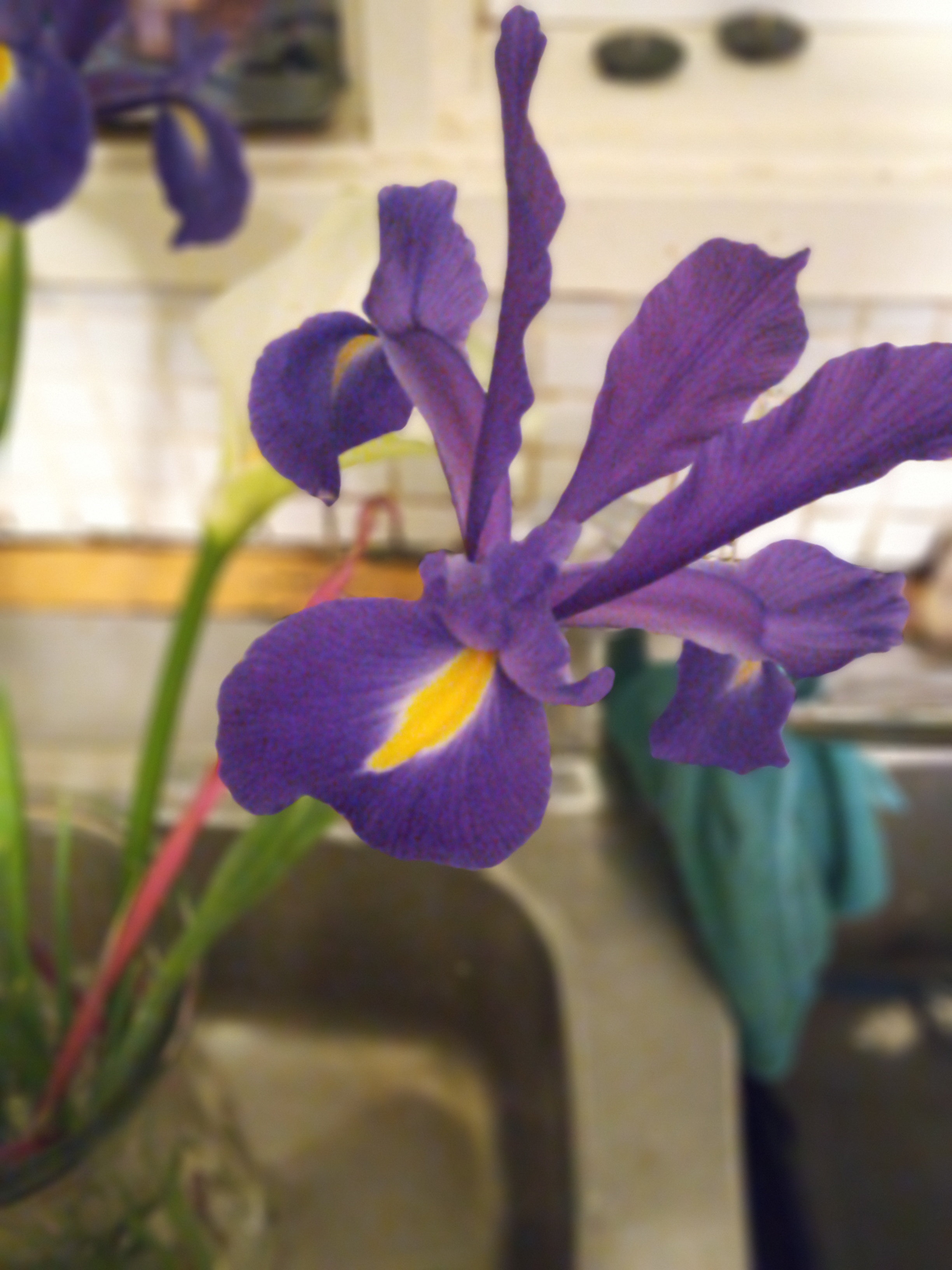
And so I seek to be obedient. I wash dishes and clean dirty underpants. I write essays and try to go to bed early so I can rise to my sons in the night. And sometimes, like these irises that I found my wife had placed in the sink in between my interrupted attempts at doing the dishes, beauty appears in the dirt and grime of our everyday obedience. Undoubtedly God appears, but we have to look faithfully at the tasks set before us if we are to expect to find Him there.
One of my favourite moments in the Bible is the little, anticlimactic story after one of the big show-stopping stories. It comes in 1 Kings 19, immediately after Elijah has triumphed over all the false prophets of Baal and the land-grabbing wicked King Ahab. God has shown up in an undeniable way to give Elijah the victory that day. It should be anyone’s career highlight. Yet Elijah, hearing that the king’s wife is still out to get him, sets out on an endurance sprint to escape and at the end of it all collapses in despair in the desert.
What do I love about this story? First, I love its humanity. It’s why I love the book of Jonah too. I recognise myself so easily in these pages. I, like Elijah, am a massive idealist. Like Elijah, I push myself to my limit. And a two-decade battle with depression has also meant that, like Elijah, I am easily defeated, prone to despair.
But more than this I love what comes next. God shows up, first as an angel that tells Elijah to eat, drink and sleep. He does this twice. Then He sends a series of dramatic natural events: a violent wind, an earthquake, a fire, and yet in all of these events we are told that God, though sending them, was not “in them”. They were not Him speaking. When He does speak, it’s in “the sound of a low whisper”. Some translations call it the “still small voice”. And then, in that low whisper, God gets Elijah’s attention and shows him the way forward.
I am drawn back to that story today for a few reasons. The obvious one most Australians will recognise. This morning my city experienced the shock of an earthquake registering 6 points on the Richter scale, with its epicentre in the mountains north-east of me. It was dramatic but relatively minor, nothing of the scale that many places around the world have to deal with often, simply unusual for Australia which lies safely within its own continental plate. But yes, an earthquake got me thinking. Specifically it made me think, How does God get my attention? It struck me quite quickly how many in my city, stuck in the morass of our sixth lockdown and the growing reality of what this delta strain of Covid means for us, welcomed the earthquake as a diversion. I certainly did. But others, understandably, were frightened. Others wondered, what next?
Which brings me to my second reason why I’m telling this story today. Because, while the earthquake itself did not make me feel like this, I know well that feeling of “what next?” and am often there when I feel that I’ve had one too many things go wrong. Today it wasn’t the earthquake that made me feel like this but some complaints about work I had given much effort to that tipped me quickly into a place of feeling that I couldn’t do any more. It was so easy to slip into that place, so easy to feel that I had no choice but despair.
And yet there was a moment in the day when I felt that God spoke quietly yet clearly and I want to return to that moment. I was walking my boys to the park at the end of the afternoon and, as often happens, they grew tired and distracted, occupied with digging in the dirt and finding treasures of sticks and leaves. So I gave in and decided that some nature play was more important than getting to the park. I pulled the pram off to the side of the path and I let the boys crawl and discover instead. And as I stood there, I looked around me, listened to leaves and wattle-birds, briefly lowered my mask so I could breathe in wattle and eucalypt, and God was so clearly present, the author and perfecter of this scene, the one who carved each groove in the trees’ skin, the one who taught wattle-birds to dance and sing, that I heard my spirit say, “How much more will He care for you?”
It was simple. The ground did not shake. I still grew deflated by evening. My mind played suddenly and unexpectedly in the darkness. But then I sat with Elijah, and told you his story, and I can now repeat what my spirit heard this afternoon. I ask it to myself. I ask it to you. If He so clothes the wattle-birds and the eucalypts, how much more will He care for you?



 The Consolations of Writing