In this episode, Ben and I are joined by our artist friend Robert Kingdom to talk about how he uses his art as a form of worship. Enjoy listening to what he has to say, and be sure to check out his artwork at his website and the spiritual reflections which he posts regularly at his blog, Kingdom Reflections.
Open
And immediately his mouth was opened and his tongue loosed, and he spoke, blessing God.
(Luke 1:64)
No good unless used for you:
only death, only a swallowing tomb.
No sweet grapes from a rotten vine;
no figs budding from a cursed tree.
When speaking, we curse; when silent, bones waste…
Until the words, He is risen. Why seek
the living among these yawning tombs?
Run. Tell the mourners.
Doubt has died.
This tongue has life to speak.
Talking Worship Episode 2
Counting Words and Days: For Ash Wednesday
Because we’ve loaded even our song with so much music that it’s slowly sinking
and we’ve decorated our art so much that its features have been eaten away by gold
and it’s time to say our few words because tomorrow our soul sets sail.
(Giorgos Seferis, “An Old Man on the River Bank”)
I should have let my words be few,
yet I dressed them up, swelling,
until they could not fit in the door.
You know the score:
hardest words are easiest for yelling,
hardest by far to live as true.
What, then, for me, for You?
Your glorious silence is the most compelling.
The grandest truths that I ignore
are found in Your richest store.
Days are short. Life’s noise is telling.
Take ash, take silence. Take You.
Week of the Figs and Peaches
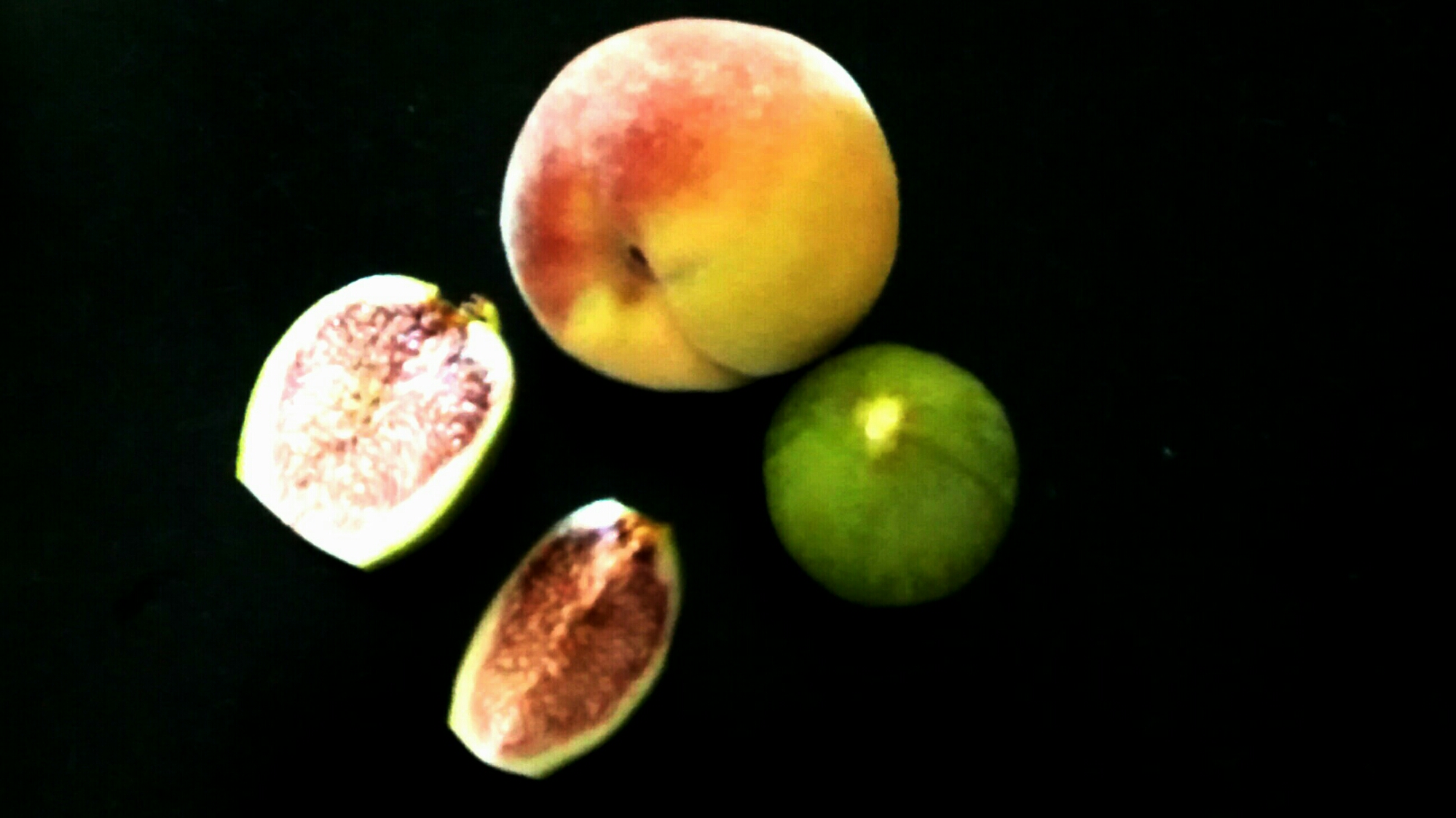
First the long wait:
trees stubborn in their stasis,
only buds, only
promises unyielding to the squeeze.
Then –
overnight almost!
an abundance attracting the birds,
the sun.
Come to their trees and find them burst open,
drinking in the light,
or the semi-spoiled meal of toddlers pecking on passing by.
Neglect for a minute and ripeness turns to rotting;
at the right time, they will drop
at your fingers’ lightest touch.
Too much; preserve what you can,
before the thieves of beak and day render worthless
on your watch.
Grace, charm, a clenched jaw
If what Christians believe is true, then Gide knows now what all of us will know before long. What is it that he knows? What is it that he sees?
(Francois Mauriac, “The Death of Andre Gide”)
Was it better by far to be wily, in the end?
Maintaining to the last where Montaigne had failed,
were you applauded for living your art?
The wager – held firm to the last –
carried you further than most will willingly go.
Even Sartre, expelling God to the margins of thought,
rejected your logic, your choice of your filth.
Was your choice for all? In clenching your jaw,
you made God relevant, at every call.
Searching for Sully Prudhomme
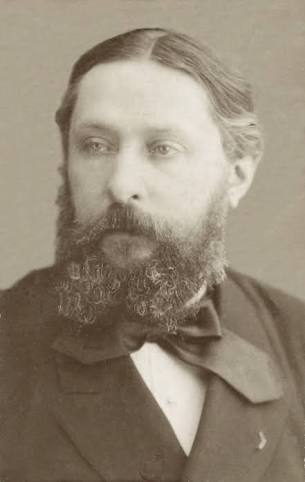
I had assumed, perhaps unwisely,
that because he won the highest prize he
must be somewhere I could find him
(online, perhaps, or in the library).
Yet, though some sites had heard of him
and books in French lurked here and there,
the only place I could repair
for works in English was a book
which promised much and almost looked
the part, but when I peered within,
turned out to hold, far from the great
Nobel-awarded poems recorded
in an English style surpassing,
all the marks of awkward parsing
which befall Google Translate.
And so the book that I’d downloaded
took such beauty and imploded
all of it to demonstrate
that though they equal (or may beat)
our speed at calculations
and number machinations
computers don’t know poetry
and fail at translation.
Also, because this hopeless fraud
of literature was somehow bought,
it seems my task now to express:
if greatness is so soon forgotten,
and language can be made so rotten,
all that we can hope to do
is sell our taste to Google too.
NB: PoemHunter.com has a handful of translations from Prudhomme, the first writer to win the Nobel in 1901, and there’s several wonderful renderings of his beautiful poem “The Broken Vase” for those who want to discover a forgotten great.
Teacher
Jesus never said a thing
without the ring
of action round his pricking words.
When he declared
that cheeks should turn
each time their other halves were spurned,
remember that his own cheek fared
worse than those he preached to. See,
when they were striking,
he was biting
each resisting word inside
his mouth. No, deeper still:
when called to walk the extra mile, no talk
but actions
louder than
all holy words which can’t disguise or hide
the shallowness of tongues which bless
but fork with passive will.
Tom and Bertie
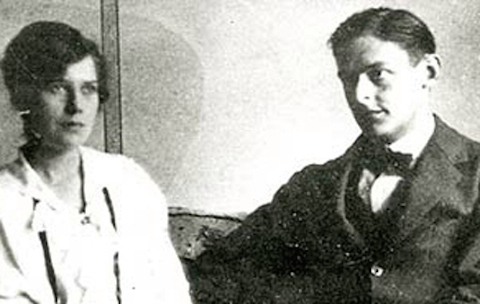
Once the marriage was destroyed* did the one
take comfort in the other’s halitosis?
And did the other, foul in breath, seek scum
to prove that folly persists in churches
and in the minds of worshippers? If words
are crude and language imprecise, then actions
like his speak loudest: a moral compass
cast aside with mathematical pride.
In this they agreed, though not on the sanctions:
that mankind was tending towards its own turd.
What then? Desecrate a marriage bed?
Render a language unreadable? Abide
in the peace of logic or of Logos?
Or turn to grace’s silent arms instead?
* Bertrand Russell was one of the most famous atheists of the 20th century and T.S. Eliot one of the century’s most famous converts. Russell contributed to the breakdown of Eliot’s marriage by having an affair with his wife.
Poetry in Translation: After Erik Axel Karlfeldt’s “Intet är som väntanstider (Nothing is like expecting)”

In a time when the only crime is the refusal of access, I found
all search terms fail, only foreign language yielded, only
the kernel of power, unopening to me.
What beauty I knew to lie within, I could not see: just
umlauts and A-rings, word atoms which Google could not split…
When the pen is mightier than the missile, what is
the untranslated poem, the fixed moment of beauty which refuses us?
I set to work with all that the Web afforded; if posterity had found
this to be genius, why did it lie locked away from me?
There was no such thing as the text I could not read,
only the text which had not yet been found:
a process of twisting, turning words, rearranging how it seemed
to best fit my cloud of knowledge. Yet nothing fits.
Truth must break what moulds we have created, and if
I have found a meaning, it was not, could never have been
what was meant before I tampered. Better perhaps had I
left it where I found it, with its circles and dots denying me entry.
No tampering when we do not touch, yet no being touched either.
The true poem sits where we cannot harm it, and we must fumble –
have no other choice – if the true poem is to enter life,
be lived.
(To read Karlfeldt’s seemingly untranslated poem, look here. As far as I can tell, it is a masterpiece. I just wish I spoke Swedish.)
 The Consolations of Writing